
About Sergey Karaganov
Born 1952. Sergey Karaganov is a Russian geopolitical analyst, politician, political scientist, economist and university teacher.
Sergey Alexandrovich Karaganov (, born 12 September 1952) is a Russian political scientist who heads the Council for Foreign and Defense Policy, a security analytical institution founded by Vitaly Shlykov. He is also the dean of the Faculty of World Economy and International Affairs at Moscow's Higher School of Economics. Karaganov was a close associate of Yevgeny Primakov, and has been Presidential Advisor to both Boris Yeltsin and Vladimir Putin.
Karaganov has been a member of the Trilateral Commission since 1998, and served on the International Advisory Board of the Council on Foreign Relations. He has also been Deputy Director of the Institute of Europe at the USSR (now Russian) Academy of Sciences since 1983.
Early life Karaganov came from a mixed Russian and Jewish family; his Russian father was Aleksandr Vasilyevich Karaganov (1915–2007), a film and literature scholar, and his Jewish mother was Sofia Grigorievna Karaganova (née Mazeh, 1918–2013), the first wife of the Soviet poet Yevgeny Dolmatovsky. Steinbeck then wrote about him in his travel book A Russian Journal, published in 1948. Sofia's great-uncle was the Chief Rabbi of Moscow Yaakov Mazeh (; 1859–1924), a leading figure in Russian Jewry. This idea was first brought into domestic Russian Federation politics by Boris Yeltsin in 1992, It was already a subject of controversy in February 1994 when the doctrine was the subject of remarks by Lennart Meri, the then-president of Estonia, in his Matthiae-Mahl speech in Hamburg on 25 February.
In 2022 Karaganov claimed full ownership of this idea in a serious interview.
The Karaganov Doctrine has been likened by scholars to the idea that furnished Hitler's 1938 Anschluss of Austria.
Eurasianism as ideology
In addition to his Doctrine, Karaganov has advocated for a united Sino-Russian strategy to unify a Eurasian bloc. He argues that the Eurasian Economic Union (EEU) and China's One Belt One Road Initiative (OBOR), will work together to promote economic integration throughout the region. Many experts disagree with this judgement, claiming that China, as a far more powerful economy, will simply dominate this Eurasian bloc. This would counter Russian ambitions to regain their foothold as a global power.
Authoritarianism embedded into genetic code Karaganov has been quoted to say: "Russia is genetically an authoritarian power. Russia's authoritarianism was not imposed from above but is the result of our history which has formed our genetic code."
On Russian might
In an April 2002 interview published in the journal Russia in Foreign Affairs, Karaganov defined Russia's main foreign policy goal as forcing its own dominance on the globe and breaking the security order put in place at the end of the Cold War in 1991.
Russia's dependence on China
In April 2022, Karaganov said that Russia "will be more integrated and more dependent on China", further stating that "Chinese are our close allies and friends and the biggest source of Russian strength after Russian people themselves." In January 2022, he stated that NATO is a "political cancer" that aims to kill the "healthy" Russian state.
In January 2022, he denied accusations that Russia was planning to invade Ukraine and claimed that Russian troops were concentrated at the Russia–Ukraine border to prevent a possible Ukrainian attack on Donbas.
Regarding Ukraine, Karaganov claimed that it was necessary to subdue it in order to prevent the further expansion of NATO. As justification for an aggression, Karaganov suggested that Ukraine was not a viable state anyway, and "most likely, the country will slowly disintegrate," or, alternatively, it will be broken up into smaller parts, and "something may go to Russia, something to Hungary, something to Poland, and something may remain a formally independent Ukrainian state."
Instead of the legally-mandated "police action" or "special military operation", Karaganov uses the word "war" openly: "The stakes of the Russian elite are very high – for them it is an existential war." He has also said that "we need a kind of a solution which would be called peace, and which would include de facto the creation of some kind of a viable, pro-Russian government on the territory of Ukraine, and real security for the Donbas republics."
In April 2022, in an interview with the Italian newspaper Corriere della Sera, Karaganov stated that "war was inevitable, they were a spearhead of NATO. We made the very hard decision to strike first, before the threat becomes deadlier."
In June 2023, Karaganov called for the use of nuclear weapons by Russia against NATO member states in Europe, saying that "we will have to hit a bunch of targets in a number of countries in order to bring those who have lost their mind to reason." He concluded that "By breaking the West's will to continue the aggression, we will not only save ourselves and finally free the world from the five-century-long Western yoke, but we will also save humanity." According to Karaganov, "countries in the Global South would feel satisfaction from the defeat of their former oppressors" and Russia together with China "will win for the benefit of everyone, including the people living in Western countries." In response to Karaganov's suggestions, American historian Alexander J. Motyl wrote: "Some Western policymakers and analysts believe that Russia isn't irrational, that its rationality is unlike that found in the West. Whatever the case, just how does one talk to people who completely misunderstand geopolitical realities, truly believe that nuclear weapons are a product of divine intervention, aspire to create a messianic Russia, and believe that destroying Poznan and other European cities isn't to start World War III but to prevent it?." As of June 2023, Russian President Vladimir Putin rejected such proposals, saying "I reject this. ... First, we see no need to use it [a tactical nuclear strike]; and second, considering this, even as a possibility, factors into lowering the threshold for the use of such weapons." Also in 2023, Karaganov coauthored a critical analysis of Russian foreign policy in recent years. In this paper, he and other coauthors recommended the annexion of Ukraine's southeastern regions. Meanwhile, according to them, the energy, industrial, and transport infrastructure of western Ukraine should be destroyed, and this region turned into a buffer on the border with the West. They also believed that one or two million Ukrainians should be deported to Siberia, and that Ukrainian prisoners of war should be used to build transport routes between Russia's Arctic coastline with Asian countries to the South.
Ivan Timofeev, director general of the Kremlin-linked Russian International Affairs Council, noted that Karaganov's approach "underestimates the Western elites' determination to climb the escalation ladder with Russia, and, if necessary, ahead of it" and "overlooks the possibly catastrophic consequences for Russia itself."
Karaganov was a host for the June 2024 St. Petersburg International Economic Forum where he shared the stage with Vladimir Putin and other global leaders like Emmerson Mnangagwa.
In July 2025, Karaganov proposed that Russia adopt a state ideology that would be taught to Russian children in schools. The core of Russian state ideology would be devotion to the state and its leader. He dismissed democracy as harmful to Russia, stating, "Democracy is ineffective as a form of governance for complex societies. It can exist only under favorable external conditions, in the absence of external threats and powerful rivals." He described Russia as an "Asian empire" in the company of China and India. Karaganov characterized Russians as a "God-bearing people" with a mission to protect "the best in humanity, world peace, freedom for all countries and peoples, and their diversity, variety, and multiculturalism." He criticized Western nations for "individualism" and the "cult of consumerism".
Personal life Karaganov has been barred from entering the EU after his calls to use nuclear weapons.
Don’t just read it —
keep it.
Full-length biographies made to live with: read them, listen on the way to work, watch them tonight.
- E-book
- Audio
- Video
Instant download · yours to keep · every purchase keeps this site free
Important facts
People in Sergey Karaganov's life
Named in this biography and alive at the same time

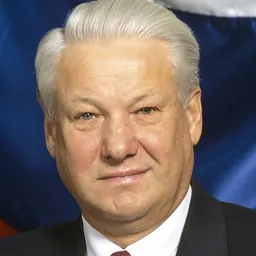
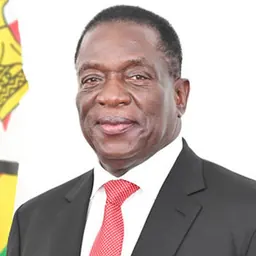


Related people
Same field, nearest in time

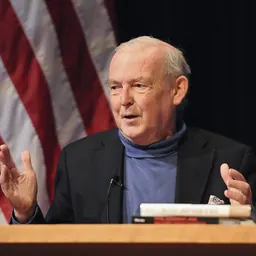
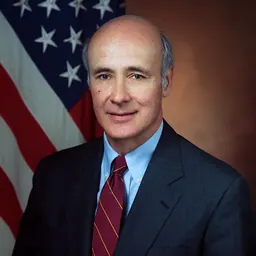
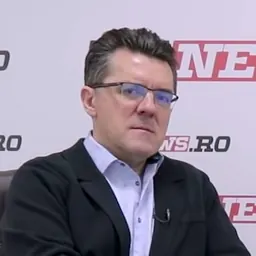

Contemporaries
People whose lives overlapped Sergey Karaganov's
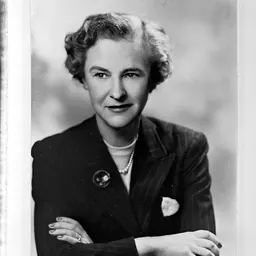

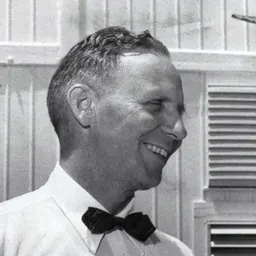
Frequently asked questions
Who is Sergey Karaganov?
Russian geopolitician
When was Sergey Karaganov born?
Sergey Karaganov was born on 12 September 1952 in Moscow.
What is Sergey Karaganov's occupation?
Sergey Karaganov is a geopolitical analyst, politician, political scientist, economist and university teacher.
What nationality is Sergey Karaganov?
Sergey Karaganov is Russian.
Sources & further reading
Cite this page
APA: Biography.guide. (2026). Sergey Karaganov. https://biography.guide/sergey-karaganov/
MLA: "Sergey Karaganov." Biography.guide, https://biography.guide/sergey-karaganov/.
Chicago: "Sergey Karaganov." Biography.guide. https://biography.guide/sergey-karaganov/.
Data last updated: 2026-09-20 · Spot an error? Report a correction.
Page generated 2026-09-27 05:22 UTC