
About Sergei Vasilenko
Lived 1872 – 1956 (aged 83). Sergei Vasilenko was a Russian composer, conductor, musicologist, music educator, professor and conducting.
Sergei Nikiforovich Vasilenko (; – 11 March 1956) was a Russian and Soviet composer, conductor and music teacher whose compositions showed a strong tendency towards mysticism.
Vasilenko was born in Moscow and originally studied law at Moscow State University, but then changed direction and studied at the Moscow Conservatory from 1896 to 1901 as a pupil of Sergei Taneyev and Mikhail Ippolitov-Ivanov. From 1903 to 1904 he was the conductor of a private opera house in Moscow. For several years he was the organiser and conductor of the Historic Concerts of the Russian Musical Society. He then became a professor at the Moscow Conservatory, where his students included Aram Khachaturian, Nikolai Roslavets, Nikolai Rakov and Aarre Merikanto.
Vasilenko was awarded two Orders of the Red Banner of Labour as well as the title People's Artist of the RSFSR. In 1947, he was awarded the Stalin Prize. He died in Moscow in 1956.
Selected works
Opera Skazaniye o grade velikom Kitezhe i tikhom ozere Svetoyare (Tale of the Great City of Kitezh and the Quiet Lake Svetoyar) (1902; originally a cantata, Op. 5) Sïn solntsa (The Son of the Sun), Op. 63 (1929) Khristofor Kolumb (Christopher Columbus), Op. 80 (1933) Buran (The Snow Storm), Op. 98 (1939) Velikiy kanal (The Grand Canal), Op. 101 (1939) Suvorov, Op. 102 (1942)
Ballet In the Rays of the Sun, Op. 17 (1925–26) Noya, Op. 42 (1923) Joseph the Handsome, Op. 50 (1925) Lola, Op. 52 (1926) The Gypsies, Op. 90 (1936; after Alexander Pushkin) The Frog Princess, Op. 103 (1941) Mirandolina
Choral Cantata Legend of the Great City of Kitezh and the Quiet Lake Svetoyar, Op, 5 (later turned into an opera that anticipated Nikolai Rimsky-Korsakov's work on the same subject) Cantata for the 20th Anniversary of the October Revolution, Op. 92 (1937)
Incidental music Euripides' Alcestis (written as a schoolboy) other works
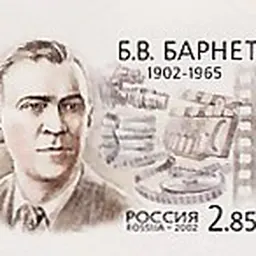
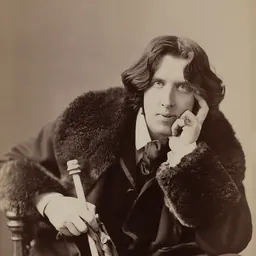
Orchestral Three Bloody Battles, Op. 1 (1900) Epic Poem, Op. 4 (1900–03) Symphony No. 1 in G minor, Op. 10 (1904–06) The Garden of Death, symphonic poem after Oscar Wilde, Op. 13 (1907–08) Sappho, symphonic poem, Op. 14 (1909) Flight of the Witches, symphonic poem, Op. 15 (1908–09) Au soleil, symphonic poem, Op. 17 Fantastic Waltz, Op. 18 (1912) Symphony No. 2 in F major, Op. 22 Suite on lute music of the 14th to 17th centuries, Op. 24 (1914) Zodiac, suite on French themes of the 18th century, Op. 27 (1914) Exotic Suite, Op. 29 (1915–16) Indian Suite, Op. 42bis Chinese Suite, No. 1, Op. 60 (1928) Turkmenian Suite, Op. 68 (1931) Chinese Suite, No. 2, Op. 70 (1931) Merry-go-round, 8 Soviet dances, Op. 73 (1932) The Soviet East, suite, Op. 75 (1932) Red Army Rhapsody, Op. 77 (1932) film music for Boris Barnet's Outskirts (1933) Slavonic Rhapsody (1937)
Concertante Violin Concerto in D minor, Op. 25 (1910–13) Concerto for symphony orchestra and brass band (1928) Suite on Russian Folk Themes, balalaika and accordion (1928) Concerto for Trumpet and Orchestra, Op. 113 Piano Concerto in F-sharp minor, Op. 128
Chamber String Quartet in A, Op. 3 (c. 1901) Sonata in D minor for viola and piano, Op. 46 (1923); version for violin and piano (1955) String Quartet in E minor, Op. 58 (c. 1928) Quartet on Turkmenian Themes, for flute, oboe (English horn), clarinet, bassoon and percussion ad lib., Op. 65 (1932) Piano Trio in A, Op. 74 (1932) Japanese Suite for oboe, clarinet, bassoon, xylophone and piano, Op. 66a (1938) Chinese Sketches, woodwind, Op. 78 (1938) Quartet on American Themes, woodwind, Op. 79 (1938)
Military band March of the Red Army, Op. 64 (1929) Fantasy on Revolutionary Songs of the West, Op. 71 (1931)
Other songs (including settings of Māori, Sinhalese, Indian and Japanese tunes) folksong arrangements (including Negro and Turkmenian melodies) piano pieces
Recordings Sergei Vasilenko: Viola and Piano Music (Complete) - Viola Sonata, Op. 46 / Lullaby / 4 Pieces on Themes of Lute Music of the 16-17th Centuries, Op. 35 / Sleeping River / Oriental Dance, Op. 47 / Suite Zodiakus I.A.S, Op. 27 / 4 Pieces (1953) - Elena Artamonova (viola) and Nicholas Walker (piano). Toccata Classics TOCC0127, released 2011 "The Russian Connection" - Hexagon Ensemble. Etcetera Records KTC1246, released 2001 - includes Sergei Vasilenko: Quartet on Turkmenian Themes Op.65
Don’t just read it —
keep it.
Full-length biographies made to live with: read them, listen on the way to work, watch them tonight.
- E-book
- Audio
- Video
Instant download · yours to keep · every purchase keeps this site free
Important facts
People in Sergei Vasilenko's life
Named in this biography and alive at the same time



Related people
Same field, nearest in time


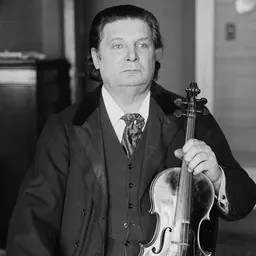


Contemporaries
People whose lives overlapped Sergei Vasilenko's
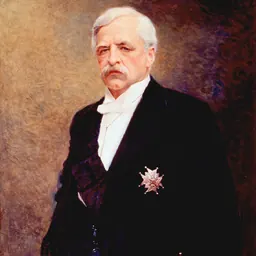
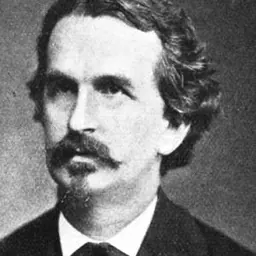
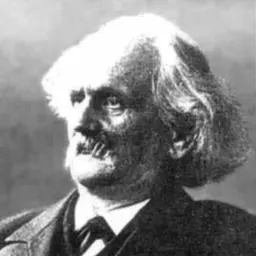

Frequently asked questions
Who was Sergei Vasilenko?
Russian and Soviet composer (1872–1956)
When was Sergei Vasilenko born?
Sergei Vasilenko was born on 30 March 1872 in Moscow.
When did Sergei Vasilenko die?
Sergei Vasilenko died on 11 March 1956 in Moscow.
What was Sergei Vasilenko's occupation?
Sergei Vasilenko was a composer, conductor, musicologist, music educator, professor and conducting.
What nationality was Sergei Vasilenko?
Sergei Vasilenko was Russian.
Sources & further reading
Cite this page
APA: Biography.guide. (2026). Sergei Vasilenko. https://biography.guide/sergei-vasilenko/
MLA: "Sergei Vasilenko." Biography.guide, https://biography.guide/sergei-vasilenko/.
Chicago: "Sergei Vasilenko." Biography.guide. https://biography.guide/sergei-vasilenko/.
Data last updated: 2026-09-20 · Spot an error? Report a correction.
Page generated 2026-09-27 05:31 UTC