
About Sergei Novikov
Lived 1938 – 2024 (aged 86). Sergei Novikov was a Russian mathematician and university teacher, known for Adams–Novikov spectral sequence, Krichever–Novikov algebras and Morse–Novikov theory.
Sergei Petrovich Novikov (Russian: Серге́й Петро́вич Но́виков ; 20 March 19386 June 2024) was a Soviet and Russian mathematician, noted for work in both algebraic topology and soliton theory. He became the first Soviet mathematician to receive the Fields Medal in 1970.
Biography Novikov was born on 20 March 1938 in Gorky, Soviet Union (now Nizhny Novgorod, Russia). In 1964, he received the Moscow Mathematical Society Award for young mathematicians In 1965, he defended a dissertation for the Doctor of Science in Physics and Mathematics degree there.
Career In 1966, Novikov became a corresponding member of the Academy of Sciences of the Soviet Union.
Novikov also carried out important research in geometric topology, being one of the pioneers with William Browder, Dennis Sullivan, and C. T. C. Wall of the surgery theory method for classifying high-dimensional manifolds. He proved the topological invariance of the rational Pontryagin classes, and posed the Novikov conjecture. From about 1971, he moved to work in the field of isospectral flows, with connections to the theory of theta functions. Novikov's conjecture about the Riemann–Schottky problem (characterizing principally polarized abelian varieties that are the Jacobian of some algebraic curve) stated, essentially, that this was the case if and only if the corresponding theta function provided a solution to the Kadomtsev–Petviashvili equation of soliton theory. This was proved by Takahiro Shiota (1986), following earlier work by Enrico Arbarello and Corrado de Concini (1984), and by Motohico Mulase (1984).
Awards and honours In 1967, Novikov received the Lenin Prize. He is one of just eleven mathematicians who received both the Fields Medal and the Wolf Prize. In 2020, he received the Lomonosov Gold Medal of the Russian Academy of Sciences.
In 1981, he was elected a full member of the USSR Academy of Sciences (Russian Academy of Sciences since 1991).
He received honorary doctorates from the University of Athens (1988) and University of Tel Aviv (1999).
Writings
with Dubrovin and Fomenko: Modern geometry- methods and applications, Vol.1-3, Springer, Graduate Texts in Mathematics (originally 1984, 1988, 1990, V.1 The geometry of surfaces and transformation groups, V.2 The geometry and topology of manifolds, V.3 Introduction to homology theory) Topics in Topology and mathematical physics, AMS (American Mathematical Society) 1995 Integrable systems – selected papers, Cambridge University Press 1981 (London Math. Society Lecture notes)
with V. I. Arnold as editor and co-author: Dynamical systems, 1994, Encyclopedia of mathematical sciences, Springer Topology I: general survey, V. 12 of Topology Series of Encyclopedia of mathematical sciences, Springer 1996; 2013 edition Solitons and geometry, Cambridge 1994 as editor, with Buchstaber: Solitons, geometry and topology: on the crossroads, AMS, 1997 with Dubrovin and Krichever: Topological and Algebraic Geometry Methods in contemporary mathematical physics V.2, Cambridge , My generation in mathematics, Russian Mathematical Surveys V.49, 1994, p. 1
Don’t just read it —
keep it.
Full-length biographies made to live with: read them, listen on the way to work, watch them tonight.
- E-book
- Audio
- Video
Instant download · yours to keep · every purchase keeps this site free
Important facts
more
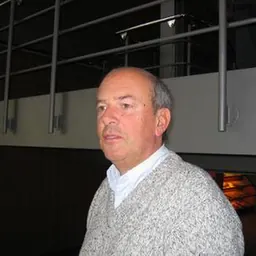
Novikov–Shubin invariant, Novikov–Veselov equation, Wess–Zumino–Witten modelPeople in Sergei Novikov's life
Named in this biography and alive at the same time




Related people
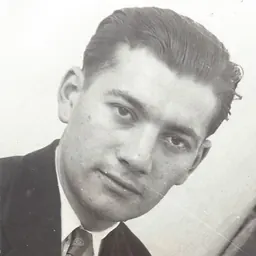
Same field, nearest in time

Contemporaries
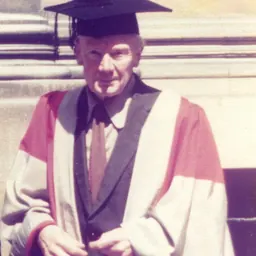
People whose lives overlapped Sergei Novikov's


Frequently asked questions
Who was Sergei Novikov?
Soviet and Russian mathematician (1938–2024)
When was Sergei Novikov born?
Sergei Novikov was born on 20 March 1938 in Nizhny Novgorod.
When did Sergei Novikov die?
Sergei Novikov died on 6 June 2024 in Moscow.
What was Sergei Novikov's occupation?
Sergei Novikov was a mathematician and university teacher.
What was Sergei Novikov known for?
Sergei Novikov was known for Adams–Novikov spectral sequence, Krichever–Novikov algebras, Morse–Novikov theory, Novikov conjecture, Novikov ring and Novikov's compact leaf theorem.
What nationality was Sergei Novikov?
Sergei Novikov was Russian.
Sources & further reading
· DBpedia: Sergei Novikov (mathematician)
Cite this page
APA: Biography.guide. (2026). Sergei Novikov. https://biography.guide/sergei-novikov/
MLA: "Sergei Novikov." Biography.guide, https://biography.guide/sergei-novikov/.
Chicago: "Sergei Novikov." Biography.guide. https://biography.guide/sergei-novikov/.
Data last updated: 2026-09-20 · Spot an error? Report a correction.
Page generated 2026-09-27 05:15 UTC