
About Septima Poinsette Clark
Lived 1898 – 1987 (aged 89). Septima Poinsette Clark was an American educator.
Septima Poinsette Clark (May 3, 1898 – December 15, 1987) was an African American educator and civil rights activist. Clark developed the literacy and citizenship workshops that played an important role in the drive for voting rights and civil rights for African Americans in the Civil Rights Movement. Septima Clark's work was commonly under-appreciated by Southern male activists. Martin Luther King Jr. commonly referred to Clark as "The Mother of the Movement". Clark's argument for her position in the Civil Rights Movement was one that claimed "knowledge could empower marginalized groups in ways that formal legal equality couldn't." Her father, Peter Poinsette, was enslaved at birth on Joel Roberts Poinsett's plantation, called the White House, near Georgetown. Joel Roberts Poinsett was a distinguished US politician of his time and the namesake of the poinsettia plant. Peter was a house servant to Joel and his main task was taking the children to and from school each day. After slavery, Peter found a job working on a ship in the Charleston harbor. During one of his travels, he went to Haiti and it was then that Peter met Victoria, Clark's mother. The couple got married in Jacksonville, Florida, and then moved back to Charleston.
Clark's first educational experience was in 1904 at age six, when she started attending Mary Street School. All Clark did at this school was sit on a set of bleachers with a hundred other six-year-olds, learning nothing. Clark's mother quickly removed her from the school. An elderly woman across the street from their house was teaching girls, so Clark learned to read and write there. Due to Clark's poor financial status, she watched the woman's children every morning and afternoon in return for her tuition. At this time there was not a high school in Charleston for blacks, however, in 1914 a school opened for blacks in 6th, 7th, 8th grade. After sixth grade, she took a test and went on to ninth grade at the Avery Institute. All of the teachers were white women. In 1914, black teachers were hired and this brought much controversy to the city, which Clark later took part in through the NAACP. As the teaching principal, Clark made $35 per week, while the other teacher made $25. Meanwhile, the white school across the street had only three students, and the teacher who worked there received $85 per week. It was her first-hand experience with these inequalities that led Clark to become an active proponent for pay equalization for teachers. In 1919 her pay equalization work brought her into the movement for civil rights. In an interview with Robert Penn Warren for the book Who Speaks for the Negro?, Clark explains how these experiences with her education, as well as her early experiences with growing up in a racist Charleston and teaching in the slums, prompted her to want to work towards civil rights.
NAACP involvement Clark first heard of the National Association for the Advancement of Colored People (NAACP) while she was teaching on John's Island from 1916 to 1919. There was no NAACP chapter on John's Island, but a meeting was held in which various preachers came and spoke about what the NAACP was and what exactly it was trying to do. The superintendent was in attendance to collect dues and it was then that she decided to join the organization.
In 1918, Clark returned to Charleston to teach sixth grade at Avery Normal Institute, a private academy for black children. She joined the local branch of the NAACP,
The late-1940s proved to be a difficult time for Clark as she stood up for the NAACP's aim of equalization to integration against many other members and activists.
Marriage and children While teaching at Avery from 1919 to 1920, Clark met Nerie David Clark. He worked as a warden cook on a submarine in the navy during World War I. In late 1920, she went to teach in McClellanville until 1922. She and Nerie wrote letters back and forth and dated for approximately three years. In 1923, they were married in McClellanville and then shortly moved to Hickory, North Carolina, Nerie's hometown. Clark's mother was disgraced by her marriage. Victoria believed that to marry any man outside of the state is to marry a stranger. She refused to have her in-laws for dinner or for any occasion. The marriage severed Victoria and Septima's relationship.
While living in Hickory with Nerie's family, Clark became aware of the many cultural and ideal differences they had. They grew up in different worlds; a mountain man and a low-country girl. In Hickory, Clark attended the same church as Nerie's family, which was an African Methodist church. She found this church to be much more of a community than her church in Charleston, the United Methodist Church. Throughout Clark's religious journey in life, she found that there are many ways to serve God, rather than only one correct way. Clark got homesick, so they moved back to Charleston, where she taught at Promise Land again from 1926 to 1929.
In Charleston, they had their first child, who died. Clark viewed the death of her baby as a punishment to her because she married a man not from South Carolina. Her mother was not sympathetic and refused to help her; however, her father was friendlier towards her. To get over her lost baby, she took a job with a white woman for a summer. They stayed in the mountains for the summer and the woman was helpless, which gave Clark optimism and hope. She then moved to Columbia and began teaching in 1929. It was in Columbia she got much more involved in civic activities. Between 1942 and 1945, she received a bachelor's degree from Benedict College, Columbia, S.C., and a master's degree from Hampton (Virginia) Institute (now Hampton University). While earning her bachelor's degree, she took classes in the morning, taught from noon to five, and took more classes in the evenings. She was earning $62.50 per month in college, and every summer she traveled to Maine to earn more money. The NAACP in Columbia, SC, had approximately 800 members and all were black. The biggest NAACP impact during Clark's time in Columbia was that they sponsored a suit that won the equalization of teacher salaries. It was a huge win for the NAACP. In 1956, Clark obtained the position of vice president of the Charleston NAACP branch.
That same year, the South Carolina legislature passed a law banning city or state employees from being involved with civil rights organizations. Clark believed that a combination of relations, such as social and power relations, were a major contributor to schooling. Before long she was teaching literacy courses, drawing on her experience on John's Island. "In a compressed week's workshop, Clark promised to turn sharecroppers and other unschooled Negros into potential voters".
Highlander was one of the few interracial schools in the South at the time and Clark prospered as a teacher there. After being fired and unwelcomed in her hometown, Clark found Highlander to be a great community. In 1959, while she was teaching at Highlander she was arrested for allegedly "possessing whiskey"; however, these charges were later dropped and seen as false. Clark also served as Highlander's director of workshops, recruiting teachers and students. One of the participants in her workshops was Rosa Parks. A few months after participating in the workshops Parks helped to start the Montgomery bus boycott. Many other women who took part in the Montgomery bus boycott also attended Highlander and participated in Clark's workshops. Upon seeing the success of Clark, Ella Baker traveled to Highlander as a representative of SCLC and observed to see if Clark's program could be incorporated into SCLC's Crusade for Citizenship.
She was not only teaching literacy, but also citizenship rights. Clark's goals for the schools were to instill both personal and cultural pride, literacy, and a sense of one's citizenship rights. She recruited the rural communities to get involved with the movement. The citizenship schools are also seen as a form of support to Martin Luther King Jr. in the nonviolent Civil Rights Movement.
The project was a response to legislation in Southern states which required literacy and interpreting various portions of the US Constitution in order to be allowed to register to vote. These laws were used to disenfranchise black citizens. Citizenship Schools were based on the adult literacy programs Clark and Robinson had developed at Highlander. They required a week's worth of training in a program that was ultimately designed by Clark. Septima Clark hired her cousin Bernice Robinson, to be the first teacher. Bernice was also a Highlander alumna. In addition to literacy, Citizenship Schools also taught students to act collectively and protest against racism.
The leadership schools ultimately spread to a number of Southern states, growing so large that, upon the recommendation of Myles Horton and Clark, the program was transferred to the Southern Christian Leadership Conference (SCLC), in 1961 though initially Martin Luther King Jr. was hesitant about the idea. Clark claimed that women being treated unequally was "one of the greatest weaknesses of the civil rights movement." Clark retired from active work with the SCLC in 1970. She later sought reinstatement of the pension and back salary that had been canceled when she was dismissed as a teacher in 1956, which she won. She was later to serve two terms on the Charleston County School Board.
Death and legacy In 1978, Clark was awarded an honorary doctorate of humane letters by the College of Charleston. U.S. President Jimmy Carter awarded Clark a Living Legacy Award in 1979. In 1987, her second autobiography, Ready from Within: Septima Clark and the Civil Rights Movement (Wild Trees Press, 1986) won the American Book Award.
Septima P. Clark died on December 15, 1987. In a eulogy presented at the funeral, the president of the Southern Christian Leadership Conference (SCLC) described the importance of Clark's work and her relationship to the SCLC. Reverend Joseph Lowery asserted that "her courageous and pioneering efforts in the area of citizenship education and interracial cooperation" won her SCLC's highest award, the Drum Major for Justice Award. She is buried at Old Bethel United Methodist Church Cemetery in Charleston, South Carolina.
Clark had major relations to other black activists of the Civil Rights Movement, such as Booker T. Washington and W. E. B. DuBois. Washington and Clark both emphasized the importance of self-improvement before the importance of institutional reforms. DuBois and Clark agreed on the emphasis of education as the most important approach to the civil rights movement.
Septima Clark Public Charter School in Washington, DC, is named in her honor. Septima P. Clark Parkway (also known as the Septima P. Clark Expressway) and Septima P. Clark Memorial Park in Charleston, S.C. are named in her honor.
Minor planet 6238 Septimaclark, discovered by Eleanor Helin is named in her honor. The official naming citation was published by the Minor Planet Center on 8 November 2019 .
In 2020, Clark was honored by South Carolina by being featured on the reverse of the American Innovation series of $1 coins.
Quotes I have a great belief in the fact that whenever there is chaos, it creates wonderful thinking. I consider chaos a gift.
Don't ever think that everything went right. It didn't.
This country was built up from women keeping their mouths shut.
I never felt that getting angry would do you any good other than hurt your own digestion- keep you from eating, which I liked to do.
Autobiographies Septima Clark wrote two autobiographies during her lifetime, in which she recorded her lifelong experiences. The first, written in 1962, was named Echo In My Soul. It is a combination of her life story, as well as her work at the Highlander Folk School. The work also discussed her views concerning the Jim Crow laws and the legitimacy of the Civil Rights Movement. Clark's second autobiography, Ready from Within (1979), was an oral recollection of lifelong experiences.
Footnotes
Don’t just read it —
keep it.
Full-length biographies made to live with: read them, listen on the way to work, watch them tonight.
- E-book
- Audio
- Video
Instant download · yours to keep · every purchase keeps this site free
Important facts
People in Septima Poinsette Clark's life
Named in this biography and alive at the same time




Related people
Same field, nearest in time


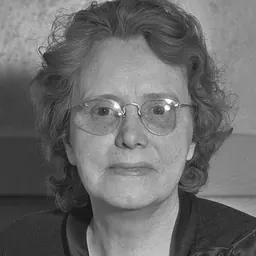
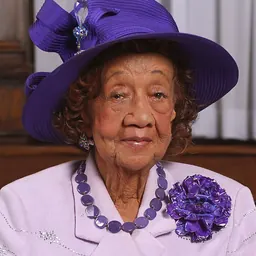
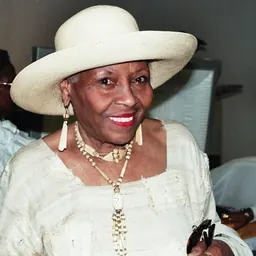
Contemporaries
People whose lives overlapped Septima Poinsette Clark's

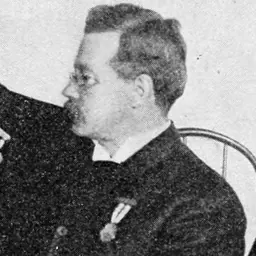


Frequently asked questions
Who was Septima Poinsette Clark?
American activist (1898-1987)
When was Septima Poinsette Clark born?
Septima Poinsette Clark was born on 3 May 1898 in Charleston.
When did Septima Poinsette Clark die?
Septima Poinsette Clark died on 15 December 1987 in Johns Island.
What was Septima Poinsette Clark's occupation?
Septima Poinsette Clark was an educator.
What nationality was Septima Poinsette Clark?
Septima Poinsette Clark was American.
Sources & further reading
· Wikipedia: Septima Poinsette Clark
· DBpedia: Septima Poinsette Clark
Cite this page
APA: Biography.guide. (2026). Septima Poinsette Clark. https://biography.guide/septima-poinsette-clark/
MLA: "Septima Poinsette Clark." Biography.guide, https://biography.guide/septima-poinsette-clark/.
Chicago: "Septima Poinsette Clark." Biography.guide. https://biography.guide/septima-poinsette-clark/.
Data last updated: 2026-09-20 · Spot an error? Report a correction.
Page generated 2026-09-27 05:10 UTC