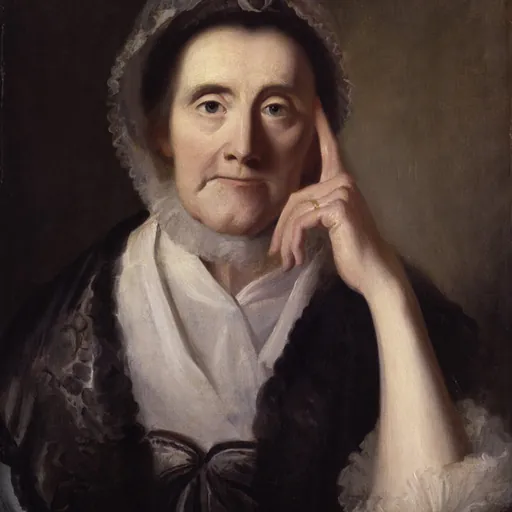
About Selina Hastings, Countess of Huntingdon
Lived 1707 – 1791 (aged 83). Selina Hastings, Countess of Huntingdon was a British theologian.
Selina Hastings, Countess of Huntingdon ( Shirley; 24 August 1707 – 17 June 1791) was an English Methodist leader who played a prominent part in the religious revival of the 18th century and the Methodist movement in England and Wales. She founded an evangelical branch in England and Sierra Leone, known as the Countess of Huntingdon's Connexion.
She helped finance and guide early Methodism and was the first principal of Trevecca College, Wales, established in 1768 to train Methodist ministers. With the construction of 64 chapels in England and Wales, plus mission work in colonial America, she is estimated to have spent over £100,000 on these activities, a huge sum when a family of four could live on £31 per year.
A regular correspondent of George Whitefield and John Wesley, she is also remembered for her adversarial relationships with other Methodists.
Personal life Selina Shirley was born in August 1707 at Astwell Castle, Northamptonshire, second daughter of Washington Shirley, 2nd Earl Ferrers, and Mary Levinge, daughter of Sir Richard Levinge, 1st Baronet. The family moved to Staunton Harold Hall, in Leicestershire when she was 17 and in 1728, she married Theophilus Hastings, 9th Earl of Huntingdon, who lived at nearby Donington Hall. This was arranged by his elder half-sister, Lady Elizabeth Hastings, a well-known religious philanthropist and supporter of women's education.
She gave birth to seven children in the first ten years of the marriage, four of whom died young; her husband died in 1746, while she allegedly suffered from poor health. The family were interested in politics, religion and the arts, and commissioned portraits from fashionable artists of the day.
Foundling Hospital On 21 April 1730, she became one of the 21 aristocratic women whose support Thomas Coram would enlist in his efforts to establish the Foundling Hospital. Securing the support of notably pious women such as Lady Huntingdon as signatories to the Ladies' Petition for the Establishment of the Foundling Hospital lent his endeavour not only respectability but cachet; many of the women were lending their signature where their husbands had previously refused, making the Foundling Hospital 'one of the most fashionable charities of the day.' Selina would later provide the Coram with 'financial support for fees, stamp duties, vellum, seals and others expenses [sic] connected with the presentation of the Foundling Hospital Charter for the King's signature.'
The petition was presented to King George II in 1735.
Religious revival In 1739, Lady Huntingdon joined the first Methodist society in Fetter Lane, London. Sometime after the death of her husband in 1746, she threw in her lot with John Wesley and George Whitefield in the work of the great revival. According to Schlenther, it was Wesley who first attracted her to Methodism, noting a visit to his chapel in Donnington (Wood) in East Shropshire, in which a rare exception to egalitarian principles was made and she was offered a private pew. Whitefield became her personal chaplain, and, with his assistance, following problems put in her path by the Anglican clergy from whom she had preferred not to separate, she founded the "Countess of Huntingdon's Connexion", a Calvinistic movement within the Methodist church.
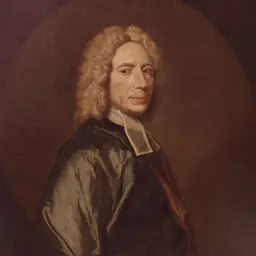
In the earlier part of her life Isaac Watts, Mary, Lady Abney, Philip Doddridge, and Augustus Montague Toplady were among her friends. Lady Anne Erskine (eldest daughter of the 10th Earl of Buchan), was her closest friend and companion for many years in the latter part of Lady Huntingdon's life.
Chapel building In 1748, the Countess gave Whitefield a scarf as her chaplain, and in that capacity, he preached in one of her London houses, in Park Street, Westminster, to audiences that included Chesterfield, Walpole and Bolingbroke. She held large dinner parties at which Whitefield preached to the gathered dignitaries after they had eaten.
Moved to further the religious revival in a Calvinistic manner compatible with Whitefield's work, she was responsible for founding 64 chapels and contributed to the funding of others, insisting they should all subscribe to the doctrines of the Church of England and use only the Book of Common Prayer. Amongst these were chapels at Brighton (1761), Bath (1765), Worcester (c. 1766), Tunbridge Wells (1769), several in Wales, and a small number in London including founding one adjacent to her London home at Spa Fields, Clerkenwell/Finsbury (which resulted in a case being brought before the ecclesiastical courts by the vicar of the parish church of St James). She partly funded the independent Surrey Chapel, Southwark of Rowland Hill. She appointed ministers to officiate in them, under the impression that as a peeress she had a right to employ as many chaplains as she pleased. In her chapel at Bath (now owned by the Bath Preservation Trust and housing the Building of Bath Collection which is open to the public), there was a curtained recess dubbed "Nicodemus' Corner" where bishops sat incognito to hear services.
Trevecca College and later history
Following the expulsion of six Methodist students from St Edmund Hall, Oxford in 1768 the Countess founded a ministers' training college at Trefeca (Trevecca) near Talgarth, in Mid Wales, not far from Brecon. George Whitefield preached at the opening ceremony. The college moved to Hertfordshire in 1792, and was renamed Cheshunt College. It moved to Cambridge in 1906. Cheshunt College, Cambridge merged with Westminster College, Cambridge, the training college of the Presbyterian Church of England (and after 1972, of the United Reformed Church), in 1967.
In 1842, the Presbyterian Church of Wales opened a college at Trefeca which is approximately a quarter of a mile south of the site of the Countess's college (which is now a farmhouse).
Foreign missions
The Countess had an interest in the Thirteen Colonies, and issues related to Native Americans and enslaved Africans there. During the mid-1760s, she met and befriended Mohegan preacher Samson Occom, then on a tour of England to raise funds for Indian missions in the colonies.
She became a slave owner herself in 1770 when she inherited Whitefield's overseas estates in Georgia and South Carolina, including the Bethesda Home for Boys. On Whitefield's advice, she bought additional slaves for the orphanage's benefit.
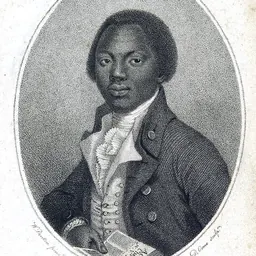
The Countess promoted the writings and freedom of formerly enslaved Africans who espoused religious views compatible with her own. For instance, she supported publication of memoirs, or slave narratives, by Ukawsaw Gronniosaw and Olaudah Equiano.
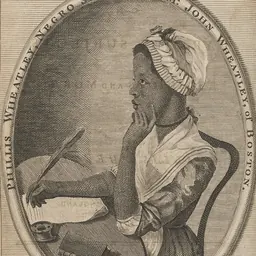
She also used her influence in the world of the arts to secure publication for Phillis Wheatley's 1773 volume of poems, Poems on Various Subjects, Religious and Moral by Phillis Wheatley, Negro Servant to Mr. John Wheatley, of Boston, in New England, which was dedicated to the Countess. Because the Countess was ill when Wheatley visited London, the two women never met. Several pieces of their correspondence are extant. with others in Sierra Leone.
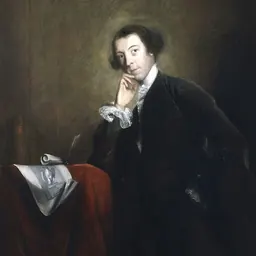
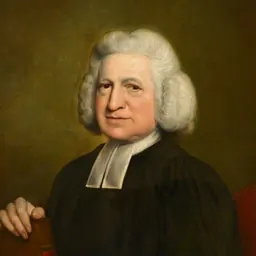
In her will, she requested no biography of her should be written and none was attempted until 90 years after her death. Obituaries and tributes were written: Horace Walpole described her as "the patriarchess of the Methodists", while the Roman Catholic Cardinal John Henry Newman commented, "She devoted herself, her means, her time, her thoughts, to the cause of Christ. She did not spend her money on herself; she did not allow the homage paid to her rank to remain with herself".
Huntingdon College, in Montgomery, Alabama, is a coeducation liberal arts college named after the Countess of Huntingdon to honour her contributions to Methodism.
Huntingdon Street in Savannah, Georgia, is likewise named after her in recognition of her association with Whitefield and John and Charles Wesley in their apostolic works in the Colony of Georgia.
Lady Huntingdon Lane is at the Givens Estates in Asheville, North Carolina, a retirement community affiliated with the United Methodist Church.
Lady Huntingdon Road is on the grounds of the United Methodist Assembly, Lake Junaluska, NC, located near the World Methodist Center.
Huntingdon, Pennsylvania is the county seat of Huntingdon County, Pennsylvania (founded September 20, 1787), both of which are named for her.
Family By her marriage to Theophilus Hastings, 9th Earl of Huntingdon, she had seven children. Of those, three died in childhood and the death date of a fourth is unknown. Her longest surviving children were:
Francis, Lord Hastings (1729–1789), later 10th Earl of Huntingdon, died unmarried and without issue. Lady Elizabeth Hastings (1731–1808), Baroness Hastings, the only child to survive her mother, married John Rawdon, 1st Earl of Moira. Lady Selina Hastings (1737–1763), died when engaged to Lt-Col George Hastings, without issue.
Don’t just read it —
keep it.
Full-length biographies made to live with: read them, listen on the way to work, watch them tonight.
- E-book
- Audio
- Video
Instant download · yours to keep · every purchase keeps this site free
Important facts
People in Selina Hastings, Countess of Huntingdon's life
Named in this biography and alive at the same time
Related people
Same field, nearest in time
Contemporaries
People whose lives overlapped Selina Hastings, Countess of Huntingdon's

Frequently asked questions
Who was Selina Hastings, Countess of Huntingdon?
British countess (1707-1791)
When was Selina Hastings, Countess of Huntingdon born?
Selina Hastings, Countess of Huntingdon was born on 24 August 1707 in Ashby-de-la-Zouch.
When did Selina Hastings, Countess of Huntingdon die?
Selina Hastings, Countess of Huntingdon died on 17 June 1791 in Spa Fields.
What was Selina Hastings, Countess of Huntingdon's occupation?
Selina Hastings, Countess of Huntingdon was a theologian.
What nationality was Selina Hastings, Countess of Huntingdon?
Selina Hastings, Countess of Huntingdon was British.
Sources & further reading
· Wikipedia: Selina Hastings, Countess of Huntingdon
· DBpedia: Selina Hastings, Countess of Huntingdon
Cite this page
APA: Biography.guide. (2026). Selina Hastings, Countess of Huntingdon. https://biography.guide/selina-hastings-countess-of-huntingdon/
MLA: "Selina Hastings, Countess of Huntingdon." Biography.guide, https://biography.guide/selina-hastings-countess-of-huntingdon/.
Chicago: "Selina Hastings, Countess of Huntingdon." Biography.guide. https://biography.guide/selina-hastings-countess-of-huntingdon/.
Data last updated: 2026-10-02 · Spot an error? Report a correction.
Portrait: Wikimedia Commons · author & licence
Page generated 2026-10-05 04:45 UTC