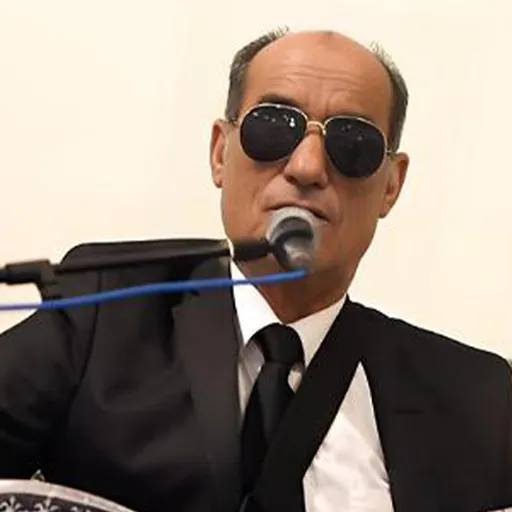
About Seid Gebarî
Lived 1956 – 2020 (aged 64). Seid Gebarî was a Syrian singer and musician.
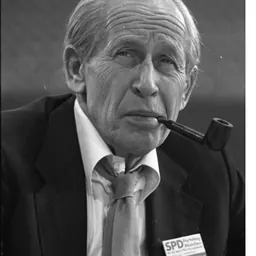
Said Gabari (Kurdish: Seîd Gabarî; 13 April 1956 – 4 May 2020) was a Syrian Kurdish singer, musician and composer. He was known for performing Kurdish folk, patriotic and revolutionary songs and for setting poems by Kurdish poets such as Cigerxwîn and Seydayê Tîrêj to music. His career spanned more than five decades and was closely associated with Kurdish music and the preservation of Kurdish cultural heritage.
Early life Said Gabari was born on 13 April 1956 in the village of Xirbê Kejê in the Hasakah Governorate of northeastern Syria.
According to Welat TV, Gabari's musical talent became apparent when he was about eight years old. His mother, who sang Kurdish folk songs, influenced his early interest in music, and the two memorised traditional songs together. He later met the Kurdish poets Cigerxwîn and Seydayê Tîrêj, who supported his artistic development and whose poems he subsequently performed and set to music.
Musical career and political repression Gabari's repertoire included Kurdish folk songs as well as patriotic and revolutionary songs. His work was closely connected with Kurdish cultural and political themes. Welat TV reported that he performed national, folk and popular songs in Qamishli and Amuda during the early years of his career.
In 1970, Gabari was arrested during a concert in Qamishli for singing revolutionary songs. According to accounts by Kurdistan24 and Welat TV, he was tortured following his arrest. He continued to perform Kurdish songs despite political repression.
Kurdistan24 reported that Gabari spent years in prisons in different parts of the Kurdish region. In a 2015 interview with The Christian Science Monitor, he was described as a "Peshmerga bard" and spoke about his experiences of imprisonment and his musical activities.
Albums Êşa Gel, Ses Media, 1995.
Among the album's better-known songs are Dîlber, Gel Namire, Derdê Gelê Min Dijwar E, Du Şivana, Torîn, Li Yarê Ra, Payîzok and Lo Li Pismamo.
Death In March 2020, Gabari travelled from Germany to the Kurdistan Region of Iraq. After completing a period of quarantine during the COVID-19 pandemic, his health deteriorated and he was admitted to a hospital in Erbil.
Gabari died on 4 May 2020 at a hospital in Erbil, aged 64, after suffering from lung cancer. He was buried at the Mala Omar cemetery near Erbil.
Legacy Gabari is remembered in Kurdish media as an important singer and cultural figure from Syrian Kurdistan. His work contributed to the preservation and dissemination of Kurdish folk music and Kurdish-language songs. Welat TV described his career as spanning more than five decades and highlighted his role in preserving Kurdish folklore and history.
Don’t just read it —
keep it.
Full-length biographies made to live with: read them, listen on the way to work, watch them tonight.
- E-book
- Audio
- Video
Instant download · yours to keep · every purchase keeps this site free
Important facts
People in Seid Gebarî's life
Named in this biography and alive at the same time

Related people
Same field, nearest in time




Contemporaries
People whose lives overlapped Seid Gebarî's

Frequently asked questions
Who was Seid Gebarî?
Kurdish musician and singer
When was Seid Gebarî born?
Seid Gebarî was born on 13 April 1956.
When did Seid Gebarî die?
Seid Gebarî died on 4 May 2020.
What was Seid Gebarî's occupation?
Seid Gebarî was a singer and musician.
What nationality was Seid Gebarî?
Seid Gebarî was Syrian.
Sources & further reading
Cite this page
APA: Biography.guide. (2026). Seid Gebarî. https://biography.guide/seid-gebari/
MLA: "Seid Gebarî." Biography.guide, https://biography.guide/seid-gebari/.
Chicago: "Seid Gebarî." Biography.guide. https://biography.guide/seid-gebari/.
Data last updated: 2026-09-20 · Spot an error? Report a correction.
Portrait: Wikimedia Commons · author & licence
Page generated 2026-09-27 04:58 UTC