
About Šefket Kurt
Lived 1879 – 1963 (aged 83–84). Šefket Kurt was a Yugoslav and Bosnian mufti and christian minister.
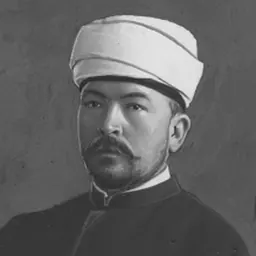
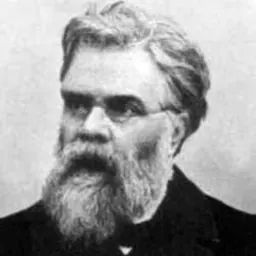
Muhamed Šefket ef. Kurt (1879 – 21 June 1963) was a Bosnian cleric, mufti of the cities of Banja Luka and Tuzla. He is credited with saving the lives of hundreds of Serbs in Tuzla during World War II.
Biography Muhamed Šefket Kurt was born in Travnik, Bosnia and Herzegovina, then a part the Austro-Hungarian Empire in 1879 to ethnic Bosniak parents.
Kurt finished the mekteb and began studying in the madrasa in front of his father Fadil (1845–1893). When his father, died 14 year old Muhamed Šefket went from Travnik to Mostar to his paternal grandfather Ahmet Kurt, an Islamic theologian, where he finished his education and listened to lectures by the famous Mostar scholar Ali Fehmi ef. Džabić. In 1895, after the death of his grandfather Ahmet, he went to Sarajevo and enrolled in the Kuršumlija Madrasa, from which he went to study in Istanbul a year later. He studied there for a full ten years and went to Damascus for the purpose of learning the Arabic language. Upon his return to Bosnia and Herzegovina in 1908, he was appointed imam and hatib of Hajji Ali-beg's mosque and muderis of his madrasa in Travnik.
He lived with his family in Travnik until 1914 when he moved to Banja Luka in 1914, where he was appointed mufti. He arrived in Tuzla in 1925 and remained mufti until 1933, when he was elected a member of the Ulema Majlis in Sarajevo. He retired in 1936.
World War II At the beginning of World War II in April 1941, 108 of the most prominent Sarajevo Bosniaks adopted a resolution stating the difficult situation and persecution of the Serb population and demanding that it be stopped. Similar resolutions were passed in Banja Luka, Prijedor and Bijeljina. In Mostar such a resolution was won on 21 October 1941. On 11 December 1941, the Tuzla Resolution was passed. Her original text was written in an extremely sharp tone, so it was decided not to send the text, but to send a delegation of eleven Bosniaks and three Croats to Zagreb and to verbally protest in the government of the Axis-aligned Independent State of Croatia over the crime. The resolutions themselves did not achieve much success, and persecutions, killings and torture continued.
On Orthodox Christmas Eve, 6 January 1942, Ustaša authorities in occupied Tuzla intended to demolish the Church of the Dormition of the Theotokos. Along with the demolition of the Tuzla Orthodox Church, the Ustašas intended to carry out a mass execution of Serb civilians on Christmas Eve.
This information was heard by the mufti of Tuzla Muhamed Šefket ef. Kurt, who with a group of prominent residents of city, requested an urgent meeting with the German commander of the Tuzla and energetically demanded that he prevent the crime. When the Germans heard of the extent of Bosniak opposition to such actions, they issued a written order prohibiting the Ustašas from taking any retaliatory measures without they approval. Two of their sons were killed while fighting with the Yugoslav Partisans in the World War II and a third son was killed by the Partisans near the end of the war out of unknown reasons. A fourth son was declared an "enemy of the people" by the new communist government of the Yugoslavia and imprisoned for 20 years.
Don’t just read it —
keep it.
Full-length biographies made to live with: read them, listen on the way to work, watch them tonight.
- E-book
- Audio
- Video
Instant download · yours to keep · every purchase keeps this site free
Important facts
Related people
Same field, nearest in time




Contemporaries
People whose lives overlapped Šefket Kurt's

Frequently asked questions
Who was Šefket Kurt?
Bosniak mufti
When was Šefket Kurt born?
Šefket Kurt was born in 1879 in Travnik.
When did Šefket Kurt die?
Šefket Kurt died on 21 June 1963 in Tuzla.
What was Šefket Kurt's occupation?
Šefket Kurt was a mufti and christian minister.
What nationality was Šefket Kurt?
Šefket Kurt was Yugoslav and Bosnian.
Sources & further reading
· DBpedia: Muhamed Šefket Kurt
Cite this page
APA: Biography.guide. (2026). Šefket Kurt. https://biography.guide/sefket-kurt/
MLA: "Šefket Kurt." Biography.guide, https://biography.guide/sefket-kurt/.
Chicago: "Šefket Kurt." Biography.guide. https://biography.guide/sefket-kurt/.
Data last updated: 2026-09-22 · Spot an error? Report a correction.
Page generated 2026-09-27 05:02 UTC