
About Sébastien Faure
Lived 1858 – 1942 (aged 84). Sébastien Faure was a French pedagogue, encyclopedist, lecturer, journalist, anarchist and editing staff.
Sébastien Faure (; 6 January 1858 – 14 July 1942) was a French anarchist, convicted sex offender, freethought and secularist activist and a principal proponent of the anarchist synthesis.
Biography
Before becoming a free-thinker, Faure was a seminarist. He engaged in politics as a socialist before turning to anarchism in 1888.
In 1894, he was prosecuted in "The Trial of the thirty" ("Procès des trente"), but was acquitted. That same year, he became the guardian of Sidonie Vaillant after the execution of her father, Auguste Vaillant. In 1895, he cofounded "Le Libertaire" with Louise Michel, taking the name of the earlier journal by Joseph Déjacque. At the time of the Dreyfus affair, he was one of the leading supporters of Alfred Dreyfus. In 1904, he created a libertarian school, La Ruche ("The Hive"), close to Rambouillet, which closed in February 1917. In 1916, he launched the periodical "Ce qu'il faut dire". Faure also co-founded (with Volin) the anarchist synthesis, which was an influential form of conceiving anarchist federations.
Pedophilia On 9 September 1903, Faure was caught molesting three young girls, but released as the parents did not press charges. On 19 November 1907, he was identified as the client of a 14-year old prostitute, but no action was taken. as well as the namesake of the Sébastien Faure Century, the French-speaking contingent of the Durruti Column during the civil war in Spain.
Anarchist Synthesis
The discussion about the Anarchist Synthesis arises in the context of the discussion on the Organisational Platform of the Libertarian Communists, written by the Dielo Truda group of Russian exiles in 1926. The main purpose behind the synthesis was that the anarchist movement in most countries was divided into three main tendencies: communist anarchism, anarcho-syndicalism, and individualist anarchism Shortly later in his text "Anarchist synthesis" he exposes the view that "these currents were not contradictory but complementary, each having a role within anarchism: anarcho-syndicalism as the strength of the mass organisations and the best way for the practice of anarchism; libertarian communism as a proposed future society based on the distribution of the fruits of labour according to the needs of each one; anarcho-individualism as a negation of oppression and affirming the individual right to development of the individual, seeking to please them in every way."
Selected works The Anarchist Synthesis (1927) Revolutionary Forces (1921) Twelve Proofs of the Inexistence of God
Don’t just read it —
keep it.
Full-length biographies made to live with: read them, listen on the way to work, watch them tonight.
- E-book
- Audio
- Video
Instant download · yours to keep · every purchase keeps this site free
Important facts
People in Sébastien Faure's life
Named in this biography and alive at the same time

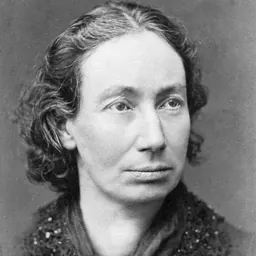
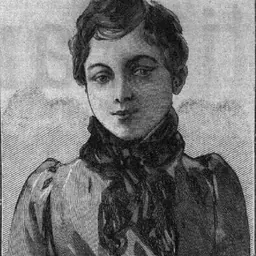
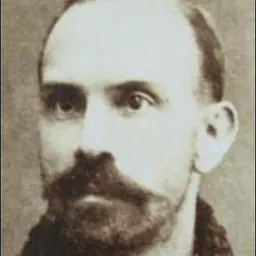

Related people
Same field, nearest in time
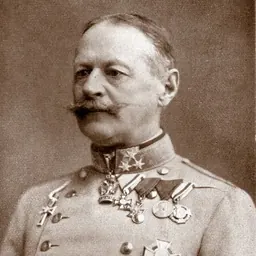



Contemporaries
People whose lives overlapped Sébastien Faure's


Frequently asked questions
Who was Sébastien Faure?
French anarchist (1858–1942)
When was Sébastien Faure born?
Sébastien Faure was born on 6 January 1858 in Saint-Étienne.
When did Sébastien Faure die?
Sébastien Faure died on 14 July 1942 in Royan.
What was Sébastien Faure's occupation?
Sébastien Faure was a pedagogue, encyclopedist, lecturer, journalist, anarchist and editing staff.
What nationality was Sébastien Faure?
Sébastien Faure was French.
Sources & further reading
Cite this page
APA: Biography.guide. (2026). Sébastien Faure. https://biography.guide/sebastien-faure-pedagogue/
MLA: "Sébastien Faure." Biography.guide, https://biography.guide/sebastien-faure-pedagogue/.
Chicago: "Sébastien Faure." Biography.guide. https://biography.guide/sebastien-faure-pedagogue/.
Data last updated: 2026-09-20 · Spot an error? Report a correction.
Page generated 2026-09-27 05:31 UTC