
About Sebastián Durón
Lived 1660 – 1716 (aged 55–56). Sebastián Durón was a Spanish composer.
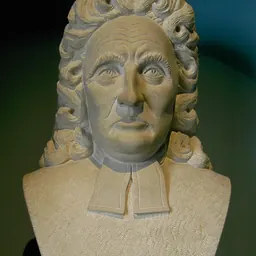
Sebastián Durón (19 April (baptized) 1660 – 3 August 1716) was a Spanish organist and composer of the Baroque period. Sebastián Durón Picazo was, with Antonio de Literes, the greatest Spanish composer of stage music of his time.
Life and career Durón was born in Brihuega, Guadalajara, Spain, and was the eldest child of two younger brothers and three sisters. His father, Sebastián Durón, was the church sacristan of Brihuega. Diego Durón, Durón's half-brother, was also a composer. Sebastián Durón began his musical training with Andrés de Sola, who was the lead organist at La Seo Cathedral in Zaragoza. In 1679, Durón briefly took on the role of paid assistant to Sola before becoming the second organist at Seville Cathedral. He served in Seville until 1685, composing sacred music and villancicos while taking minor holy orders. Due to financial reasons, Durón moved to Burgo de Osma Cathedral as first organist, where he was given a stipend and a salary. In 1686, he accepted a more profitable position at Palencia Cathedral where he taught and composed for five years.
Sebastián served as organist and choirmaster at various cathedrals (Seville, Cuenca, El Burgo de Osma, Plasencia) until in 1691, when he was appointed organist of the Royal Chapel of King Charles II in Madrid. By 1697, Durón had earned a strong reputation at court for his unmatched sacred and theatrical compositions. The new king King Philip V appointed him chapel master of this institution in 1701. He remained in this position until 1706, when he was suspended because of expressing support for Archduke Charles of Austria during the War of Spanish Succession, which ended with the victory of Bourbon King Philip V. In early 1707, he attempted to remove valuable scores, which included his own works, from the royal chapel music library. This led to further disgrace, forcing Durón into exile in France. his main influence was in the zarzuela. Durón's earliest known stage work was the zarzuela Salir el amor del mundo, and his last was Veneno es de amor la envidia. This final theatrical composition premiered in Madrid from 1710-1711 alongside two other zarzuelas composed by Durón. It was very successful despite his exile in 1707, suggesting that he sent works to Madrid from exile or left copies behind. From 1718 to 1723, Durón's zarzuelas circulated and were performed in Lisbon. His cantatas and theatrical songs are kept in copies in Latin America sources.
Opera Durón's La guerra de los gigantes, written for the Count of Salvatierra, is based on the myth of the giants revolt against the Olympus gods. There is no surviving libretto and little recitative, suggesting that the one-act work likely combined music and spoken dialogue, resembling a zarzuela. The music was set both in strophic form as well as in four-part choruses, while spoken roles were used to further the dramatic development of the characters. This mixed format also appears in Durón's Veneno es de amor la envidia, where the supernatural characters only sing.
Legacy Sebastián Durón's impact on Spanish theatre music was significant, reflecting a blend of Spanish and foreign styles that shaped early 18th century Madrid. After his death in 1716, his music remained controversial. Father Benito Jerónimo Feijoo (1676–1764) criticised Durón, compared to Literes, for the worldliness of his compositions. Durón's critics believed he compromised the traditional Spanish style by using foreign influences.
Works
Stage Works (Zarzuelas and Operas) 1696 Salir el amor del mundo (libretto by ¿José de Cañizares?). Zarzuela in two acts.
ca. 1696-99 Apolo y Dafne (libretto by José Benavides). Zarzuela.
1697 Muerte en amor es la ausencia (libretto by Antonio de Zamora). Mythological Comedy in three acts. c. 1697 Selva encantada de amor. Zarzuela in two acts. c. 1701 La guerra de los gigantes. 1 act. 1704 Hasta lo insensible adora (libretto by José de Cañizares). Zarzuela in two acts. c. 1705 Apolo y Dafne (anonymous libretto). Zarzuela in two acts (first act contains the music of Navas). c. 1705 Coronis (libretto by an anonymous poet). Zarzuela in two acts. 1711 22 January (revival date . Premniere c. 1706)Veneno es de amor la envidia (libretto by Antonio de Zamora, possibly with the participation of José Cañizares). Zarzuela in two acts: Madrid. 1711 25 December (revival date. Premniere c. 1702) Las nuevas armas de amor (libretto by José de Cañizares). Zarzuela in two acts: Madrid.
Sacred
Ave maris stella Dios te salve María Dixit Dominus Ego sum resurrectio Letanía de los santos María: in idirem ungüentorum tuorum Responsorio de difuntos Salve Regina
Selected discography Tonadas (Songs), Raquel Andueza. Naxos. selections on Barroco Español, Vol. 2, Vol. 3, by Al Ayre Español, cond. Eduardo Lopéz Banzo. DHM Lágrimas, Amor - Arias for Soprano—Eva Juárez, A Corte Musical, Rogério Concalves Pan Classics, 2016 Durón: La guerra de los gigantes— Granada Baroque Orchestra & Íliber Ensemble, Darío Moreno & Darío Tamayo IBS Classical, 2019 Coronis - Le poème harmonique, Vincent Dumestre Outhere, 2022
Don’t just read it —
keep it.
Full-length biographies made to live with: read them, listen on the way to work, watch them tonight.
- E-book
- Audio
- Video
Instant download · yours to keep · every purchase keeps this site free
Important facts
People in Sebastián Durón's life
Named in this biography and alive at the same time



Related people
Same field, nearest in time
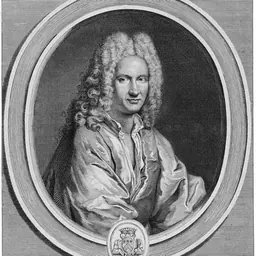

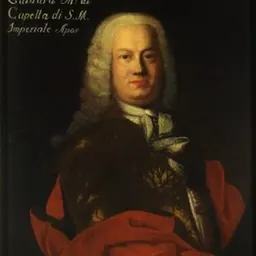
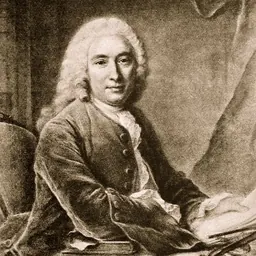
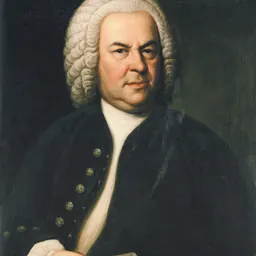
Contemporaries
People whose lives overlapped Sebastián Durón's




Frequently asked questions
Who was Sebastián Durón?
Spanish composer (1660-1716)
When was Sebastián Durón born?
Sebastián Durón was born in 1660 in Spain.
When did Sebastián Durón die?
Sebastián Durón died on 3 August 1716 in Cambo-les-Bains.
What was Sebastián Durón's occupation?
Sebastián Durón was a composer.
What nationality was Sebastián Durón?
Sebastián Durón was Spanish.
Sources & further reading
Cite this page
APA: Biography.guide. (2026). Sebastián Durón. https://biography.guide/sebastian-duron/
MLA: "Sebastián Durón." Biography.guide, https://biography.guide/sebastian-duron/.
Chicago: "Sebastián Durón." Biography.guide. https://biography.guide/sebastian-duron/.
Data last updated: 2026-09-20 · Spot an error? Report a correction.
Page generated 2026-09-27 05:03 UTC