
About Sebastián de Eslava
Lived 1685 – 1759 (aged 74). Sebastián de Eslava was a Spanish soldier, military personnel and politician.
Sebastián de Eslava y Lazaga (January 19, 1685 – June 21, 1759) was a general and colonial official for Spain. From April 24, 1740 to November 6, 1749 he was viceroy of the newly reestablished Viceroyalty of New Granada. He was governing the viceregal at the time of the defeat of British Admiral Edward Vernon at the Battle of Cartagena de Indias. After his death he was named marqués de la Real Defensa de Cartagena de Indias.
The reestablishment of the Viceroyalty of New Granada In 1740 the Viceroyalty of the Nuevo Reino de Granada (New Granada) was reestablished. This part of South America, including what are today the countries of Venezuela, Colombia, Panama and Ecuador, had originally been part of the Viceroyalty of Peru. It was removed from Peru and established as the separate viceroyalty of New Granada in 1718. However, this first viceregal establishment lasted only from 1718 to 1724. In 1724 it was returned to Peru.
There were difficulties governing this large territory from Lima, however. In 1740 New Granada was reestablished as a viceroyalty, for the same reasons as it had originally been established — large distances, growing population, tax collection, defense, and administrative control. In August 1739 Sebastián de Eslava was named the first viceroy of this second incarnation, with express instructions from the Crown to defend the viceregal against British attacks.
Beginning of his term as viceroy Eslava studied at the Royal Military Academy in Barcelona. He was a lieutenant general in the Royal Army of Spain and commander in the Order of Calatrava. In April 1740 he arrived at Cartagena de Indias. He remained there for the duration of his term as viceroy, not traveling to the interior.
He repaired the Castle of Bocachica and various forts protecting the port. In the Castle of San Lázaro he started a factory of gun carriages and esplanades. He took steps to supply arms, ammunition and military training to the Spanish forces. Elsewhere in the viceregal, he built defensive works in Santa Marta, Puerto Cabello and Gaira. He strengthened the fort at Araya and the Castle of San Antonio in the province of Cumaná. He approved the construction of the fort on the islet of Caño de Limones and equipped the presidio of Guayana.
The War of Jenkins' Ear These steps were necessary because Britain, fighting for the commercial control of America, declared war on Spain in 1739 (the War of Jenkins' Ear). The defense of the coast was essential.
On November 21, 1739 British Admiral Edward Vernon captured Portobelo, on the Atlantic side of the Isthmus of Panama, which was part of the new Viceroyalty. This was just before Eslava's arrival in Cartagena as viceroy of the colony. After this success, Vernon turned his attention to Cartagena. On March 13, 1741 he blockaded the port with 51 warships, 135 transports, 2,000 cannon and more than 28,000 men, possibly the strongest fleet ever assembled up to this time. The city was defended by the Spanish Admiral Blas de Lezo, who had at his command 3,000 Spanish troops, 600 Indian archers, and six Ships of the Line. He also relied on his careful preparations and the sturdy fortifications of the city.
On the night of April 19, as part of the battle of Cartagena de Indias, the British began a major assault on the wall of the fort of San Felipe. However, the attackers soon found that their scaling ladders were shorter than the walls they were attacking. The British were unable to advance and impeded from retreating by the equipment they carried. The Spanish opened fire on them, and then counterattacked outside the walls with bayonets. The carnage was great, and the remaining British soldiers were forced to remain on board their ships, with provisions running out.
Vernon finally had to raise the blockade and return to Jamaica. Eight thousand British were said to have died, against only 1,000 Spanish. Blas de Lezo, who had already lost a leg, an eye and an arm in other battles, lost his life after this one, dying of disease.
After the siege of Cartagena During his administration, Viceroy Eslava founded hospitals and towns, constructed roads, promoted the pacification of the Motilones Indians, and contributed arms, money and provisions to defend some cities (like Pamplona and San Faustino), and to maintain navigation on the Zulia River. He built 20 churches, repaired and enlarged others, protected the established missions and organized those of Darién, in Panama. He improved the finances of the colony and the administration of justice.
He left New Granada for Spain on February 23, 1750. After his return to Spain, King Ferdinand VI named him captain general of Andalucia, and later, on July 2, 1754, minister of war. In 1760 he was posthumously granted the title of marqués de la Real Defensa de Cartagena de Indias.
Don’t just read it —
keep it.
Full-length biographies made to live with: read them, listen on the way to work, watch them tonight.
- E-book
- Audio
- Video
Instant download · yours to keep · every purchase keeps this site free
Important facts
People in Sebastián de Eslava's life
Named in this biography and alive at the same time
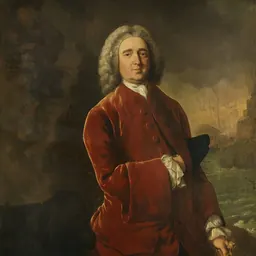
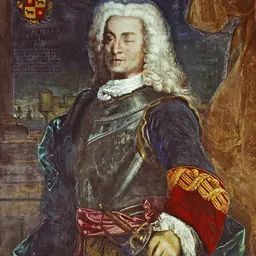
Related people
Same field, nearest in time



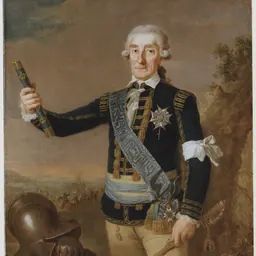
Contemporaries
People whose lives overlapped Sebastián de Eslava's
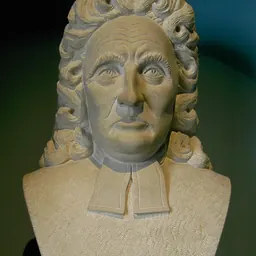


Frequently asked questions
Who was Sebastián de Eslava?
Viceroy of New Grenada (1685-1759)
When was Sebastián de Eslava born?
Sebastián de Eslava was born on 19 January 1685 in Enériz/Eneritz.
When did Sebastián de Eslava die?
Sebastián de Eslava died on 21 June 1759 in Madrid.
What was Sebastián de Eslava's occupation?
Sebastián de Eslava was a soldier, military personnel and politician.
What nationality was Sebastián de Eslava?
Sebastián de Eslava was Spanish.
Sources & further reading
· Wikipedia: Sebastián de Eslava
· DBpedia: Sebastián de Eslava
Cite this page
APA: Biography.guide. (2026). Sebastián de Eslava. https://biography.guide/sebastian-de-eslava/
MLA: "Sebastián de Eslava." Biography.guide, https://biography.guide/sebastian-de-eslava/.
Chicago: "Sebastián de Eslava." Biography.guide. https://biography.guide/sebastian-de-eslava/.
Data last updated: 2026-09-20 · Spot an error? Report a correction.
Page generated 2026-09-27 05:23 UTC