
About Seán Mac Stíofáin
Lived 1928 – 2001 (aged 73). Seán Mac Stíofáin was a British military officer and journalist.
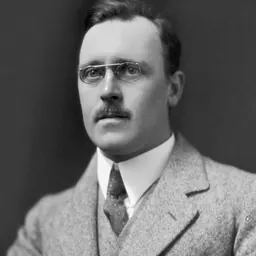
Seán Mac Stíofáin (born John Edward Drayton Stephenson; 17 February 1928 – 18 May 2001) was an English-born chief of staff of the Provisional IRA, a position he held between 1969 and 1972.
Childhood Although he used the Gaelicised version of name in later life, Mac Stíofáin was born John Edward Drayton Stephenson in Leytonstone, London, in 1928. An only child, his father was an English solicitor's clerk and his mother a Londoner of Ulster Protestant East Belfast descent. He stated his mother had left an impression on him at the age of seven with her instruction:
"I'm Irish, therefore you're Irish… Don't forget it."
His childhood was marred by his alcoholic father. His mother, who doted over her son, died when Mac Stíofáin was 10. Mac Stíofáin attended Catholic schools, where he came into contact with pro-Sinn Féin Irish students.
He left school in 1944 at the age of 16 and worked in the building trade, before being conscripted into the Royal Air Force in 1945. He attained the rank of corporal. After leaving the RAF, he returned to London where he became increasingly involved with Irish organisations in Britain. He first joined Conradh na Gaeilge (Gaelic League), then the Irish Anti-Partition League, bought (and later sold) the United Irishman, joined Sinn Féin in London, and eventually in 1949 helped to organise a unit of the IRA. He first met his wife, Máire, who was from Castletownroche, County Cork. Mac Stíofáin then began work for British Rail.
Joining the IRA On 25 July 1953, Mac Stíofáin took part in an Irish Republican Army arms raid on the armoury of the Officers' Training Corps at Felsted School in Essex. The IRA obtained over 108 rifles, ten Bren and eight Sten guns, two mortars and dummy mortar bombs in the raid. The police seized the van carrying the stolen weapons some hours later, due to it being so overloaded that it was going at about 20 mph on the Braintree bypass with a queue of traffic behind it. On 19 August 1953, he was sentenced, along with Cathal Goulding and Manus Canning, to eight years' imprisonment by a court in Bishop's Stortford, Hertfordshire. It was in the run-up to the raid that Mac Stíofáin learned his first few words of Irish from Goulding. He later became fluent in the language.
While incarcerated in Wormwood Scrubs and Brixton prisons in London, he learned not only a smattering of Greek from the Cypriot EOKA prisoners (he befriended Nikos Sampson) but also "the realities of an anti-British rule guerrilla campaign".
Upon being granted parole in 1959, Mac Stíofáin went to the Republic of Ireland with his wife and young family and settled in Dublin, and later Navan, and became known under the Irish version of his name. This was not his first visit to the country: he had been to Ireland a month before the Felsted raid in 1953. He worked as a salesman for an Irish-language organisation. He remained active in the IRA and gave the Bodenstown oration in 1959. He was uneasy with the left-wing political direction – under way from 1964 – his erstwhile friend and IRA chief of staff, Cathal Goulding, was bringing to the IRA. Appointed IRA Director of Intelligence in 1966, Mac Stíofáin continued to voice his opposition to the Goulding line and was gaining support among members. Despite his hostility to the left-wing direction, he was prominent in agitations in Midleton against ground-rent landlordism, the Dublin Housing Action Committee and against foreign buy-outs of Irish farmland in County Meath, where he moved with his family in 1966.
A tall, well-built man, Mac Stíofáin was regarded as a rather stoic personality who did not drink or smoke. He was a devout Catholic, and was infuriated by an article in the United Irishman, by Roy Johnston, condemning the reciting of the Rosary at republican commemorations as "sectarian". For refusing to distribute the newspaper, he was suspended from the IRA for six months.
The British claimed this was impossible owing to the commitment it had given to unionists. The talks ended in failure, and as a briefing for prime minister Edward Heath later noted, Whitelaw "found the experience of meeting and talking to Mr Mac Stíofáin very unpleasant". Mac Stíofáin said that Whitelaw put up his bluff exterior at first, but after a couple of minutes let it drop and showed himself to be a shrewd political operator; he also noted that Whitelaw was one of the few Englishmen to pronounce his name correctly. His hunger strike led to tumultuous scenes in Dublin and protests outside the Mater Hospital, where he was visited by the then Catholic archbishop of Dublin, Dermot Ryan, and his predecessor, John Charles McQuaid.
After 57 days, he ended his strike when asked to do so by the IRA Army Council. Some have reported that council members Ruairí Ó Brádaigh and Dáithí Ó Conaill ordered him off the strike. However, Ó Brádaigh, by this time, had also been arrested. In fact, when he was transferred into the Glasshouse of the Curragh, Ó Brádaigh welcomed him.
Following standard procedures, Mac Stíofáin lost his rank upon arrest and he never again regained his influence within the IRA after his release in April 1973.
Later life After he was sidelined, Mac Stíofáin began working as a distribution manager and part-time columnist with the Sinn Féin newspaper, An Phoblacht, in the late 1970s. He resigned from the party in 1982 after a disagreement about strategy at the Ard Fheis, when a majority opposed the Éire Nua policy, which envisaged the setting up of regional governments in each of the traditional four Provinces of Ireland.
In the late 1970s he met with representatives from the Army Council of the Irish National Liberation Army who were interested in him becoming Chief of Staff of that movement, but nothing ever came from the meetings.
In March 1983, Mac Stíofáin appealed to the IRA to declare a ceasefire.
In the 1980s and 1990s, Mac Stíofáin became active in the Irish-language organisation Conradh na Gaeilge. At that organisation's centenary celebration held in Dublin's O'Connell Street in 1993, he was a guest of honour on the platform. He remained a member of the standing committee (Coiste Gnó) of Conradh na Gaeilge until his death. He lived in the Meath Gaeltacht. Visitors to his home were greeted at the front door with a mat saying Labhair Gaeilge Anseo ("Speak Irish here").
Death In 1993, Mac Stíofáin suffered a stroke. On 18 May 2001, he died in Our Lady's Hospital in Navan, County Meath, after a long illness at the age of 73. He is buried in St Mary's Cemetery, Navan.
Despite his controversial career in the IRA, many of his former comrades (and rivals) paid tribute to him after his death. Ruairí Ó Brádaigh, who attended the funeral, issued a glowing tribute, referring to Mac Stíofáin as an "outstanding IRA leader during a crucial period in Irish history" and as the "man for the job" as first Provisional IRA chief of staff. Gerry Adams and Martin McGuinness also attended. In her oration, Ita Ní Chionnaigh of Conradh na Gaeilge, whose flag draped the coffin, lambasted Mac Stíofáin's "character assassination" by the "gutter press" and praised him as a man who had been "interested in the rights of men and women and people anywhere in the world who were oppressed, including Irish speakers in Ireland, who are also oppressed".
Notes and references
Writings Mac Stíofáin, Seán, Memoirs of a Revolutionary, London (Gordon Cremonesi), 1975. Also published as Revolutionary in Ireland
Don’t just read it —
keep it.
Full-length biographies made to live with: read them, listen on the way to work, watch them tonight.
- E-book
- Audio
- Video
Instant download · yours to keep · every purchase keeps this site free
Important facts
People in Seán Mac Stíofáin's life
Named in this biography and alive at the same time




Related people
Same field, nearest in time


Contemporaries
People whose lives overlapped Seán Mac Stíofáin's


Frequently asked questions
Who was Seán Mac Stíofáin?
Irish Republican Army member (1928–2001)
When was Seán Mac Stíofáin born?
Seán Mac Stíofáin was born on 17 February 1928 in Leytonstone.
When did Seán Mac Stíofáin die?
Seán Mac Stíofáin died on 18 May 2001 in Navan.
What was Seán Mac Stíofáin's occupation?
Seán Mac Stíofáin was a military officer and journalist.
What nationality was Seán Mac Stíofáin?
Seán Mac Stíofáin was British.
Sources & further reading
· Wikipedia: Seán Mac Stíofáin
Cite this page
APA: Biography.guide. (2026). Seán Mac Stíofáin. https://biography.guide/sean-mac-stiofain/
MLA: "Seán Mac Stíofáin." Biography.guide, https://biography.guide/sean-mac-stiofain/.
Chicago: "Seán Mac Stíofáin." Biography.guide. https://biography.guide/sean-mac-stiofain/.
Data last updated: 2026-09-20 · Spot an error? Report a correction.
Page generated 2026-09-27 05:12 UTC