
About Séamus Henchy
Lived 1917 – 2009 (aged 91). Séamus Henchy was a barrister.
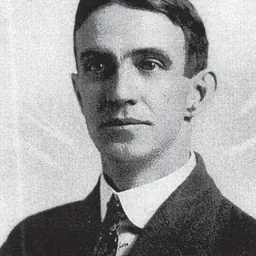
Séamus Anthony Henchy (6 December 1917 – 5 April 2009) was an Irish judge, barrister, and academic who served as a Judge of the Supreme Court of Ireland between 1972 and 1988 and a Judge of the High Court from 1962 to 1972. Many of Henchy's judgments are considered to be influential in the development of Irish constitutional law.
Born in County Clare, he studied law and Celtic studies in Galway and Dublin, obtaining a PhD in Celtic studies in 1943. He practiced as a barrister and was appointed to the High Court in 1962. He presided over the Arms Trial in 1970. He was elevated to the Supreme Court in 1972, where he was noted for his opinions in McGee v. The Attorney General, Cahill v. Sutton, Norris v. Attorney General and Crotty v. An Taoiseach. He died in 2009.
Early life Henchy was born in 1917 to shopkeepers Patrick and Margaret in Corofin, County Clare, as one of seven children. He attended primary school in Corofin and for secondary school wen to St Mary's College, Galway.
His university education began at University College Galway, where he obtained a BA in Celtic Studies. He then concurrently studied for a MA in Galway, and later a LL.B. at University College Dublin and to become a barrister at the King's Inns. He completed a PhD at UCD in 1943, supervised by D. A. Binchy, on the law of fosterage. Using his Irish name, Séamus Ó hInnse and as part of the Dublin Institute for Advanced Studies, he published Miscellaneous Irish annals in 1947.
Legal career He was called to the bar in 1943 and primarily practiced in the West of Ireland. He became a senior counsel in 1959. He published on "The Communist Theory of Law" in Studies in 1957 and was the first Irish academic published in the Modern Law Review. He also wrote about the role of the Visitor and the National University of Ireland. He presided over many personal injuries cases and heard at first instance as part of a panel of three judges the case of State (Nicolaou) v. An Bord Uchtála. The trial required him to have 24-hour Garda protection.
In 1965, he was the chairperson of a commission, joined by Felix Ermacora and Peter Papadatos, convened by the International Commission of Jurists to investigate allegations of racism in the public service of Guyana. They concluded that racial discrimination had occurred. He also chaired the Mental Illness Commission. He was frequently president of the Court of Criminal Appeal during the 1970s. He was seen to be a liberal in relation to social issues. He wrote a concurring opinion with the then Chief Justice Tom O'Higgins in 1980 in the case of Cahill v. Sutton which established the rule of standing in Irish constitutional law where Hench wrote:
He also contributed to decisions establishing the right to legal aid in criminal trials and in the case of Crotty v. An Taoiseach which established the need for a referendum to incorporate new European Union treaties into Irish law where he wrote:
There is, of course, nothing in the Constitution to prevent the Government, or any person or group or institution, from advocating or campaigning for or otherwise working for a change in the Constitution. Likewise, there does not appear to be any constitutional bar to anon-binding arrangement by the State to consult with other states in the conduct of its foreign policy. It is quite a different matter when, ashere, it is proposed that the State be bound by an international treaty that requires the State to act in the sphere of foreign relations in a manner that would be inconsistent with constitutional requirements. What would be an imperative under international law would be proscribed under the Constitution. In such circumstances, it is the Constitution that must prevail.
Further roles Henchy was among those appointed in 1974 to the Anglo-Irish Commission on Law Enforcement, arising out of the Sunningdale Agreement. He was appointed the first chairperson of the Independent Radio and Television Commission for a five-year term beginning in 1988, a body responsible for issuing the first commercial radio licences in Ireland. He retired a year early in order to take up the position.
Legacy Henchy was awarded an honorary doctorate by Trinity College Dublin in 1990 and another by NUI Galway in June 1999. At his ceremony at NUIG, he was cited as being "one of the most outstanding judges and jurists of 20th-century Ireland". Upon his death, the Irish Independent commented that he was "one of the country's most respected and influential judges."
Personal life Henchy was married to Averil Graney.
His brother, Patrick, was a librarian and director of the National Library of Ireland.
He died at the age of 91 in April 2009. His funeral was attended by the then Chief Justice of Ireland John L. Murray, the Attorney General of Ireland Paul Gallagher and aides-de-camp to the President of Ireland and the Taoiseach. He is buried at Shanganagh Cemetery.
Don’t just read it —
keep it.
Full-length biographies made to live with: read them, listen on the way to work, watch them tonight.
- E-book
- Audio
- Video
Instant download · yours to keep · every purchase keeps this site free
Important facts
People in Séamus Henchy's life
Named in this biography and alive at the same time




Related people
Same field, nearest in time



Contemporaries
People whose lives overlapped Séamus Henchy's

Frequently asked questions
Who was Séamus Henchy?
Irish judge
When was Séamus Henchy born?
Séamus Henchy was born on 6 December 1917 in Corofin.
When did Séamus Henchy die?
Séamus Henchy died on 5 April 2009 in Monkstown, County Dublin.
What was Séamus Henchy's occupation?
Séamus Henchy was a barrister.
What nationality was Séamus Henchy?
Séamus Henchy's recorded nationality: Irish people.
Sources & further reading
Cite this page
APA: Biography.guide. (2026). Séamus Henchy. https://biography.guide/seamus-henchy/
MLA: "Séamus Henchy." Biography.guide, https://biography.guide/seamus-henchy/.
Chicago: "Séamus Henchy." Biography.guide. https://biography.guide/seamus-henchy/.
Data last updated: 2026-09-20 · Spot an error? Report a correction.
Page generated 2026-09-27 05:27 UTC