
About Scipione Rebiba
Lived 1504 – 1577 (aged 73). Scipione Rebiba was an Italian catholic priest and catholic bishop.
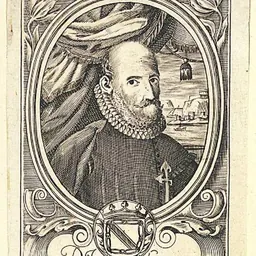
Scipione Rebiba (3 February 1504 – 23 July 1577) was an Italian prelate of the Catholic Church, a protégé of Gian Pietro Carafa, who became Pope Paul IV. He held a variety of positions in the Church hierarchy, including some of the most senior. He introduced the Inquisition to Naples in the 1550s and became a cardinal in 1555. He is mostly known today for having been the earliest bishop to whom most Latin Catholic bishops – including the current pope Leo XIV – can trace their apostolic succession, as it is currently unknown who consecrated Rebiba.
Biography
Scipione Rebiba was born on 3 February 1504 in the village of San Marco d'Alunzio, in Sicily. He studied in Palermo and enjoyed a benefice in the Church of S. Maria dei Miracoli.
On 16 March 1541, on the recommendation of Bishop Gian Pietro Carafa, Pope Paul III appointed Rebiba titular Bishop of Amyclae so he could serve as Carafa's auxiliary bishop in the Diocese of Chieti.
On 22 February 1549, Pope Paul III named Carafa Archbishop of Naples, but Emperor Charles V prevented him from taking possession of that see until July 1551. Carafa, who was active in Rome as one of the six cardinals of the Roman Inquisition (1542–1555), appointed Rebiba as his vicar to administer the diocese on his behalf. Rebiba was also promoted from auxiliary and on 12 October 1551 made Bishop of Motula, a see in the Kingdom of Naples. With the full support of the head of the Inquisition in Rome, Rebiba introduced the Roman Inquisition into Naples and was granted the office of Commissary of the Roman Inquisition.
Carafa was elected pope on 23 May 1555 and named Rebiba Governor of Rome on 5 July. He served only a few months, until the next consistory for the elevation of cardinals on 20 December, where he was made a cardinal.
In 13 April 1556, Paul IV appointed Rebiba Archbishop of Pisa and Rebiba took possession of that see on 29 April 1556. but Pope Paul issued a bull rejecting the committee's findings and Morone was kept in prison until, after the pope's death in 1559, the College of Cardinals ordered his release.
In 1559, the newly elected Pope Pius IV authorized the arrest of persons accused of various crimes during the administration of Paul IV, including his predecessor's nephew Cardinal Carlo Carafa and Rebiba, who were imprisoned in Castel San Angelo. Rebiba was eventually released, Carafa was strangled on the order of Pius IV on 4 March 1561.
In 1565 he was given the title Patriarch of Constantinople, which he held until 1573.
On 7 October 1566, Rebiba opted to accept the rank of Cardinal Priest and chose as his titular church the Church of S. Angelo in Pescheria.
Rebiba participated in the conclave of 1565–1566 that followed the death of Pius IV and elected Cardinal Michael Ghislieri as Pope Pius V. He also voted in the conclave of 1572, which followed the death of Pius V and elected Pope Gregory XIII.
Rebiba was appointed Bishop of Albano on 8 April 1573 and Bishop of Sabina in 1574.
Rebiba died in Rome on 23 July 1577 and was interred in the Church of S. Silvestro on the Quirinal. At the time of his death he was Prefect of the Office of the Holy Inquisition. His memorial monument describes him as "Inquisitor into heretical depravity, a most fierce fighter for the orthodox faith".
Episcopal succession
In the early 18th century, Pope Benedict XIII, whose holy orders were descended from Rebiba's consecration of Giulio Antonio Santorio, personally consecrated at least 139 bishops for various important European sees, including German, French, English and New World bishops. These bishops in turn consecrated bishops almost exclusively for their respective countries. Therefore, Rebiba is part of the episcopal lineage of Pope Leo XIV and nearly 95% of Catholic bishops alive today. The last pope who did not have his apostolic succession derived from Rebiba is Pope Innocent XII (a member of Guillaume d'Estouteville's line) who died on 27 September 1700.
Since there are no known surviving records of who consecrated him, most Latin Catholic bishops can trace their episcopal lineage only as far back as Rebiba.
Although there is no knowledge of who consecrated Rebiba as bishop, records indicate that it was done 14 May, 1541.
Don’t just read it —
keep it.
Full-length biographies made to live with: read them, listen on the way to work, watch them tonight.
- E-book
- Audio
- Video
Instant download · yours to keep · every purchase keeps this site free
Important facts
People in Scipione Rebiba's life
Named in this biography and alive at the same time
Related people
Same field, nearest in time


Contemporaries
People whose lives overlapped Scipione Rebiba's



Frequently asked questions
Who was Scipione Rebiba?
Catholic cardinal (1504-1577)
When was Scipione Rebiba born?
Scipione Rebiba was born on 3 February 1504 in San Marco d'Alunzio.
When did Scipione Rebiba die?
Scipione Rebiba died on 23 July 1577 in Rome.
What was Scipione Rebiba's occupation?
Scipione Rebiba was a catholic priest and catholic bishop.
What nationality was Scipione Rebiba?
Scipione Rebiba was Italian.
Sources & further reading
Cite this page
APA: Biography.guide. (2026). Scipione Rebiba. https://biography.guide/scipione-rebiba/
MLA: "Scipione Rebiba." Biography.guide, https://biography.guide/scipione-rebiba/.
Chicago: "Scipione Rebiba." Biography.guide. https://biography.guide/scipione-rebiba/.
Data last updated: 2026-09-20 · Spot an error? Report a correction.
Page generated 2026-09-27 05:18 UTC