
About Sattar Bahlulzade
Lived 1909 – 1974 (aged 64). Sattar Bahlulzade was a Russian painter.
Sattar Bahlulzade (; 15 December 1909 – 14 October 1974) was an Azerbaijani painter, best known for his landscape paintings depicting the nature of Azerbaijan. He is considered to be the founder of Azerbaijani Impressionism.
Among Bahlulzade's best-known works are Tears of Kapaz (1965), Bank of the Gudiyalchay (1953), Dream of the Land (1961), Evening Above the Caspian Sea (1959), and Goygol (1964). His works have been featured in exhibitions in Azerbaijan, the Soviet Union, and other parts of the world. The majority of Bahlulzade's body of work is preserved in the National Art Museum of Azerbaijan, where a special hall is dedicated to the artist. Some of his paintings are also kept in museums in Moscow, Tbilisi, Beijing, etc.
Today, he is widely considered to be one of the greatest painters of Azerbaijan, as well as a prominent figure in the history of Azerbaijani art in general. He is the recipient of many awards, including two Orders of the Red Banner of Labour and People's Artist of Azerbaijan.
Early life and education Sattar Bahlulzade was born on 15 December 1909 in the village of Amirjan near Baku. He was the third child in the family after two elder sisters. Sattar developed a love for painting in his early childhood. After his father bought him colored pencils, Sattar drew everything around him - the Novruz holiday, Kos-kosa dances, children jumping over bonfires as part of the Novruz tradition, etc. Being surrounded by objects of folklore art - colorful carpets woven by his mother and grandmother, jewelry, as well as ceramics and copper dishes passed down from generation to generation - Sattar began to cultivate a love for art. In one of his diaries, the artist wrote:
"Everything had its own special place in the house. Mother arranged the dishes like an artist. She folded the blankets and beddings in a way that the color schemes matched. For her, it was a work of art, it was beauty."
At school, Sattar was fond of the poems of Nizami Ganjavi, Vagif, and Khaqani, but most of all, he was inspired by the poetry of Fuzuli and the characters in his version of the famous poem Layla and Majnun. He depicted these characters on the covers of his notebooks. His teachers liked Sattar's work, one of them telling him, "there is only one path forward for you, Sattar, and that is to become an artist." Bahlulzade's music teacher was the composer Muslim Magomayev, the grandfather of the iconic Soviet Azerbaijani singer Muslim Magomayev. After graduating in 1931, he began working with Azim Azimzade for the newspaper "Communist" as a graphic illustrator. Bahlulzade worked in the editorial office for two years, during which his first works of art, cartoons, were published.
In 1933, began studying at the Moscow School of Painting, Sculpture and Architecture, where he became a student of Vladimir Favorsky. In the post-war years, Bahlulzade painted works depicting the oil fields, dachas, and villages of the Absheron Peninsula. Bahlulzade's attraction to depictions of nature grew, and he started to paint more landscape sceneries. Azerbaijani painter Azim Azimzade, impressed by Sattar's work, offered him a position at a Communist newspaper, where he was then chief illustrator.
Bahlulzade was known primarily for his landscape paintings dedicated to the nature of the Azerbaijan. Frequently, he went out into nature to capture on canvas all its beauty. Bahlulzade once said:
"I don't have to go to Tahiti, like Gauguin, for inspiration, and I do not advise others to do it. The life and land of your people - they are the true sources of inspiration."
Initially, the artist used a realistic approach to the portrayal of nature, as he was taught by his teachers. However, Bahlulzade soon developed his own style, which helped him to better express his emotions in his depictions of nature. His new style was actually more surreal and cosmic, with some of his works looking like satellite photographs of the Earth. Combining pastels with bold colors and bold brushstrokes, Bahlulzade illustrated nature more colorfully and lively, at times including fantastic elements.
Starting from the late 1940s, Bahlulzade started to create his most renowned works of art: The Bank of Qudyalchay, The Road to Gizbanovsha (1953), Golden Evenings (1955), Native Lands (1957), etc. In these landscapes, Bahlulzade satiated his color palette, achieving a colorful decorativeness in his displays.
Sattar Bahlulzade developed his work on both natural and industrial landscapes simultaneously.
Death
In 1973, Bahlulzade became seriously ill due to blood poisoning. Although the artist was being treated in Sabunchu hospital in Baku, his condition was not getting better. The chief doctor of the hospital told him that the only way for him to recover was to continue his treatment in the Moscow. Among his works; however, there are no winter landscapes. The nature in winter attracted the artist to a lesser extent, and during this time of the year, he mostly painted in his personal studio, where he created new paintings based on his experiences in summer.
It took him much time and energy to capture nature. Sattar acknowledged this.
Sattar was distinguished by his generosity. He often gave out his paintings as gifts. From time to time, the artist's studio was visited by foreigners interested in art. Once, an Italian guest expressed their desire to buy one of the artist's works. However, Sattar decided to give him a painting for free. When the guest told him that he could not accept such a valuable gift without giving something in return, Sattar replied, "I never give cheap gifts."
In 1964, the works of Bahlulzade were exhibited in the National Gallery in Prague. After the exhibition, five of the paintings were selected to be bought for the museum's collection. Nonetheless, Sattar refused the fee, offering the paintings to the gallery as a gift. These stories tell us about his lack of care for material possessions like money. He even smoked the cheapest brands of cigarettes.
Sattar had several unique physical features, one of which was his long hair. It is said that he had only cut his hair on two occasions in his entire life. The first time was when the Azerbaijani sculptor Fuad Abdurakhmanov decided to create a sculpture of the artist. Bahlulzade suspected that Fuad would be more interested in and focused on his hair than on his personality, and therefore he cut his hair and showed up in the sculptor's studio. Abdurakhmanov was naturally very surprised. Today, the resulting marble sculpture is displayed in the National Art Museum of Azerbaijan in Baku, illustrating the artist with short hair.
Legacy
Bahlulzade's works have been shown at exhibitions of Soviet fine art in Algeria, Egypt, Lebanon, Syria, Tunisia, Norway, Germany, Czechoslovakia, Bulgaria, Hungary, Romania, Iraq, Cuba, Canada, Belgium, France, Japan, and other countries. The majority of the artist's paintings are stored in the National Art Museum of Azerbaijan, as well as museums in Moscow, Tbilisi, Yerevan, Beijing, and other cities around the world. In the National Art Museum of Azerbaijan, Bahlulzade's works are displayed in a separate room, which President Heydar Aliyev visited in 1994 to celebrate the 85th anniversary of Bahlulzade.
Bahlulzade's awards and titles include Order of the Red Banner of Labour (1959), Honored Artist of the Azerbaijan SSR (1960), and People's Artist of the Azerbaijan SSR (1963). In 1969, Sattar was awarded the Order of the Red Banner of Labour for the second time. In 1972, Sattar Bahlulzade was awarded the State Prize of the Azerbaijan SSR for his series of works denoted Landscapes of Azerbaijan.
A street in the Surakhani district of Baku is named after Bahlulzade. A house of culture in his native village, Amirjan, is also named after him. The life and work of Bahlulzade have been the subject of many documentaries, paintings, poems, and sculptures. On the artist's 100th anniversary (December 15, 2009), Azermarka issued a new series of postmarks titled Azerbaijani School of Fine Arts: Artist S. Bahlulzade. The series includes 6 stamps depicting Bahlulzade's paintings.
Don’t just read it —
keep it.
Full-length biographies made to live with: read them, listen on the way to work, watch them tonight.
- E-book
- Audio
- Video
Instant download · yours to keep · every purchase keeps this site free
Important facts
People in Sattar Bahlulzade's life
Named in this biography and alive at the same time


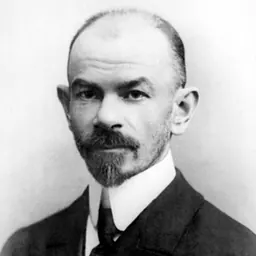
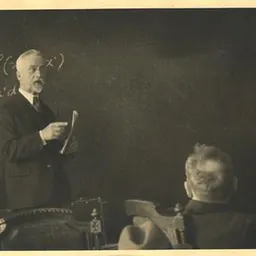
Related people
Same field, nearest in time
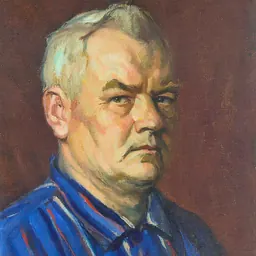


Contemporaries
People whose lives overlapped Sattar Bahlulzade's



Frequently asked questions
Who was Sattar Bahlulzade?
Azerbaijani artist (1909-1974)
When was Sattar Bahlulzade born?
Sattar Bahlulzade was born on 2 December 1909 in Əmircan, Baku.
When did Sattar Bahlulzade die?
Sattar Bahlulzade died on 13 October 1974 in Moscow.
What was Sattar Bahlulzade's occupation?
Sattar Bahlulzade was a painter.
What nationality was Sattar Bahlulzade?
Sattar Bahlulzade was Russian.
Sources & further reading
· Wikipedia: Sattar Bahlulzade
Cite this page
APA: Biography.guide. (2026). Sattar Bahlulzade. https://biography.guide/sattar-bahlulzade/
MLA: "Sattar Bahlulzade." Biography.guide, https://biography.guide/sattar-bahlulzade/.
Chicago: "Sattar Bahlulzade." Biography.guide. https://biography.guide/sattar-bahlulzade/.
Data last updated: 2026-09-27 · Spot an error? Report a correction.
Page generated 2026-09-27 05:17 UTC