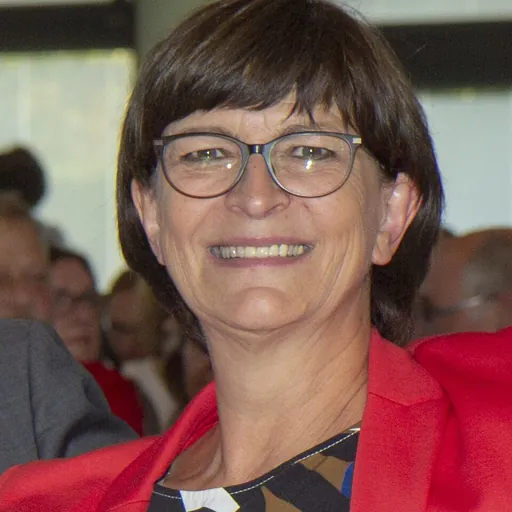
About Saskia Esken
Born 1961. Saskia Esken is a German politician and computer scientist.
Saskia Christina Esken (; born 28 August 1961) is a German politician of the Social Democratic Party (SPD) who served as co-leader of the party from her election in December 2019 (alongside Norbert Walter-Borjans) and re-election in December 2021 (alongside Lars Klingbeil) until 2025. She has been a member of the Bundestag since 2013 and has worked in the IT sector in the early 1990s.
Early life and career Esken was born 1961 in Stuttgart. She graduated from the Johannes Kepler Gymnasium in Weil der Stadt in 1980 or 1981 She was the first in her family to attend university, but dropped out of the University of Stuttgart after four semesters of German studies and politics. From then on, Esken toured southern Germany as a street musician with her guitar, slept in her car, waited tables in pubs and delivered parcels, was a chauffeur and typist at the University of Stuttgart. Esken completed her dual training as a state-certified computer scientist at the vocational college for computer science at the Akademie für Datenverarbeitung Böblingen (Böblingen Academy for Data Processing) in 1990. On the other hand, she writes that she completed this in 1991. She came to education policy via the voluntary parents' association and was deputy chair of the Baden-Württemberg state parents' council from 2012 to 2014. According to a report by the ARD magazine "Kontraste", the newly composed board of directors at the time dismissed the office manager after her email account was searched without consent. In response to an extensive "Kontraste" inquiry to Esken about the matter, the SPD stated that it would not comment on labor law issues.
Political career Early beginnings Esken joined SPD in 1990, when she lived in Calw, a small town in the black forest region. In this capacity, she was her parliamentary group's rapporteur on privacy, IT security, digital education, and eGovernment.
Within her parliamentary group, Esken was part of working groups on digital issues (since 2014) and on consumer protection (since 2018) as well as of the Parlamentarische Linke (Parliamentary Left), an association of left-wing MPs.
In the negotiations to form a coalition government under the leadership of Chancellor Angela Merkel following the 2017 federal elections, Esken was part of the working group on digital policy, led Helge Braun, Dorothee Bär, and Lars Klingbeil.
Co-Chair of the SPD, 2019–present Together with Norbert Walter-Borjans, Esken announced her candidacy for the 2019 Social Democratic Party of Germany leadership election. During her campaign, she vowed to force Chancellor Merkel and her CDU/CSU bloc to renegotiate the coalition treaty or push for an “orderly retreat” from the government.
Shortly after, both Esken and Walter-Borjans stepped back from their threat to pull out of Merkel’s government and instead signed off on a “compromise”, calling for measures including a “massive” investment program and a minimum wage of 12 euros per hour. At the time, this was widely interpreted as a move designed to mend relations between leftwing and centrist factions in the SPD.
In August 2020, Esken and Walter-Borjans released a joint statement announcing Olaf Scholz as the party’s candidate to succeed Merkel in the 2021 elections.
In the 2021 Bundestag election, she once again entered the German Bundestag in first place on the Baden-Württemberg state list. In the Calw constituency, she came second behind Klaus Mack from the CDU with 17.2% of the first votes.
Esken originally wanted to retire after the legislative term of the 20th German Bundestag. In 2024, she decided to run in the 2025 Bundestag elections, in which she heads the state list of the SPD in Baden-Württemberg.
In the early federal election on February 23, 2025, the SPD, under its Chancellor Olaf Scholz and co-chaired by Esken, came third with 16.4% of the second votes. This was not only their worst result in a Bundestag election since the Federal Republic of Germany was founded, but also their worst result in a national parliamentary election for 138 years; the last time the Social Democrats were even worse was in the Reichstag election of 1887 in the German Empire, when they were still called the Socialist Workers' Party.
In her constituency 280 (Calw), Esken achieved 12.89% of the first votes and was therefore also in third place behind the opposing candidates from the CDU with 39.04% and the AfD with 24.21%. Esken again entered the Bundestag in first place on the state list of the SPD Baden-Württemberg.
After demands had already been made from her own party, the SPD, in September 2024 regarding Esken's participation in talk shows, there were calls within the party in March 2025 for Esken to step down from her position as party chairwoman.
Since April, internal negotiations are taking place about the posts in the future government. While more and more people are speaking out against Esken and turning their backs on her, Esken is insisting on a top position as a minister in the new government coalition.
Esken's view on a coalition between the CDU/CSU („Union“) and the SPD as GroKo (Große Koalition, Grand Coalition) is noteworthy here: as we learned in an earlier interview, she is convinced that „a grand coalition is always an emergency solution, an accident rather than the norm“. She looks back with frustration and bitterness on previous coalitions with the CDU/CSU, in which the SPD was merely the junior partner. Esken considers cooperation between the parties of a GroKo with their different programs to be very difficult and problematic.
In May 2025, it was announced that Esken will not receive a ministerial office, but she will continue to be a member of the Bundestag (due to her place on the list in Baden-Württemberg, where she was again placed first in the last Bundestag election). Esken subsequently announced that she will not seek re-election as the party chairwoman. The driving force behind Esken's withdrawal were some SPD-top politicians, like Manuela Schwesig, Minister-President of Mecklenburg-Western Pomerania. According to observers, she feared a loss of power to the CDU and AfD in her state if the SPD pursued a more left-wing policy.
Other activities Regulatory agencies Federal Network Agency for Electricity, Gas, Telecommunications, Post and Railway (BNetzA), Member of the advisory board (since 2018)
Non-profit organizations Stiftung Datenschutz, Member of the Strategic Advisory Board Ein Netz für Kinder, Member of the Board of Trustees (since 2014) German Federation for the Environment and Nature Conservation (BUND), Member Greenpeace, Member German United Services Trade Union (ver.di), Member Federal Agency for Civic Education, Alternate Member of the Board of Trustees (2014-2018)
Political positions Saskia Esken is part of the more left wing of SPD and was counterpart of Lars Klingbeil, who is member of Seheimer Kreis.
In March 2019, Esken opposed the European Union's Directive on Copyright in the Digital Single Market and its article 13.
Also in 2019, Esken called repeatedly for a renegotiation of the 2018 coalition treaty on issues such as government spending and climate change policy.
Following the 2022 Russian invasion of Ukraine, Esken became the member of her Social Democrats’ leadership to call on Gerhard Schröder to quit the party when he kept defending his close ties to Russia’s leadership.
During the Gaza war, in support of Israel's actions Esken announced that she had cancelled a meeting with American-Jewish US Senator, Bernie Sanders, over his stance on the war, which he said included war crimes on both sides. Esken wrote on Bluesky Social: “He (Sanders) would have had the chance to ... clearly stand on the side of Israel and against the terror of Hamas and others. But he doesn’t do that." In response, a Sanders staffer was quoted as saying, “Bernie had never heard of Saskia Esken, but I’m sure he would have been pleased to meet her.”
On 1 May 2024, in an Interview with the Austrian television news broadcast Zeit im Bild (ORF), Esken described the Far-right Alternative for Germany as a Nazi Party and compared it to Joseph Goebbels. She said, they want to destroy democracy.
Controversy In mid-2020, the Berlin attorney general's office received hundreds of complaints accusing Esken of slander for using the term "Covidiots" on Twitter; Esken had said that protesters at a Berlin march threatened the health of others by violating social distancing rules and ignoring requirements to wear masks. The prosecutors dismissed the legal complaints, arguing that Esken was exercising her constitutional right to express her opinion.
Don’t just read it —
keep it.
Full-length biographies made to live with: read them, listen on the way to work, watch them tonight.
- E-book
- Audio
- Video
Instant download · yours to keep · every purchase keeps this site free
Important facts
People in Saskia Esken's life
Named in this biography and alive at the same time
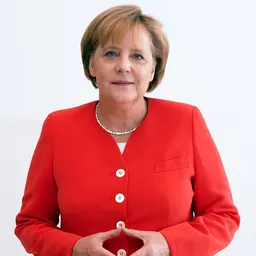
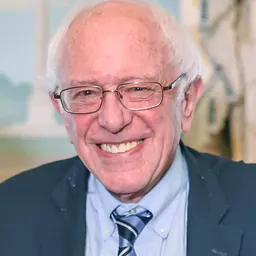

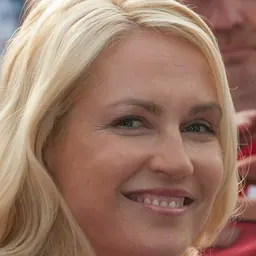
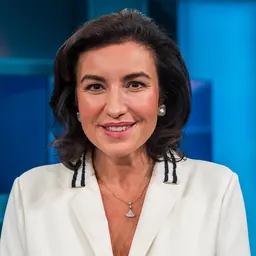
Related people
Same field, nearest in time




Contemporaries
People whose lives overlapped Saskia Esken's



Frequently asked questions
Who is Saskia Esken?
German politician
When was Saskia Esken born?
Saskia Esken was born on 28 August 1961 in Stuttgart.
What is Saskia Esken's occupation?
Saskia Esken is a politician and computer scientist.
What nationality is Saskia Esken?
Saskia Esken is German.
Sources & further reading
Cite this page
APA: Biography.guide. (2026). Saskia Esken. https://biography.guide/saskia-esken/
MLA: "Saskia Esken." Biography.guide, https://biography.guide/saskia-esken/.
Chicago: "Saskia Esken." Biography.guide. https://biography.guide/saskia-esken/.
Data last updated: 2026-09-21 · Spot an error? Report a correction.
Portrait: Wikimedia Commons · author & licence
Page generated 2026-09-27 04:59 UTC