
About Sartaj Aziz
Lived 1929 – 2024 (aged 94). Sartaj Aziz was a Pakistani and Indian diplomat, economist, politician, peace activist and economics.
Sartaj Aziz (; 7 February 1929 – 2 January 2024) was a Pakistani economist and strategist, who had previously served as the deputy chairman of the Planning Commission of Pakistan, member of the federal cabinet as the de facto Minister for Foreign Affairs, a Federal Senator as well as the National Security Advisor.
Born in north-western British India, as a student Aziz was an activist in the Pakistan Movement. Aziz went on to study economics at Punjab University and later studied public administration at Harvard Kennedy School. He served as a civil servant from 1952 to 1971 within Pakistan's federal government, also serving as the joint secretary in the planning commission between 1967 and 1971. In 1971, Aziz joined the Food and Agriculture Organization and served as its Director of Commodities, later moving to the International Fund for Agricultural Development where he served as the Assistant President, Policy and Planning between December 1977 and April 1984.
Aziz returned to Pakistan in 1984 and served as a junior minister for Agriculture and Food Security until 1988 under the conservative Junejo administration.
In 2004, he moved to academia, and became the vice-chancellor of Beaconhouse National University; he also taught at economics at the university. Aziz authored Between Dreams and Realities, which was published in 2009. He remained with the university until 2013, when he joined the Nawaz Sharif's third administration as an advisor in-charge of country's foreign policy; he also served as the National Security Advisor between 2013 and 2015.
Early life and education Sartaj Aziz was born in 1929 in a Sayyid Kakakhel family of Pashtuns in Nowshera, Khyber Pakhtunkhwa. In the 1940s, Aziz was a young activist in the Muslim League-led Pakistan movement. Aziz joined the civil service in 1950 and later traveled to the United States and earned a master's degree in development economics from Harvard University in 1963.
Political career
Indo-Pakistan conflicts
Sartaj Aziz joined the economic bureau of the Planning Commission in 1964, sitting in a bench where he attended the meeting with the Chairman of the Planning Commission, Economic minister Muhammad Shoaib, Foreign minister Zulfikar Ali Bhutto and the President Ayub Khan, to discuss the economic assessment of the Operation Gibraltar against India.
Post nationalizations Aziz did not join the government of Zulfikar Ali Bhutto but was hostile towards the issue of nationalisation. He was elected to the Senate of Pakistan from Khyber Pakhtunkhwa in 1985 elections and again in 1993 parliamentary elections. However, due to economical sanctions, Aziz briefly abandons his theory of matching economic requirements with national strategy. He also travelled to India to hold talks with his counterpart, the Minister of External Affairs Jaswant Singh, but the talks were regarded as a failure and unsuccessful in stemming the conflict. Aziz claimed India had "overreacted", while India demanded that Pakistan stop the incursion into Indian-administered Kashmir. Aziz also represented Pakistan at the Organisation of the Islamic Conference in Burkina Faso, held during the Kargil conflict. Aziz later claimed in the media that Pakistan had achieved its aims in the Kargil conflict by "forcing the Kashmir dispute to the top of the global agenda." He remained Foreign Minister of Pakistan till October 1999.
His term ended abruptly after the Nawaz Sharif government was overthrown in a military coup by Chairman of Joint Chiefs of Staff Committee and Chief of Army Staff General Pervez Musharraf. Aziz associated with Pakistan's foreign policy after his removal and tacitly backed Pakistan's decision to conduct nuclear tests. In a thesis written by Aziz in his book, "Between Dreams and Realities: Some Milestones in Pakistan's History:
It was a big upset about what happened to the economy after the [atomic] tests, but was consoled that in 2002, India mobilized half a million troops on the border after an attack on its parliament in 2001, but was finally forced to withdraw the "due to the danger of a nuclear retaliation by Pakistan.... — Sartaj Aziz, defending Pakistan's decision to tests its nuclear capability in 1998, Aziz drafted and had it approved the new national security strategy, and announced a new policy framework.
Appointed as National Security Adviser (NSA), Aziz held a meeting with Minister of External Affairs Salman Khurshid to discuss the situation in LoC. Aziz's three-day official visit also included meeting with Hurriyat Conference and Kashmir leaders. In early months of 2014, the PPP politicians began a protest at the Parliament over the foreign policy shift in regards to civil war in Syria. The protest took place after Saudi Crown prince Salman bin Abdulaziz visited Pakistan, and news channels widely broadcast the reports Saudi Arabia was in talks with Pakistan to provide anti-aircraft and anti-tank rockets to the rebel.
In a wake of deadly Peshawar massacre in December 2014, Aziz visited Kabul and held a meeting with Afghan President Ashraf Ghani where he emphasized on tighter "border control". In further talks with Afghan President Ashraf Ghani, Aziz widely quoted that "the military in Pakistan and security forces in Afghanistan have agreed to carry out coordinated operations against terrorists along the Pak-Afghan border.
In October 2015, Aziz relinquish his post as National Security Advisor to Naseer Khan Janjua (a retired army general) which was viewed as to provide coordination between civilian Foreign ministry and the military on foreign policy issues, which were being ignored due to his hectic engagement as per demand of the dual offices, quoted by the officials in Islamabad. On 9 December 2015, Aziz hosted the Heart of Asia conference in Islamabad and met with Indian Minister of External Affairs Sushma Swaraj; Aziz also accompanied Sushma Swaraj to meet with Prime Minister Sharif. About the foreign intervention in Syrian civil war, Aziz explained Pakistan's policy on Syria in Senate in December 2015 that Pakistan is "against any attempt to topple the government of Syrian President Bashar al-Assad".
Deputy Chairman Planning Commission (2017–2018) After the dismissal of Nawaz Sharif as prime minister, Shahid Khaqan Abbasi, who succeeded Sharif, appointed Aziz as Deputy Chairman Planning Commission.
Other activities
During his term as Foreign minister, Aziz made an effort with neighbouring India to promote peace and harmony between two countries. His leading peace activism efforts led India to declare Pakistan as Most favoured nation (MFN) in 1996.
Aziz authored Between dreams and realities: Some Milestones in Pakistan's history, which was published in 2009 by Oxford University Press.
Aziz was forced out by his peers during the wave of 1999 military coup d'état which started and ended the massive arrests of his colleagues and government ministers of Nawaz Sharif. In 2001, Aziz joined the Department of Social Sciences of the Beaconhouse National University in Lahore and served there as a professor of economics. In 2009, Aziz was appointed Vice-Chancellor of Beaconhouse National University.
Awards For his participation in the Pakistan movement, Aziz is the holder of the Sanad, Mujahid-e-Pakistan. In 1959, he was awarded the Tamgha-e-Pakistan (Medal of Pakistan) and the Sitara-e-Khidmat in 1967 for his work in central planning and economic development.
Books
Don’t just read it —
keep it.
Full-length biographies made to live with: read them, listen on the way to work, watch them tonight.
- E-book
- Audio
- Video
Instant download · yours to keep · every purchase keeps this site free
Important facts
People in Sartaj Aziz's life
Named in this biography and alive at the same time
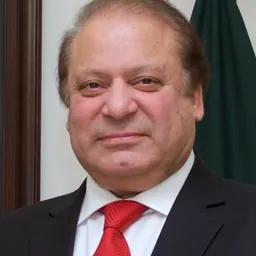
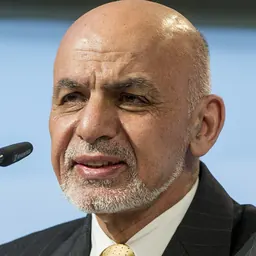

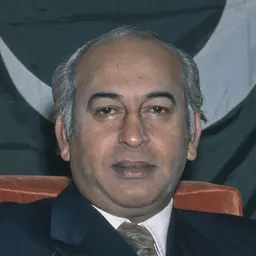

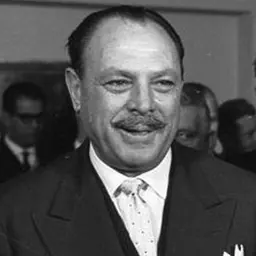

Related people
Same field, nearest in time


Contemporaries
People whose lives overlapped Sartaj Aziz's

Frequently asked questions
Who was Sartaj Aziz?
Pakistani economist and strategist (1929–2024)
When was Sartaj Aziz born?
Sartaj Aziz was born on 7 February 1929 in Mardan.
When did Sartaj Aziz die?
Sartaj Aziz died on 2 January 2024 in Islamabad.
What was Sartaj Aziz's occupation?
Sartaj Aziz was a diplomat, economist, politician, peace activist and economics.
What nationality was Sartaj Aziz?
Sartaj Aziz was Pakistani and Indian.
Sources & further reading
Cite this page
APA: Biography.guide. (2026). Sartaj Aziz. https://biography.guide/sartaj-aziz/
MLA: "Sartaj Aziz." Biography.guide, https://biography.guide/sartaj-aziz/.
Chicago: "Sartaj Aziz." Biography.guide. https://biography.guide/sartaj-aziz/.
Data last updated: 2026-09-20 · Spot an error? Report a correction.
Page generated 2026-09-27 05:31 UTC