
About Sardar Ajit Singh
Lived 1881 – 1947 (aged 66). Sardar Ajit Singh was an Indian dissident, revolutionary and freedom fighter.
Sardar Ajit Singh (23 February 1881 – 15 August 1947) was an Indian revolutionary and nationalist during the time of British rule in India and known for his role in organising agitations against anti-farmer laws known as the Punjab Colonisation Act (Amendment) 1906. He led the Pagri Sambhal Jatta Movement and was exiled to Mandalay jail in Burma in 1907 with Lala Lajpat Rai. An inspiration to his nephew Bhagat Singh, Ajit Singh spent 38 years in exile, continuing his revolutionary activities abroad. He died on 15 August 1947, the day India gained independence.
Biography
Early life and education Sardar Ajit Singh was born on 23 February 1881 in Khatkar Kalan village, located in the Jullundur district (now Shaheed Bhagat Singh Nagar) of Punjab, British India. He was born into a Jat Sikh family, with his parents being Arjan Singh and Jai Kaur. Ajit Singh's early education took place at Saindas Anglo Sanskrit School in Jalandhar, where he completed his metric studies. He later enrolled in Law College in Bareilly, Uttar Pradesh, to pursue a legal education. However, his growing involvement in the Indian freedom movement led him to abandon his law studies.
Arya Samaj philosophy, which emphasised social reform and nationalism, had a profound influence on Singh and his family. This philosophy also significantly impacted his nephew, Bhagat Singh, who later become one of India's most iconic revolutionary.
Entry into the freedom movement Singh's entry into the freedom movement was marked by his participation in agitations against the British colonial policies. In 1906, he organised protests against the Punjab Colonisation Act (Amendment) 1906 and the Bari Doab Canal Act increased water rates and revenue rates by 25%.
Exile to Burma (Myanmar) In May 1907, Singh, along with Lala Lajpat Rai, was exiled to Mandalay in Burma (presently Myanmar) by the British authorities. This was a tactic to suppress the growing unrest in Punjab. However, due to immense public pressure and the fear of unrest in the Indian Army, the exile orders were withdrawn, and both were released on 11 November 1907.
After his release, Ajit Singh continued his revolutionary activities. Along with his brothers Kishan Singh and Swaran Singh, and Sufi Amba Prasad, he published political literature criticizing the British government. In 1909, Ajit Singh and Sufi Amba Prasad escaped to Iran to avoid arrest, remaining in exile for 38 years. During his exile, Ajit Singh traveled extensively, including to Rome, Geneva, Paris, and Rio de Janeiro.
In 1918, Singh came into contact with the Ghadar Party in San Francisco, which was involved in revolutionary activities against British rule. He also taught Persian at a university in Naples during World War II and delivered speeches in Hindustani to Indian soldiers in North Africa, encouraging them to join the fight for India's independence. His efforts abroad were aimed at garnering international support for the Indian independence movement.
Return to India and death
Ajit Singh finally returned to India after interventions of Jawaharlal Nehru, who had taken over as India's acting prime minister. On 7 March 1947 Singh traveled back to India via London. He spent some time in Delhi before moving to Dalhousie, Himachal Pradesh. Singh died on 15 August 1947, the day India became independent from British rule.
Legacy
Ajit Singh established the Bharat Mata Society and published a journal named “Bharat Mata” which was later compiled into a book.
His leadership in the Pagri Sambhal Jatta Movement and his role in agitating against anti-farmer laws are particularly notable. A samadhi in his memory is located at Panjpula, Dalhousie, a popular and scenic picnic spot in Dalhousie, serving as a reminder of his enduring legacy.
In his last testament, Singh wrote:
Don’t just read it —
keep it.
Full-length biographies made to live with: read them, listen on the way to work, watch them tonight.
- E-book
- Audio
- Video
Instant download · yours to keep · every purchase keeps this site free
Important facts
People in Sardar Ajit Singh's life
Named in this biography and alive at the same time
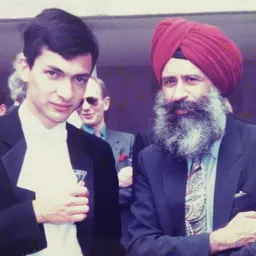
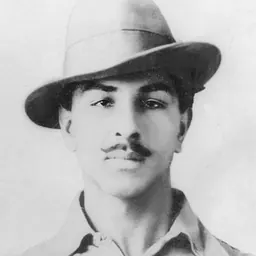
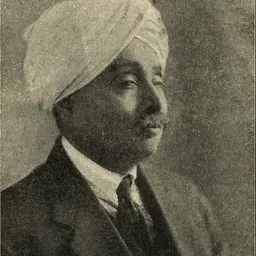

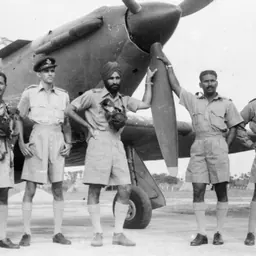

Related people
Same field, nearest in time

Contemporaries
People whose lives overlapped Sardar Ajit Singh's




Frequently asked questions
Who was Sardar Ajit Singh?
Indian dissident
When was Sardar Ajit Singh born?
Sardar Ajit Singh was born on 23 February 1881.
When did Sardar Ajit Singh die?
Sardar Ajit Singh died on 15 August 1947.
What was Sardar Ajit Singh's occupation?
Sardar Ajit Singh was a dissident, revolutionary and freedom fighter.
What nationality was Sardar Ajit Singh?
Sardar Ajit Singh was Indian.
Sources & further reading
· Wikipedia: Sardar Ajit Singh
Cite this page
APA: Biography.guide. (2026). Sardar Ajit Singh. https://biography.guide/sardar-ajit-singh/
MLA: "Sardar Ajit Singh." Biography.guide, https://biography.guide/sardar-ajit-singh/.
Chicago: "Sardar Ajit Singh." Biography.guide. https://biography.guide/sardar-ajit-singh/.
Data last updated: 2026-09-27 · Spot an error? Report a correction.
Page generated 2026-09-27 05:16 UTC