About Sara Josephine Baker
Lived 1873 – 1945 (aged 71). Sara Josephine Baker was an American physician, known for Preventive healthcare and Public health.
Sara Josephine Baker (November 15, 1873 – February 22, 1945) was an American physician notable for making contributions to public health, especially in the immigrant communities of New York City. Her fight against the damage that widespread urban poverty and ignorance caused to children, especially newborns, is perhaps her most lasting legacy. In 1917, she noted that babies born in the United States faced a higher mortality rate than soldiers fighting in World War I, drawing a great deal of attention to her cause. She also is known for (twice) tracking down Mary Mallon, better known as Typhoid Mary. Early life Baker was born in Poughkeepsie, New York, in 1873 to a wealthy Quaker family. After her father and brother died of typhoid, Baker felt pressured to support her mother and sister financially.
After studying chemistry and biology at home, she enrolled in the New York Infirmary Medical College, a medical school for women, founded by the sisters and physicians Elizabeth Blackwell and Emily Blackwell. The only class she failed—"The Normal Child", taught by Anne Daniel—led to her fascination with the future recipient of her attention, "that little pest, the normal child".
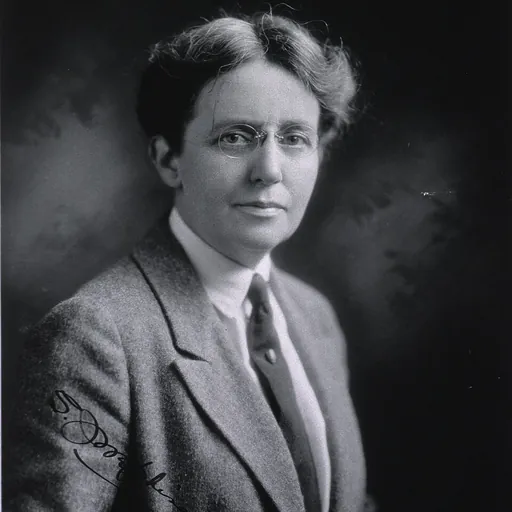
Baker began practicing as a private physician in New York City following her internship. In 1901, Baker passed the civil service exam and qualified to be a medical inspector at the Department of Health, and worked as a part-time inspector in 1902. Known as "Dr. Joe," she wore masculine-tailored suits and joked that colleagues forgot that she was a woman.
Career
After working diligently in the school system, Baker was offered an opportunity to help lower the mortality rate in Hell's Kitchen. It was considered the worst slum in New York at the turn of the century, with as many as 4,500 people dying every week. Baker decided to focus on the infant mortality rate in particular, as babies accounted for some 1,500 of the weekly deaths. Most of the infant deaths were caused by dysentery, though parental ignorance and poor hygiene were often indirectly to blame. She set up a milk station where clean milk was given out. Commercial milk at that time was often contaminated, or mixed with chalky water to improve colour and maximize profit. Baker also invented an infant formula made out of water, calcium carbonate, lactose, and cow milk. But there was still one area where infancy was dangerous: at birth. Babies were often delivered by midwives, who were excluded from the formal training available to doctors. Baker convinced New York City to license midwives to ensure some degree of quality and expertise.
While Baker was campaigning to license midwives, treat blindness, encourage breastfeeding, provide safe pasteurized milk, and educate mothers, older children were still getting sick and malnourished. Baker worked to make sure each school had its own doctor and nurse, and that the children were routinely checked for infestations. This system worked so well that head lice and the eye infection trachoma, diseases once rampant in schools, became almost non-existent. also known as "Typhoid Mary". Mallon was the first known healthy carrier of typhoid, who instigated several separate outbreaks of the disease and is known to have infected more than 50 people through her job as a cook. At least three of the people she infected died. Mallon was not the only repeat offender nor the only typhoid-contagious cook in New York City at the time, but she was unique in that she did not suffer any ill-effects of the disease and in that she was ultimately the only patient placed in isolation for the rest of her life.
Professional recognition Josephine Baker was becoming famous, so much so that New York University Medical School asked her to lecture there on children's health, or "child hygiene", as it was known at the time. Baker said she would if she could also enroll in the school. The school initially turned her down, but eventually acquiesced after looking unsuccessfully for a male lecturer to match her knowledge. In 1917, Baker became the first woman to receive a doctorate in public health.
After the United States entered World War I, Baker became even better known. Most of this publicity was generated from her comment to a New York Times reporter. She told him that it was "six times safer to be a soldier in the trenches of France than to be a baby born in the United States." Baker was offered a job in London as health director of public schools, a job in France taking care of war refugees, and a job in the United States as Assistant Surgeon General. Neither Baker nor Wylie ever declared themselves openly to be queer, but according to Dr. Bert Hansen, the two women were partners.
In 1935 and four years before her autobiography was published, Baker and Wylie decided to move to Princeton, New Jersey with Pearce.
Based on the similarity of tone and phrasing of Fighting for Life to Wylie's memoir, My Life with George, writer Helen Epstein postulates that Wylie may have helped Baker write her autobiography.
Retirement In 1923, Baker retired, but she did not stop working.
Sara Josephine Baker died from cancer on February 22, 1945, in New York City.
Don’t just read it —
keep it.
Full-length biographies made to live with: read them, listen on the way to work, watch them tonight.
- E-book
- Audio
- Video
Instant download · yours to keep · every purchase keeps this site free
Important facts
People in Sara Josephine Baker's life
Named in this biography and alive at the same time


Related people
Same field, nearest in time



Contemporaries
People whose lives overlapped Sara Josephine Baker's


Frequently asked questions
Who was Sara Josephine Baker?
American physician (1873-1945)
When was Sara Josephine Baker born?
Sara Josephine Baker was born on 15 November 1873 in Poughkeepsie.
When did Sara Josephine Baker die?
Sara Josephine Baker died on 22 February 1945 in Princeton.
What was Sara Josephine Baker's occupation?
Sara Josephine Baker was a physician.
What was Sara Josephine Baker known for?
Sara Josephine Baker was known for Preventive healthcare and Public health.
What nationality was Sara Josephine Baker?
Sara Josephine Baker was American.
Sources & further reading
· Wikipedia: Sara Josephine Baker
· DBpedia: Sara Josephine Baker
Cite this page
APA: Biography.guide. (2026). Sara Josephine Baker. https://biography.guide/sara-josephine-baker/
MLA: "Sara Josephine Baker." Biography.guide, https://biography.guide/sara-josephine-baker/.
Chicago: "Sara Josephine Baker." Biography.guide. https://biography.guide/sara-josephine-baker/.
Data last updated: 2026-09-23 · Spot an error? Report a correction.
Portrait: Wikimedia Commons · author & licence
Page generated 2026-09-27 05:06 UTC