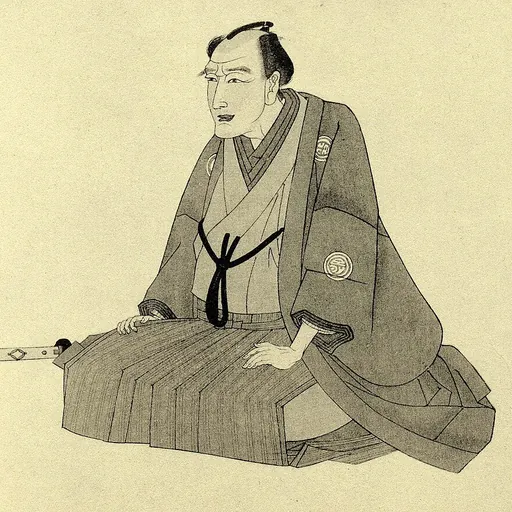
About Santō Kyōden
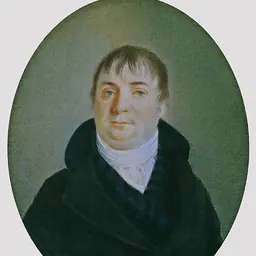
Lived 1761 – 1816 (aged 55). Santō Kyōden was a Japanese poet, writer, ukiyo-e artist, essayist, painter and artist.
was a Japanese artist, writer, and the owner of a tobacco shop during the Edo period. His real name was , and he was also known popularly as .
Early life Santō Kyōden was born in Fukagawa, Edo (now Tokyo). He began his professional career by illustrating the works of other authors. the Fine Arts Museum of San Francisco, the Boston Museum of Fine Arts, the University of Michigan Museum of Art, the Portland Art Museum, the British Museum, the Brooklyn Museum, the Yale University Art Gallery, the Art Institute of Chicago, the Minneapolis Institute of Art, the Metropolitan Museum of Art, the Chazen Museum of Art, the Philadelphia Museum of Art, the Los Angeles County Museum of Art, and the Indianapolis Museum of Art.
Kibyōshi
In the 1780s, he began writing kibyōshi or "yellow-covered" picture books under the name Santō Kyōden. Several of these works are written by Santō Kyōden and illustrated by Kitao Masanobu. His works gained popularity in 1785. One way Kyōden was able to increase sales was by placing advertisements for his shop within his writings. Although this is common practice today, this was a new development in Japan at the time. In order for Kyōden to differentiate that from his writing, he would put a box around his advertisements and announce, "this is an advertisement." Even his pseudonym, Santō Kyōden, contains a reference to the location of his tobacco shop. To means "to the East" of san, "the mountains," in kyō or "Kyōbashi." Den is a reference to his status as a merchant named "Denzaburo."
Kyōden was also able to capitalize on his celebrity status to draw customers to his shop. As Adam Kern states, "most denizens of Edo in late eighteenth-century and early nineteenth-century Japan would have recognized the Kyōden name as that of the best-selling author of numerous genres of light fiction." This is why Kyōden made sure to establish himself as a brand before he opened his shop so that people would be drawn to the shop to have a chance of meeting "Japan's first celebrity writer." However, it seems that Kyōden left the day-to-day activities to his father while he would lock himself in his office on the second floor to continue writing.
Kyōden faced competition two years after he opened his shop as other shops began making knock-offs of his tobacco pouches. Playboy, Roasted à la Edo (江戸生艶気蒲焼, Edo umare uwaki no kabayaki) (1785) A Connoisseur's Words (通言総籬, Tsūgen Sōmagaki) (1787) Forty-Eight Ways for Seducing Courtesans (傾城買四十八手, Keiseikai Shijūhatte) (1790) Shikake Bunko (仕懸文庫) (1791) Nishiki no Ura (錦之裏) (1791) Shōgi Kinuburui (娼妓絹籭) (1791) The Tale of the Three Thousand Year Flower (優曇華物語, Udonge Monogatari) (1804) Sakura Hime Zenden Akebono no Zōshi (桜姫全伝曙草子) (1805) Curios (骨董集, kottōshū) (1814–15)
Other names It was common for authors and illustrators to write and illustrate under a number of different aliases depending on what genre they were writing. Santō Kyōden was one such writer and illustrator that used a host of different names.
In Kyōka, or "mad-verse" poetry he went by the name of Migaru no Orisuke. With his ukiyo-e and book illustrations, he went by any one of the following names: Kitao Masanobu, Kitao Rissai Masanobu, Kitao Sessai Masanobu, or simply Masanobu. His later, archaic works before his death are written under the name Seisei Rōjin.
Don’t just read it —
keep it.
Full-length biographies made to live with: read them, listen on the way to work, watch them tonight.
- E-book
- Audio
- Video
Instant download · yours to keep · every purchase keeps this site free
Important facts
more
Rissai, Kitao Masanobu, Santōan, Masanobu Kitao, Santo Kyoden, Santou Kyouden, Kita MasanobuRelated people
Same field, nearest in time


Contemporaries
People whose lives overlapped Santō Kyōden's





Frequently asked questions
Who was Santō Kyōden?
Japanese poet and artist (1761–1816)
When was Santō Kyōden born?
Santō Kyōden was born on 13 September 1761 in Kiba.
When did Santō Kyōden die?
Santō Kyōden died on 27 October 1816.
What was Santō Kyōden's occupation?
Santō Kyōden was a poet, writer, ukiyo-e artist, essayist, painter and artist.
What nationality was Santō Kyōden?
Santō Kyōden was Japanese.
Sources & further reading
Cite this page
APA: Biography.guide. (2026). Santō Kyōden. https://biography.guide/santo-kyoden/
MLA: "Santō Kyōden." Biography.guide, https://biography.guide/santo-kyoden/.
Chicago: "Santō Kyōden." Biography.guide. https://biography.guide/santo-kyoden/.
Data last updated: 2026-09-22 · Spot an error? Report a correction.
Portrait: Wikimedia Commons · author & licence
Page generated 2026-09-27 05:02 UTC