
About Sanora Babb
Lived 1907 – 2005 (aged 98). Sanora Babb was an American novelist, writer, poet and journalist.
Sanora Louise Babb (April 21, 1907 – December 31, 2005) was an American novelist, poet, and literary editor known for her realistic portrayal of life during the Great Depression era. Eight of her books, including novels, a memoir, short story collections, and a volume of poetry, were published. After her death, she was featured in the Ken Burns 2012 documentary The Dust Bowl.
Her best known work, Whose Names Are Unknown (2004), received much critical acclaim and was a finalist for the 2005 Spur Award for the Best Western Novel and the 2005 PEN Center USA Literary Award for fiction. The novel had been written decades prior; John Steinbeck's 1939 Pulitzer Prize-winning novel The Grapes of Wrath had been based on Babb's field notes from interviews of migrant camp families compiled for her own book. Her boss, camp manager Tom Collins, had asked her to provide a copy of her notes to Steinbeck, who dedicated his novel to his wife and to Collins, "who lived it," with no attribution to Babb, whose own work was submitted to her publisher shortly thereafter.
Her short stories and poems have also won recognition. Her short stories "Wildflower" and "Santa Ana" were included in The Best American Short Stories (1950 and 1960 editions) edited by Martha Foley. Her poetry collection, Told in the Seed, won the Borestone Mountain Poetry Award in 1967 and her poem "Captive" from the Mitre Press Anthology, London won the Gold Medal Award in 1932. Babb's writing focuses on the themes of marginalized people and their connection to nature during the Great Depression. While neither of her parents belonged to the Otoe tribe, living in a Native American community gave Babb a heightened sensitivity to the relationship between the land and its people. Her father was a professional gambler who moved his family frequently.
Babb wrote about her experiences from this time period in her life in her The Lost Traveler (1958), an autobiographical novel that depicts a rambling gambling father from his daughter's perspective as she comes of age in the Great Depression and in An Owl on Every Post (1970), a memoir that tells Babb's story of homesteading in the Great Plains from the time she was seven years old. The town in An Owl on Every Post is Two Buttes, in Baca County, to the south of Lamar which is in Prowers County.
After four unsuccessful years in farming, her father moved the family to Elkhart, Kansas and then to Forgan, Oklahoma in the Oklahoma Panhandle. Babb began attending school at eleven. She graduated from high school as the Valedictorian. Afterwards, her father moved the family again to Kansas. She began studying at the University of Kansas but after one year, her lack of financial resources forced her to transfer to a junior college in Garden City, Kansas. would greatly influence her novel Whose Names Are Unknown.
Babb began working as a printer's assistant at 12 years old. She visited the Soviet Union in 1936. a position that would deeply influence the composition of her novel Whose Names Are Unknown. who had recently published several articles on migrants for the San Francisco News. Editor Bennett Cerf gave Babb an advance for her novel asking her to finish it. for fears that there would not be enough public support for two similar novels. Babb's novel Whose Names Are Unknown was not published until 2004.
In the early 1940s, Babb was the West Coast secretary of the League of American Writers. She edited the literary magazine The Clipper and its successor The California Quarterly, helping to introduce the work of Ray Bradbury and B. Traven. At the same time, she ran a Chinese restaurant in Los Angeles called Ching How, owned by her future husband James Wong Howe.
During the early years of the House Un-American Activities Committee (HUAC) hearings investigating Hollywood for communist influence which began in 1947, Babb was blacklisted
Personal life
Starting in 1932 Babb had a long correspondence and friendship with writer William Saroyan that grew into an unrequited love affair on Saroyan's part. She also had an affair with Ralph Ellison between 1941 and 1943.
She met the Chinese-American cinematographer James Wong Howe, and they traveled to Paris in 1937 to marry. Their marriage was not recognized in California because the state had an anti-miscegenation law that prohibited marriage between people of different races. Furthermore, Howe's studio contract had a "morals clause" that prohibited him from publicly acknowledging their relationship.
Howe and Babb did not legally marry in California until 1948, after the court case Perez v. Sharp overturned the state marriage ban. When the couple found a judge who agreed to perform the marriage, he reportedly stated: "She looks old enough. If she wants to marry a chink, that's her business".
Babb's political connections indicate a leftward, progressive lean. Mish and Whisenhunt note that Babb's connections to the Communist Party, among other liberal organizations, indicate Babb was "influenced by leftist ideals". In fact, she would sever ties with the Communist Party-USA because the party was not liberal enough for her views. Babb's engagement with the John Reed Club in the 1930s connected her to other writers of the time, such as Edna St. Vincent Millay. At one point, she was forced to flee the United States for Mexico. Babb continued to write and publish well into her eighties. Before her death, she was widowed by her husband, James Wong Howe, who died in 1976. She left no immediate survivors, but Joanne Dearcoppe, who knew Babb for over 60 years, was named literary executor.
Dearcopp has published additional work by Babb posthumously in addition to pursuing recovery work of Babb's writings. At the time of Babb's death, only one year had passed since Whose Names Are Unknown was published by the University of Oklahoma Press, which both The New York Times and Los Angeles Times noted in the obituaries they published.
Reception and legacy The reception for Whose Names Are Unknown has been largely positive. Scholars and reviewers have praised its realistic depiction of a family affected by The Great Depression and The Dust Bowl in addition to its role in introducing a progressive, feminist approach to a story known most famously from a male author, John Steinbeck. Despite critical acclaim, much speculation has ensued on the relationship (or lack thereof) between Babb and Steinbeck.
Babb's works are tied to many areas of contemporary literary and cultural studies, including Regional Studies, Great Plains Studies, Dust Bowl Studies, California Studies, and Rural Studies. Her works are also relevant to Working Class Studies, Migrant Literature, and Environmental/Nature Writing.
After a series of continued oppressive events, the family is forced to flee to California, leaving Konkie behind. In California, the family experiences more hardship, staying in migrant farm camps like those Babb had volunteered in and observed. The family is forced to work for pittance, and it is only through banding together with other migrant farm workers that they begin to exert agency.
Schooling of children features prominently in the novel. Even as the poor Oklahoma farm families struggle to survive, they are devoted to providing school access for their children. This is continued in California, although the children resist attending school, even with threat of truancy charges, due to the use of the pejorative "Okie" against migrant farmworkers and their children.
Works
Books The Lost Traveler, 1958 An Owl on Every Post, 1970 Dark Earth and Other Stories from the Great Depression — printed in one volume with Lew Amster, The Killer Instinct and Other Stories from the Great Depression, Santa Barbara, CA : Capra Press, 1987, Cry of the Tinamou, 1997, Muse Ink Press (27. Juli 2021), Told in the Seed, 1998, Muse Ink Press (30. Juli 2021), Whose Names Are Unknown, Norman, Oklahoma: University of Oklahoma Press, 2004, On the Dirty Plate Trail: Remembering the Dust Bowl Refugee Camps, 2007, Austin: University of Texas Press, 2007, The Dark Earth and Selected Prose from the Great Depression, Muse Ink Press (24 Aug. 2021),
Short stories "The Larger Cage" The Anitoch Review, vol. 13, no. 2, 1953, pp. 168–80. "The Tea Party" Seventeen, vol. 15, no. 3, 1956, 0p. 110, 142, 145, 175–77. "The Wild Flower" in The Best American Short Stories 1950, edited by Martha Foley. "Night of Yearning" Saturday Evening Post, vol. 232, no. 22, Nov. 1959, pp. 20106. "The Santa Ana" in The Best American Short Stories 1960, edited by Martha Foley.
Poems "Spring Wooing" Prairie Schooner, vol. 7, no. 1, 1933, p. 66. "Essence" Prairie Schooner, vol. 7, no. 2, 1933, p. 93. "Why Does the Dog Howl on the Midnight Hill?" Dalhousie Review, vol. 36, 1956, p. 58. "Allegro Con Fuoco" Dalhousie Review, vol. 36, 1956, p. 58. "The Visitor" Dalhousie Review, vol. 43, no. 2, 1963, p. 189. "Old Snapshots: Poem." Prairie Schooner, vol. 39, 1965, p. 302. "Told in the Seed" The Southern Review (Baton Rouge), vol. 2, no. 1, 1966, p. 117. "Night Visit" The Southern Review (Baton Rouge), vol. 17, no. 3, 1981, p. 583. "The Last Year" Hawaii Review, 1987, p. 20. "Above Malpaso Creek" Hawaii Review, vol. 12, no. 2, 1988, p. 54. "Night in a Greek Village" The Southern Review (Baton Rouge), vol. 26, no. 3, 1990, p. 679.
Don’t just read it —
keep it.
Full-length biographies made to live with: read them, listen on the way to work, watch them tonight.
- E-book
- Audio
- Video
Instant download · yours to keep · every purchase keeps this site free
Important facts
Family & relationships
People in Sanora Babb's life
Named in this biography and alive at the same time



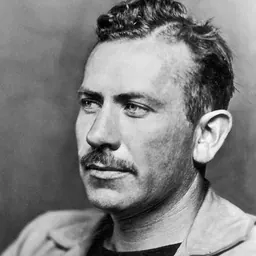



Related people
Same field, nearest in time
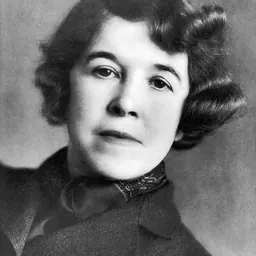
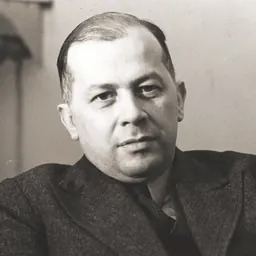


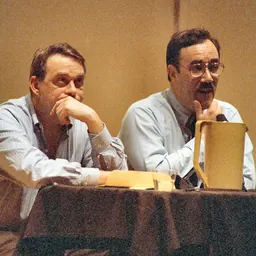
Contemporaries
People whose lives overlapped Sanora Babb's

Frequently asked questions
Who was Sanora Babb?
Αmerican writer (1907-2005)
When was Sanora Babb born?
Sanora Babb was born on 21 April 1907 in Osage County.
When did Sanora Babb die?
Sanora Babb died on 31 December 2005 in Hollywood Hills.
What was Sanora Babb's occupation?
Sanora Babb was a novelist, writer, poet and journalist.
What nationality was Sanora Babb?
Sanora Babb was American.
Sources & further reading
Cite this page
APA: Biography.guide. (2026). Sanora Babb. https://biography.guide/sanora-babb/
MLA: "Sanora Babb." Biography.guide, https://biography.guide/sanora-babb/.
Chicago: "Sanora Babb." Biography.guide. https://biography.guide/sanora-babb/.
Data last updated: 2026-09-20 · Spot an error? Report a correction.
Page generated 2026-09-27 05:30 UTC