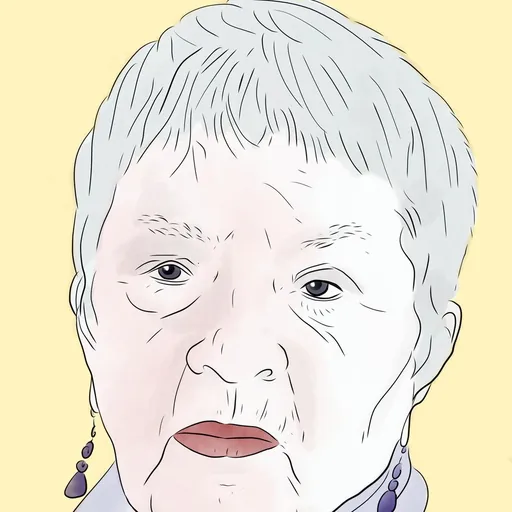
Sandra Harding
American philosopher of feminist theory, postcolonial theory, and epistemology
About Sandra Harding
Lived 1935 – 2025 (aged 89). Sandra Harding was an American philosopher, university teacher, writer, publisher and feminist.
Sandra G. Harding (March 29, 1935 – March 5, 2025) was an American philosopher of feminist and postcolonial theory, epistemology, research methodology, and philosophy of science, who directed the UCLA Center for the Study of Women from 1996 to 2000, and co-edited Signs: Journal of Women in Culture and Society from 2000 to 2005. Until her death, she was a Distinguished Professor Emeritus of Education at UCLA and a Distinguished Affiliate Professor of Philosophy at Michigan State University. In 2013, she was awarded the John Desmond Bernal Prize by the Society for the Social Studies of Science (4S).
Education and career Sandra Harding received her undergraduate degree from Douglass College of Rutgers University in 1956. After 12 years working as legal researcher, editor, and fifth-grade math teacher in New York City and Poughkeepsie, N.Y., she returned to graduate school and earned a doctorate from the Department of Philosophy at UCLA in 1973. This 56-page account was the first such attempt to bring gender issues in science and technology to such a global-scale and prestigious context. She was invited to contribute a chapter to UNESCO's World Social Science Report 2010 on "Standpoint Methodologies and Epistemologies: a Logic of Scientific Inquiry for People." This statement, among others, caused Harding's work to be controversial within certain scholarly circles. During the Science Wars, a debate regarding the value-neutrality of the sciences of the 1990s, her work became a main target of critics of feminist and sociological approaches.
She was criticized by mathematicians Michael Sullivan, Mary Gray, and Lenore Blum, and by the historian of science Ann Hibner Koblitz. Historian Garrett G. Fagan criticizes her for uncritically endorsing Afrocentric pseudohistory. Her essay on "Science is 'Good to Think With'" was the lead article in the issue of the journal Social Text that also included the Sokal Hoax, which focused on her work among others. Her work was also a main target of Paul Gross and Norman Levitt's Higher Superstition.
Death Harding died on March 5, 2025, at the age of 89.
Awards, honors and fellowships 2013. Awarded John Desmond Bernal Prize of Society for the Social Studies of Science (4S). 2012. Appointed Distinguished Professor of Education and Gender Studies. UCLA 2011. Appointed Distinguished Affiliate Professor of Philosophy, Michigan State University, East Lansing 2009. Received American Education Research Association (AERA) Award for Distinguished Contributions to Gender Equity in Education Research. 2007–08. Appointed a Phi Beta Kappa National Lecturer. 2007. Awarded The Douglass (College) Society Membership. 2000–05 Co-editor of Signs: Journal of Women in Culture and Society. 1990 Woman Philosopher of the Year, Eastern Division Society for Women in Philosophy. 1989. Elected to membership in Sigma Xi.
Selected works
Books The Science Question in Feminism, 1986. Whose Science? Whose Knowledge?: Thinking from Women's Lives, 1991. Is Science Multicultural? Postcolonialisms, Feminisms, and Epistemologies, 1998. Science and Social Inequality: Feminist and Postcolonial Issues, 2006. Sciences From Below: Feminisms, Postcolonialities, and Modernities, 2008. Objectivity and Diversity: Another Logic of Scientific Research, 2015.
Articles 1973. "Feminism: Reform or Revolution?" Philosophical Forum (Boston) 5, 271–284 1979. "The Social Function of the Empiricist Conception of Mind," Metaphilosophy 10 (Jan 1), 38–47 1979. "Is the Equality of Opportunity Principle Democratic?" Philosophical Forum (Boston) 10 (Dec 1), 206–22 1982. "Is Gender a Variable in Conceptions of Rationality: A Survey of Issues," Dialectica, 36 (Jan 1): 225–42 1983. "Why Has the Sex/Gender System Become Visible Only Now," in Discovering Reality, ed. Sandra Harding and Merrill Hintikka 1987. "The Method Question," Hypatia: A Journal of Feminist Philosophy 2, 19–35 1987. "The Curious Coincidence of Feminine and African Moralities," Women and Moral Theory, ed. Eva Feder Kittay and Diana Meyers 1990. "Starting Thought From Women's Lives: Eight Resources for Maximizing Objectivity," Journal of Social Philosophy 21(2–3), 140–49 1990. "Feminism, Science, and the Anti-Enlightenment Critiques," in Feminism/Postmodernism, ed. Linda Nicholson, 83–106 1992. "After Eurocentrism? Challenges for the Philosophy of Science," PSA 1992 Vol. 2, 311–319 1993. "Rethinking Standpoint Epistemology: What Is 'Strong Objectivity'?" in Feminist Epistemologies, ed. Linda Alcoff and Elizabeth Potter 1995. "'Strong Objectivity': A Response to the New Objectivity Question," Synthese, Vol. 104, No. 3, pp. 331–349 1998. "Women, Science, and Society," Science, New Series, Vol. 281, No. 5383 (Sep 11 1998), 1599–1600 2002. "Must the Advance of Science Advance Global Inequality?" International Studies Review, Vol. 4, No. 2 (Summer), 87–105 2003. "How Standpoint Methodology Informs Philosophy of Social Science," in Blackwell Guide to the Philosophy of the Social Sciences 2004. "A Socially Relevant Philosophy of Science? Resources from Standpoint Theory's Controversiality," Hypatia, Vol. 19, No. 1, 25–47 2005. "'Science and Democracy:' Replayed or Redesigned?" Social Epistemology, Vol. 19, No. 1, 5–18 2006. "Two Influential Theories of Ignorance and Philosophy's Interests in Ignoring Them," Hypatia, Vol. 21, No. 3 (Summer), 20–36 2007. "Modernity, Science, and Democracy," in Social Philosophy Today, Volume 22. Philosophy Documentation Center 2008. "How Many Epistemologies Should Guide the Production of Scientific Knowledge?" Hypatia, Vol. 23, No. 4, 212–219 2009. "Postcolonial and Feminist Philosophies of Science and Technology," Postcolonial Studies, Vol. 12, No. 4, p. 410–429 2010. "Standpoint Methodologies and Epistemologies: A Logic of Scientific Inquiry for People," World Social Science Report 2010, 173–5 2012. "Objectivity and Diversity," in Encyclopedia of Diversity in Education, ed. James Banks 2017. "Latin American Decolonial Studies: Feminist Issues," Feminist Studies, Vol. 43, No. 3, 624–636 and Kathryn Norberg, 2005. "New Feminist Approaches to Social Science Methodologies: An Introduction," Signs, Vol. 30, No. 4, 2009–15
Don’t just read it —
keep it.
Full-length biographies made to live with: read them, listen on the way to work, watch them tonight.
- E-book
- Audio
- Video
Instant download · yours to keep · every purchase keeps this site free
Important facts
People in Sandra Harding's life
Named in this biography and alive at the same time







Related people
Same field, nearest in time



Contemporaries
People whose lives overlapped Sandra Harding's




Frequently asked questions
Who was Sandra Harding?
American philosopher of feminist theory, postcolonial theory, and epistemology
When was Sandra Harding born?
Sandra Harding was born on 29 March 1935 in San Francisco.
When did Sandra Harding die?
Sandra Harding died on 5 March 2025.
What was Sandra Harding's occupation?
Sandra Harding was a philosopher, university teacher, writer, publisher and feminist.
What nationality was Sandra Harding?
Sandra Harding was American.
Sources & further reading
Cite this page
APA: Biography.guide. (2026). Sandra Harding. https://biography.guide/sandra-harding/
MLA: "Sandra Harding." Biography.guide, https://biography.guide/sandra-harding/.
Chicago: "Sandra Harding." Biography.guide. https://biography.guide/sandra-harding/.
Data last updated: 2026-09-24 · Spot an error? Report a correction.
Portrait: Wikimedia Commons · author & licence
Page generated 2026-09-27 05:08 UTC