
Samuel Wear
Early American militia leader
About Samuel Wear
Lived 1753 – 1817 (aged 63–64).
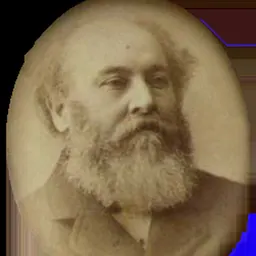
Samuel Wear (1753–April 3, 1817) was an American Revolutionary War soldier who fought at the Battle of Kings Mountain. He was one of the early inhabitants of, and a founder of, the "Lost State of Franklin". He later helped draft the Constitution of the State of Tennessee.
Early life Samuel Wear was born in Augusta County, Virginia in 1753. He and his first wife, Mary Thompson, had four children.
Frontier life
During the War for Independence, Wear and his family settled in the Overmountain town of Henderson Springs, then in Washington County (and later Greene County). Wear fought with the Overmountain Men in the Battle of Kings Mountain in October 1780. This is along the Cherokee footpath known as the "Indian Gap Trail," that passed through the valley en route to its junction with the Great Indian Warpath. Wear's fort was erected to protect the early settlers in that vicinity from Indian attacks; but its location along the trail made it a popular target for small bands of Cherokee raiders.
In 1786, Wear was one of the emissaries to the Cherokee who negotiated the Treaty of Coyatee, re-affirming the 1785 Treaty of Dumplin (that Dragging Canoe's Chickamauga faction had refused to recognize). The new treaty extended the area for white settlement almost as far south as the Little Tennessee River, along which the main "Overhill Cherokee" towns were located.
Constitutional delegate In 1795, as a constitutional convention delegate appointed by Sevier, Wear and four others met at Wears Fort and drafted the constitution presented to convention delegates in the establishment of the State of Tennessee.
War of 1812 Wear commanded the 1st Regiment, East Tennessee Volunteer Militia, from September through December 1813, under General James White. The volunteer corp, which was stationed at the new Fort Strother in the Mississippi Territory, fought in the frontier extension of the War of 1812 (known as the "Creek War"), but was disbanded and sent home after the Hillabee Massacre.
Later life and death Wear died April 3, 1817, in Sevierville, Tennessee. He is buried in the Ft. Wear cemetery, Henderson Springs, Tennessee. A monument dedicated to Wear reads: "Pioneer, Soldier of four Wars; Colonial, Revolution, Indian,1812; One of the Heroes of Kings Mountain, and a Founder of the State of Franklin. This monument is erected by his decendents."
Legacy Wears Valley is named for Wear. Although the original name of the valley was "Crowson Cove," after its first settler, Aaron Crowson, the valley was using its current name by 1900. The reason for the 19th-century name change is uncertain.
Don’t just read it —
keep it.
Full-length biographies made to live with: read them, listen on the way to work, watch them tonight.
- E-book
- Audio
- Video
Instant download · yours to keep · every purchase keeps this site free
Important facts
People in Samuel Wear's life
Named in this biography and alive at the same time

Contemporaries
People whose lives overlapped Samuel Wear's






Frequently asked questions
Who was Samuel Wear?
Early American militia leader
When was Samuel Wear born?
Samuel Wear was born in 1753 in Augusta County.
When did Samuel Wear die?
Samuel Wear died in 1817 in Sevierville.
Sources & further reading
Cite this page
APA: Biography.guide. (2026). Samuel Wear. https://biography.guide/samuel-wear/
MLA: "Samuel Wear." Biography.guide, https://biography.guide/samuel-wear/.
Chicago: "Samuel Wear." Biography.guide. https://biography.guide/samuel-wear/.
Data last updated: 2026-09-20 · Spot an error? Report a correction.
Page generated 2026-09-27 04:58 UTC