
About Samuel W. Rowse
Lived 1822 – 1901 (aged 79). Samuel W. Rowse was an American painter.
Eastman Johnson, The Funding Bill also known as Portrait of Two Men, 1881. Depicts Robert W. Rutherford and Samuel W. Rowse (right). Samuel Worcester Rowse (January 29, 1822 – May 24, 1901) was an American illustrator, lithographer, and painter. He worked in Maine as an engraver.
Works
In 1852, Rowse worked for a lithographer and then opened a studio in Boston, Massachusetts, due to the demand for his crayon (pastel) and charcoal portraits. He developed a reputation for his drawings of people in the news. Rowse boarded with the family of Ralph Waldo Emerson in the summer of 1854, and while there sketched Henry David Thoreau, which was considered to be a good likeness by Sophia Thoreau. The drawing, which had hung in the Thoreau house, was donated to the Concord Free Public Library by Amos Bronson Alcott after he purchased the house in 1877. Rowse made a sketch of Emerson, considered by William James Stillman to be "the most masterly" depiction of him. The drawing is displayed in Emerson'a former home in Concord. Rowse is best known for these images.
Copies of his lithograph of The Resurrection of Henry Box Brown at Philadelphia were used by anti-slavery activists prior to and during the American Civil War (1861–1865) to raise funds for the Underground Railroad and other anti-slavery campaigns. Henry Box Brown was a slave who escaped from Richmond, Virginia in 1849 by having himself shipped overland express to Philadelphia, Pennsylvania in a small crate, delivered to Passmore Williamson, Reverend James Miller McKim, and other members of the Pennsylvania Anti-Slavery Society. His journey took 27 hours and was considered a miracle of the improved private mail system.
In 1864 Rowse joined the Saturday Club, of which Emerson was a member. Generally the portraits were drawings in black and white, and in crayon. Arthur Hugh Clough and Howard Dwight. Annie Adams Fields, wife of Boston publisher James T. Fields, sat for a black crayon drawing by Rowse and noted the artist was "eccentric but true and interesting".
He made portraits of children, which exhibited at the galleries of M. Knoedler & Co. in January, 1902. A book was published that year entitled Ideal Children's Heads in Crayon and Oil.
Rowse died in Morristown, New Jersey on May 24, 1901.
Don’t just read it —
keep it.
Full-length biographies made to live with: read them, listen on the way to work, watch them tonight.
- E-book
- Audio
- Video
Instant download · yours to keep · every purchase keeps this site free
Important facts
People in Samuel W. Rowse's life
Named in this biography and alive at the same time




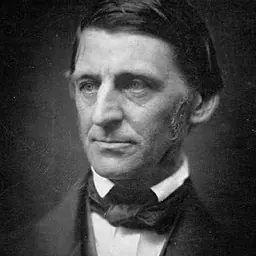
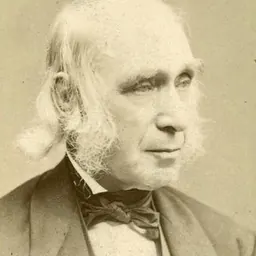
Related people
Same field, nearest in time
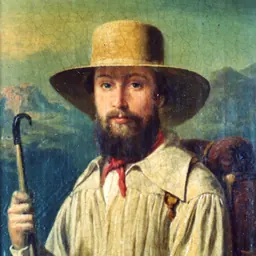
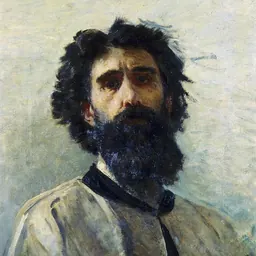

Contemporaries
People whose lives overlapped Samuel W. Rowse's



Frequently asked questions
Who was Samuel W. Rowse?
American artist (1822-1901)
When was Samuel W. Rowse born?
Samuel W. Rowse was born on 29 January 1822 in Bath, Maine.
When did Samuel W. Rowse die?
Samuel W. Rowse died on 24 May 1901.
What was Samuel W. Rowse's occupation?
Samuel W. Rowse was a painter.
What nationality was Samuel W. Rowse?
Samuel W. Rowse was American.
Sources & further reading
Cite this page
APA: Biography.guide. (2026). Samuel W. Rowse. https://biography.guide/samuel-w-rowse/
MLA: "Samuel W. Rowse." Biography.guide, https://biography.guide/samuel-w-rowse/.
Chicago: "Samuel W. Rowse." Biography.guide. https://biography.guide/samuel-w-rowse/.
Data last updated: 2026-09-20 · Spot an error? Report a correction.
Page generated 2026-09-27 05:26 UTC