
Samuel Stalnaker
Virginia frontiersman
About Samuel Stalnaker
Lived 1715 – 1769 (aged 53–54).
Samuel Stalnaker (1682 or 1715 – 1769) was an explorer, trapper, guide and one of the first settlers on the Virginia frontier. He established a trading post, hotel and tavern in 1752 near what is now Chilhowie, Virginia. He was held captive by Shawnee Indians at Lower Shawneetown in Kentucky for almost a year, before escaping and traveling over 460 miles to Williamsburg, Virginia, to report on French preparations to attack English settlements in Virginia and Pennsylvania. He later served as a guide under George Washington during the French and Indian War.
Birth and arrival in Virginia Samuel Stalnaker was probably born about 1715, although some sources give a birthdate of 1682. He was born either in the Palatinate of southwestern Germany, or in Westphalia, or possibly in western New York or Pennsylvania. George and Adam, who accompanied or followed him to southwestern Virginia, were probably his brothers. Some sources report his arrival in Virginia as early as 1732. In December 1742, he first appears in the records (as "Samuel Stolenacre"), in the estate settlement of Matthias Harmon in Hanover Township, Montgomery County, Pennsylvania. By 1745, Samuel Stalnaker was living on the New River in southwestern Virginia, which was the far frontier and populated mainly by Scots-Irish and German immigrants, as well as English settlers from farther east in Virginia. He and his wife Susanna had a daughter, Maria Barbara, in 1743, who was not christened until November 1755. In October 1745, Samuel bought land granted to the Wood's River Company. He paid John Buchanan, agent for the company, £3 for 100 acres opposite the Buffalo Pound (later Bingamon's and then Pepper's Ferry) near what is now Radford, Virginia.
On 23 March 1750, Dr. Walker and his associates again met Stalnaker on the middle fork of the Holston River, on the north side, just a few miles above its junction with the South Fork, and helped him to build a cabin there. Walker himself states in his journal: "March 23rd, we kept down the Holston River about four miles and camped; then Mr. Ambrose Powell and I went to look for Samuel Stalnaker, who I had been informed was just moved out to settle. We found his camp, and returned to our own in the evening. Mar. 24th, we went to Stalnaker's, helped him to raise his house and camped about a quarter of a mile below him."
Stalnaker was Virginia's westernmost colonial settler. His route to the Cherokees, with whom he was trading for skins and furs at the time, was a passage through the mountains later to be named the Cumberland Gap by Walker, in honor of Prince William, Duke of Cumberland, son of King George II of Great Britain.Stalnaker acted as a guide and Indian liaison to Walker and his crew leading them through the treacherous path to the lands west so that they could chart the then unknown territory. "Know all men by these presents that we, Saml. Stalnaker and Alexander Sayers are held and firmly bound to our sovereign Lord, George the Second, in the sum of ten thousand pounds of tobacco to which the payment well and truly to be made we bind ourselves and every of us and every of our heirs, executors, administrators, jointly and severally, firmly by these presents sealed with our seals and dated this 7th day of Nov. 1752. THE CONDITION of this obligation is such that whereas the above bound Saml. Stalnaker hath obtained a license to keep an ordinary in this county; if therefore, the said Stalnaker doth constantly find and provide in his ordinary good, wholesome and cleanly lodgings and diet for travelers and stablage and fodder and provender, or pasturage and provender as the season shall require for horses, for and during the term of one year from this seven day of Nov. and shall not suffer or permit any unlawful gaming in this house on the Sabbath day or suffer or permit any to tipple or drink more than is necessary; then this obligation to be void and of none effect or else to remain in full force and virtue." Samuel Stalnaker signed this bond with his initials "S. S."
Records indicate that Stalnaker used the structure he had originally built as a fort in 1748 and renovated it as a tavern.
By 1752 there was apparently a large encampment of Cherokees near Samuel's trading post on the Holston. The Cherokees came to trade at Stalnaker's and settled there more or less permanently, and Stalnaker provided them with corn and other supplies. When Stalnaker asked the Governor Robert Dinwiddie to pay for their keep, the Governor refused until they finished a road they had agreed to build, and Samuel started charging them for their provisions. In January 1753, a Cherokee leader known as "The Emperor" (possibly either Amouskositte or Moytoy of Citico) petitioned Governor Dinwiddie for the removal of Stalnaker from his farm on the Holston River because Stalnaker was allegedly overcharging the Cherokees for goods at his trading post. This charge was supported by Erwin Patterson, Stalnaker's neighbor. The Governor agreed to order Stalnaker to charge fair prices. An investigation proved that Stalnaker's prices were reasonable and that the Cherokees were satisfied. In negotiating the Catawaba and Cherokee Treaty of March 1756, the Indians requested that the treaty be held at Stalnaker's tavern, Samuel Stalnaker himself had been captured by the Indians and was believed dead. The tavern eventually became a stagecoach stop under the name Chillhowie Springs by 1815.
In 1938 Leo Stalnaker reported that the remains of Samuel Stalnaker's tavern were still standing just outside Chilhowie, Virginia, and described it as "very likely the original log cabin of Samuel Stalnaker which later had been weather-boarded and enlarged into an Inn...[It is] a two-story, rambling building obviously used as a tavern. Numbers are still on the doors upstairs [and]...logs of a cabin are visible behind rotting weatherboarding."
Capture and escape On 18 June 1755, Shawnee Indians attacked Samuel Stalnaker's settlement, capturing Stalnaker, his wife and son Adam, along with Samuel Hydon, Matthias Counce, and an unnamed male servant. They executed all except Stalnaker and Hydon. Stalnaker's mother and four children were in another building when the Indians rushed the house, and got away by hiding in a "rye patch." Stalnaker and Hydon were taken through Glinch Valley along the Sandy Creek by the Indians on their way to Ohio.
The Pennsylvania Gazette reported: Williamsburg, July 11. Last Sunday an Express arrived in Town, with the melancholly News of several more of our inhabitants being cut off, on Holston's River. Captain Stallnicher and his Wife were taken Prisoners, his Mother and four Children being in an Out House made their escape, and concealed themselves in a Rye Patch, till the Affair was over; there were three more taken prisoner and killed. Colonel Stewart, and William Long, on their Return from Fort Cumberland, where they had been to supply Provisions for the Army, were shot at there several Times, but escaped unhurt to the Augusta Court-House, from whence they were about 45 Miles distant.
Major Andrew Lewis led the Sandy Creek Expedition from mid-February until April 1756, in a failed attempt to rescue prisoners taken by the Shawnee. On Sunday, 29 February 1756, Captain William Preston wrote in his journal: "The creek has been much frequently used by Indians both traveling and hunting on it, and...I am apprehensive that Stalnaker and the prisoners taken with him were carried this way." The expedition was planning to attack Lower Shawneetown (where Stalnaker was being held), but bad weather and inadequate supplies forced them to turn back and abandon their mission.
On 10 May 1756, Stalnaker escaped and traveled for 40 days, covering over 460 miles to Williamsburg, Virginia to report to Governor Robert Dinwiddie on an impending assault by the French and Indians on English frontier settlements. A letter from the governor dated 21 June 1756 reports Stalnaker's escape: "One Stalniker, who was taken prisoner by the Shawnesse, made his escape and says he saw six Fr. Officers with 1,000 Ind's from Oubatch, bound to F't Dusquesne, and reports they intended to visit our Front's y's Sumer." The Pennsylvania Gazette reported:
"Williamsburg, June 11 -- Capt. Stalnacker, who was taken Prisoner by the Shawnese, the 18th of June last, on Holston's River, and has been at the Shawnese Town, and Ouabach [Wabash] Fort ever since, till the tenth of last Month, when he made his Escape from them, is come to this Town, and informs us, that on the evening before he made his escape (9 May 1756), 1,000 Indians and six French officers came to the Shawnese Town, destined for Fort Duquesne, to wait there some time to see whether any attempt would be made upon it, and if not, to disperse themselves, and fall upon the Frontiers of Virginia and Pennsylvania."
Military service in the French and Indian War On 8 September 1756, Governor Dinwiddie, writing to Colonel Clement Reed, acknowledged the receipt of a letter from that officer through Captain Stalnaker and said "Give Stalnaker 100 pounds to qualify him to raise his Company and build a stockade fort at Drapers Meadow." Dinwiddie also proposed promoting Stalnaker to lieutenant. Governor Dinwiddie wrote to Major Lewis on 17 December 1756: "As to Stalnaker...I'm of the Opin'n he sh'd, and desire [you would] apoint him a Lieut., in one of the Forts, as probably he may be of Service hereafter, being well acquainted in the Woods and a good Pilot or Guide on Occasion." and Stalnaker was going to participate, but the plan was never implemented.
Final years Stalnaker must have remarried, because in the fall of 1761 he and his wife Margaret served as administrators of the estate of Valentine Snyder, who had died in 1755, and Vincent Williams, killed by Bemino in a raid in 1756. Stalnaker continued to operate his tavern, which served Colonel William Byrd and his troops in 1761 during the Anglo-Cherokee War, when they constructed a blockhouse named Fort Attakullakulla nearby. While staying at Stalnaker's tavern in July 1761, Major Robert Stewart wrote a letter to George Washington, mentioning that construction of the fort at Stalnaker's settlement was delayed due to an "epedemick" fever (possibly malaria) which had affected most of his troops.
At some time in the 1760s Stalnaker may have gone to South Carolina with his daughter Barbara. Records show that he purchased land there, but had returned to Hampshire County, Virginia by 1768.
Samuel Stalnaker does not appear in records after this, and 1769 is generally recorded as the date of his death and burial.
Family and children
Samuel Stalnaker is believed to have had three brothers, George, Jacob and Adam. He had five children: Jacob (1737–1834), Adam (1738–1755), Maria Barbara (born 1743), Samuel (born 1749, christened 15 November 1750), and George Christian (born 18 November 1752). His first wife Susanna and his son Adam were killed during the Shawnee attack on 18 June 1755. He remarried to Margaret sometime around 1761.
Don’t just read it —
keep it.
Full-length biographies made to live with: read them, listen on the way to work, watch them tonight.
- E-book
- Audio
- Video
Instant download · yours to keep · every purchase keeps this site free
Important facts
People in Samuel Stalnaker's life
Named in this biography and alive at the same time
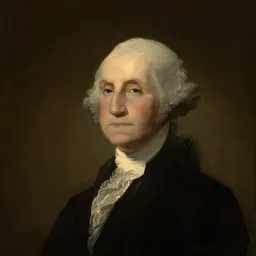
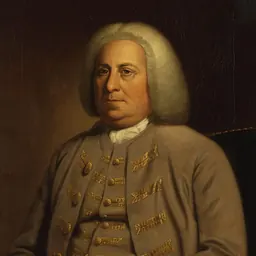

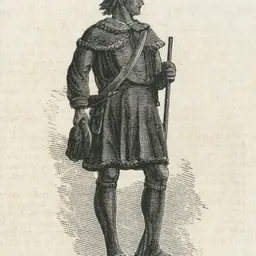

Contemporaries
People whose lives overlapped Samuel Stalnaker's



Frequently asked questions
Who was Samuel Stalnaker?
Virginia frontiersman
When was Samuel Stalnaker born?
Samuel Stalnaker was born in 1715 in Westphalia.
When did Samuel Stalnaker die?
Samuel Stalnaker died in 1769 in Chilhowie, Virginia.
What was Samuel Stalnaker known for?
Samuel Stalnaker was known for Cumberland Gap and Shawnees.
Sources & further reading
Cite this page
APA: Biography.guide. (2026). Samuel Stalnaker. https://biography.guide/samuel-stalnaker/
MLA: "Samuel Stalnaker." Biography.guide, https://biography.guide/samuel-stalnaker/.
Chicago: "Samuel Stalnaker." Biography.guide. https://biography.guide/samuel-stalnaker/.
Data last updated: 2026-09-22 · Spot an error? Report a correction.
Page generated 2026-09-27 05:18 UTC