
About Samuel Seymour
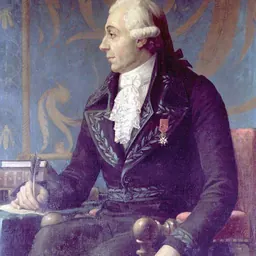
Lived 1770 – 1853 (aged 82–83). Samuel Seymour was an American scientific illustrator.
Samuel Seymour (ca. 1775–ca. 1832) was a painter, engraver, and illustrator who documented Native American people and the scenery from expeditions of Stephen Harriman Long in 1819, 1820, and 1823. Some of the drawings captured new species of flora and fauna.
He was described as "the first of the far western expeditionary artists".
Philadelphia
Seymour completed five panels in 1795 for the American edition of the Encyclopædia Britannica printed by Thomas Dobson. He established himself in Philadelphia by 1796, where he was an engraver and painter through 1822. He was a colleague of Thomas Sully and made engravings of William Birch's work in 1801, 1803, and 1804. His engraving of Thomas Birch's Philadelphia, taken from Kensington drawing of 1811 is among the collection of the Philadelphia Museum of Art.
His works were exhibited at the Pennsylvania Academy of the Fine Arts shows, and Man directing woman into a cave, an engraving of John James Barralet's work, and other illustrations. Most of the works that he exhibited at the Academy were plein air landscapes and yet he mainly focused his energy on his commercial engraving business.
Either directly or through his connections, Seymour was familiar with the nation's leading artistic and scientific organizations: the Academy of Natural Sciences of Philadelphia, Philadelphia Museum of Art, and American Philosophical Society. Seymour was an associate member of the Society of Artists. He became increasingly interested in landscape paintings and traveled to the countryside with Sully and along the Schuylkill River with Jarvis and Birch to make sketches.
These organizations helped define the objective for Stephen Harriman Long's scientific expeditions.
Long expeditions
Seymour joined a scientific expedition to explore the Missouri River in 1819. He, along with Titian Peale, were the first trained artists to explore the western frontier and capture scenic landscapes and Native Americans. There were also the "first official artists to accompany a United States government" expedition of the Great Plains. He was with Major Benjamin O'Fallon when he met with Missouria, Otoe, and Pawnee tribes. Among his works was a watercolor that he made of a Pawnee council that included a military party of officers and a band. In it, Pawnee are seated on benches, an American flag flies from a pole, and a Native American leader stepped forward to speak to the audience.
Seymour was also the illustrator for Long's Expedition in 1820 along the Platte River, to the Front Range of the Rocky Mountains, and then along the Arkansas and Canadian Rivers. They traveled to the headwaters of St. Peter's River in present Minnesota. He gave his daughter Emma the painting Fort Smith, Arkansas, 1820 in Newark.
Gallery
Don’t just read it —
keep it.
Full-length biographies made to live with: read them, listen on the way to work, watch them tonight.
- E-book
- Audio
- Video
Instant download · yours to keep · every purchase keeps this site free
Important facts
People in Samuel Seymour's life
Named in this biography and alive at the same time




Related people
Same field, nearest in time



Contemporaries
People whose lives overlapped Samuel Seymour's




Frequently asked questions
Who was Samuel Seymour?
American painter, engraver, and illustrator (1770–1853)
When was Samuel Seymour born?
Samuel Seymour was born in 1770.
When did Samuel Seymour die?
Samuel Seymour died in 1853.
What was Samuel Seymour's occupation?
Samuel Seymour was a scientific illustrator.
What nationality was Samuel Seymour?
Samuel Seymour was American.
Sources & further reading
· DBpedia: Samuel Seymour (artist)
Cite this page
APA: Biography.guide. (2026). Samuel Seymour. https://biography.guide/samuel-seymour/
MLA: "Samuel Seymour." Biography.guide, https://biography.guide/samuel-seymour/.
Chicago: "Samuel Seymour." Biography.guide. https://biography.guide/samuel-seymour/.
Data last updated: 2026-09-20 · Spot an error? Report a correction.
Page generated 2026-09-27 05:15 UTC