
About Samuel Scott
Lived 1702 – 1772 (aged 69–70). Samuel Scott was a British painter and watercolorist.
Samuel Scott ( – 12 October 1772) was an English painter who specialised in landscape painting and marine art.
Early life Scott was born in London, and began painting around 1720. Nothing is known of his artistic training. He started as a maritime artist, painting men-of-war and other ships on calm seas in the style of Willem van de Velde, many of whose drawings he owned. An account of their trip was written by Ebenezer Forrest and eventually published in 1782, with engravings taken from drawings by Hogarth and Scott.
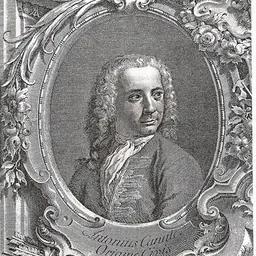
In the early 1740s, Scott began making sketches of London, especially of the new Westminster Bridge, then under construction. When, following the arrival of Canaletto in London in 1746, paintings of views of the city became fashionable, he began working the sketches up into oil paintings.
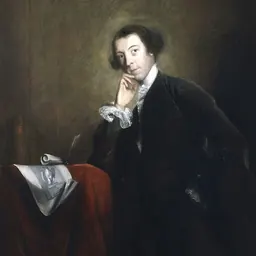
Later life Between 1761 and 1771, he exhibited three works at the Society of Artists, one at the Free Society of artists, and one, The Thames and the Tower of London, at the Royal Academy's Exhibition of 1771. He was one of the early draughtsmen in watercolours, and was called the father of English watercolour, but his chief works were in oil. Some of Scott's most celebrated paintings were his depictions of scenes during the War of Jenkins' Ear. Scott earned a considerable reputation for his shore and river scenes, which were well-drawn and painted, and enlivened with figures. Horace Walpole, who had a large collection of his works, said that they "will charm in every age" and that "if he was second to Vandeveldt in sea pieces, he excelled him in variety." His views of London Bridge, the Custom-house Quay, and other pictures of the Thames earned him the name "the English Canaletto".
Scott lived at number 2 Henrietta Street, Covent Garden, overlooking the Piazza at Covent Garden, from 1747 to 1758. He moved to Twickenham in 1758, and then to Ludlow, where his daughter was living, before retiring to Bath, where he died in Walcot Street, of gout, on 12 October 1772, leaving one daughter. His collection was sold by Langford in January 1773.
William Marlow (1740–1813) and the animal painter Sawrey Gilpin (1733–1807) were his pupils. Marlow produced similar scenes of the Thames to Scott, and later acquired his former villa at Twickenham.
Gallery
References and sources
Don’t just read it —
keep it.
Full-length biographies made to live with: read them, listen on the way to work, watch them tonight.
- E-book
- Audio
- Video
Instant download · yours to keep · every purchase keeps this site free
Important facts
more
Scott, late Mr. Scot, Mr. Scott, Mr. Scot, scott samuelPeople in Samuel Scott's life
Named in this biography and alive at the same time

Related people
Same field, nearest in time



Contemporaries
People whose lives overlapped Samuel Scott's



Frequently asked questions
Who was Samuel Scott?
British landscape painter (1702-1772)
When was Samuel Scott born?
Samuel Scott was born in 1702 in London.
When did Samuel Scott die?
Samuel Scott died on 12 October 1772 in Bath.
What was Samuel Scott's occupation?
Samuel Scott was a painter and watercolorist.
What nationality was Samuel Scott?
Samuel Scott was British.
Sources & further reading
· DBpedia: Samuel Scott (painter)
Cite this page
APA: Biography.guide. (2026). Samuel Scott. https://biography.guide/samuel-scott-painter/
MLA: "Samuel Scott." Biography.guide, https://biography.guide/samuel-scott-painter/.
Chicago: "Samuel Scott." Biography.guide. https://biography.guide/samuel-scott-painter/.
Data last updated: 2026-09-20 · Spot an error? Report a correction.
Page generated 2026-09-27 05:18 UTC