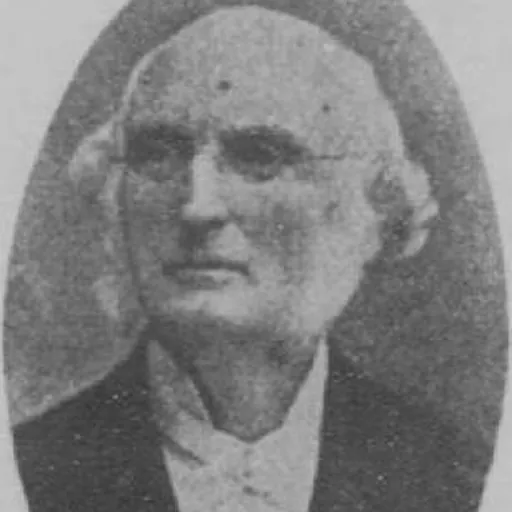
About Samuel Robbins Brown
Lived 1810 – 1880 (aged 70). Samuel Robbins Brown was an American linguist, translator, missionary, bible translator and teacher.
Rev. Samuel Robbins Brown D.D. (June 16, 1810 – June 20, 1880) was an American missionary to China and Japan with the Reformed Church in America.
Birth and education Brown was born in East Windsor, Connecticut. He graduated from Yale College in 1832, studied theology in Columbia, South Carolina and as a member of the first graduating class of Union Theological Seminary, and taught for four years (1834–38) at the New York Institution for the Deaf and Dumb.
China In 1838, he went to Guangzhou and opened, for the Morrison Education Society, the first Protestant School in the Chinese Empire—a school in which were taught Yung Wing and other pupils who afterward came to the United States. The several annual reports on this school were published in The Chinese Repository for 1840 to 1846, to which he contributed some of his papers on Chinese subjects.
Return to America After nine years' service, his wife's health failing, Brown returned to the United States and became a pastor at Sand Beach Church and teacher of boys at Owasco Outlet, near Auburn (1851–59). He worked for the formation of a college for women, which was situated first in Auburn and then in Elmira, New York and now known as Elmira College. Brown was responsible for sponsoring Yung Wing (1828–1912); the first Chinese student to graduate from a U.S. university, graduating from Yale College in 1854. On arrival, Brown shared residential accommodation with the family of the Presbyterian medical missionary Dr. James Curtis Hepburn, then residing at Jobutsuji in Kanagawa, a dilapidated temple formerly occupied by the Dutch consulate.
Brown and Hepburn, both benefiting from the experience of living and working in China, were noted pioneers in the study of the Japanese language. In collaboration with Dr. Hepburn and others, Brown made substantial contributions to the translation of the New Testament into Japanese. Brown was also a gifted teacher, Ernest Satow, then a student interpreter at the British legation, who many years later became British Consul to Japan, described the Japanese language lessons received from Brown to be, "of the greatest value."
Brown began presiding at Christian ecumenical religious services held at the Jobutsuji in Kanagawa from the second Sunday after his arrival in November 1859. In July 1860, at the request of English-speaking merchants in Yokohama, Brown begun to preach regularly at Sunday morning service that attracted 30 to 40 congregants each week.
In 1861 Brown also contributed to drawing up the plans and specifications for the British Anglican Garrison Church built on Lot 105 in the foreign settlement. The Garrison Church, also known as Christ Church, was the forerunner of Christ Church, Yokohama, rebuilt in 1901 on a prominent position on the Bluff overlooking the Port of Yokohama. On Lot 167 in the heart of the Kannai commercial district, Brown was also able to establish a Reformed Church, later named in 1872 as Union Church, Yokohama.
At Yokohama, Brown also opened a school in which hundreds of young men, afterwards leaders in various walks of life, were educated. Brown acted as honorary chaplain to the United States legation, teaching and preaching for over 20 years. He was one of the founders of the Asiatic Society of Japan and a prominent contributor to early Meiji Period higher education.
Following a fire that destroyed much of his home, personal library, manuscripts, and notes, Brown returned to the United States for a two-year furlough in May 1867. In June of the same year he was awarded an honorary Doctorate in Divinity by New York University.
Brown returned to Japan in 1869, arriving at Yokohama on August 26, to take up a new position as principal of a government funded school in Niigata. The Niigata sojourn was only brief; desiring to be close to his fellow New Testament translators, Brown accepted a new teaching post and relocated back to Yokohama in 1870.
Brown, suffering from ill health, left Japan for the United States in the Autumn of 1879.
Death Brown died during his sleep, while visiting an old friend in Stockbridge, Massachusetts, and is buried at Monson, Massachusetts, his boyhood home.
Don’t just read it —
keep it.
Full-length biographies made to live with: read them, listen on the way to work, watch them tonight.
- E-book
- Audio
- Video
Instant download · yours to keep · every purchase keeps this site free
Important facts
People in Samuel Robbins Brown's life
Named in this biography and alive at the same time

Related people
Same field, nearest in time

Contemporaries
People whose lives overlapped Samuel Robbins Brown's





Frequently asked questions
Who was Samuel Robbins Brown?
American missionary (1810–1880)
When was Samuel Robbins Brown born?
Samuel Robbins Brown was born on 16 June 1810 in East Windsor.
When did Samuel Robbins Brown die?
Samuel Robbins Brown died on 20 June 1880 in Stockbridge.
What was Samuel Robbins Brown's occupation?
Samuel Robbins Brown was a linguist, translator, missionary, bible translator and teacher.
What nationality was Samuel Robbins Brown?
Samuel Robbins Brown was American.
Sources & further reading
· Wikipedia: Samuel Robbins Brown
· DBpedia: Samuel Robbins Brown
Cite this page
APA: Biography.guide. (2026). Samuel Robbins Brown. https://biography.guide/samuel-robbins-brown/
MLA: "Samuel Robbins Brown." Biography.guide, https://biography.guide/samuel-robbins-brown/.
Chicago: "Samuel Robbins Brown." Biography.guide. https://biography.guide/samuel-robbins-brown/.
Data last updated: 2026-09-20 · Spot an error? Report a correction.
Page generated 2026-09-27 05:10 UTC