
About Samuel Mosberg
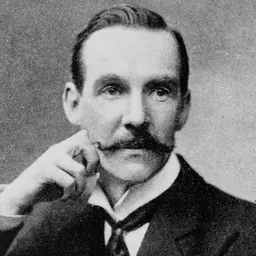
Lived 1896 – 1967 (aged 71). Samuel Mosberg was an American boxer.
Samuel A. Mossberg or Mosberg (June 14, 1896 – August 30, 1967) was an American lightweight professional boxer who competed in the early 1920s. He was managed by Billy Gibson and Jack Bulger for most of his professional career.
Amateur career Mosberg was born in Cisleithania (nowadays Austria) on June 14, 1896, but grew up on New York City's East side, a largely Jewish section. He began his prolific amateur boxing career in 1912 at age 16 with New York's Pastime Athletic Club and gained vast experience, eventually fighting an impressive 250 amateur fights.
WWI Navy boxer Boxing for the navy in World War I, Mosberg won the lightweight championship for his base, the Newport Naval Station at Newport, Rhode, Island, where he continued his amateur boxing career against navy fighters. He simultaneously worked as a navy boxing instructor, as did his friend boxer Mel Coogan, before he was discharged and returned to his civilian amateur career. His patriotic service in World War I and subsequent training and participation in the Olympics delayed his entry into boxing's professional ranks until he reached the age of twenty four.
Olympic gold medalist, 1920 Mosberg did not perform well enough in the Olympic trials in Boston to be placed on the two-person American lightweight boxing team, but was picked as an alternate and sailed to the Olympics in Antwerp, Belgium in August 1920. He was selected for the team when he defeated a higher-ranking team member, black boxer Ben Pontieu, in a match on the boat ride. Mosberg also claimed to have beaten Pontieu earlier that year in an Eastern elimination tournament prior to the trials, and admired his skills and technique. In 1952, he claimed Pontieu was a better boxer than those he would later meet in the Olympics. The New York Age told a different version of Pontieu's Olympic trials experience, but omitted that Mosberg had beaten Pontieu prior to the Olympics.
With an exceptional performance in his Olympic showing on August 23, 1920, Mosberg knocked out his Semi-Final competitor, rugged South African, Richard Beland, only seconds into the first round, establishing what might have been an Olympic record at the time for fastest knockout. Not long after the opening bell, Mosberg feinted, and connected with a powerful hook to Beland's chin that sent his opponent to the canvas for the count and ended the bout. In his Olympic Finals match on August 24, he defeated Danish boxer Gottfred Johansen, and claimed the gold medal. Mosberg was outpointed by the skilled, and highly rated lightweights Mel Coogan, and Frankie Conifrey. He lost to powerful Philadelphia Jewish lightweight Harry (Kid) Brown, though may have beaten him in their first bout. He was later knocked out by the powerful southpaw and World lightweight contender, Eddie Fitzsimmons. Mosberg was happy to face Cassidy, who had decisioned him in the Olympic finals in Boston earlier that year. Cassidy had been a great amateur boxer who was an AAU Champion in 1918 and New York State Amateur boxing champion in 1919. But Mosberg knew Cassidy's fighting style and was willing to prove he could defeat his former Olympic rival in a final meeting. Dave Driscoll had promoted the bout, and got Mosberg $1,500 for the well-attended match. The boxing card included Mosberg's friend and future lightweight contender Mel Coogan against Jewish boxer Eddie Wallace. It also featured future light heavyweight champion Gene Tunney, the "fighting Marine". Mosberg was praised for his aggressive boxing, and claimed to have been particularly skilled in infighting in his early career. In his second bout, on the afternoon of December 25, 1920, Mosberg defeated Paul Edwards, a more experienced and proven opponent than Cassidy, in a decisive ten-round unanimous decision at the Commonwealth Sporting Club in New York. Both boxers were from New York's East Side, and the fighting was fast and furious, with Mosberg landing more blows and more telling ones than his opponent. Mosberg "made a chopping block" out of his more experienced opponent, but though he tried desperately, was unable to put him away in the later rounds, as Edwards assimilated the blows and sailed in for more. Edwards, a quality journeyman featherweight, had met Patsy Cline, Johnny Clinton, and Joe Tiplitz, but he was on the downside of his career, and had not amassed an impressive record against the contenders he had faced. Mosberg was matched by manager Billy Gibson, who had previously worked with lightweight champion Benny Leonard. Leonard had beaten Conifrey five years earlier. Earlier in January, 1921, Conifrey had defeated Mosberg at Madison Square Garden, the shrine of East coast boxing, in a six-round split decision.
Mosberg defeated Bostonian Frankie McManus in a fifth-round technical knockout on March 14, 1921, at the Olympia Athletic Club in Philadelphia. Had the bout been allowed to continue by the referee, Mosberg would likely have dropped McManus for the count. He had previously defeated McManus on February 28, at the Olympia in a six-round newspaper decision of the Philadelphia Inquirer, in a fast fight where he boxed before a Philadelphia audience for the first time. McManus was a prolific boxer who had met New York Jewish featherweight Eddie Wallace, lightweight contender Patsy Cline, and New York Jewish lightweight contender Lew Tendler, but had not fared well against them. Capable of power, he had knocked out at least three of his early opponents, but had fared poorly in his late career.
On June 6, 1921, Mosberg easily defeated Bert Spencer at the Federal League Baseball Park in Harrison, Pennsylvania, in an eight-round newspaper decision of the Pittsburgh Post and a majority of local newspapers. It was a decisive win against a well-rated contender for Mosberg. An impressive crowd of 30,000 watched the preliminary bout at the Newark Baseball Park and would later see Benny Leonard beat Rocky Kansas. Spencer was a competent feather and lightweight who would fight top talent in his career, including world jr. lightweight champion Jack Bernstein, top rated feather and lightweight contender Benny Valgar, and world featherweight champion Johnny Dundee.
In another close bout, Mosberg drew with Ray Pryel in Newark, New Jersey, on September 22, 1921, in a twelve-round newspaper decision of the Philadelphia Record in Newark, New Jersey. Pryel would fight several highly rated lightweights in his later career including Ever Hammer and Jewish boxer Joe Tiplitz, but have a spotty record against them.
Bouts with Harry "Kid" Brown, 1921–1922
On December 26, 1921, Mosberg lost to fellow Jewish boxer Harry "Kid" Brown in a close eight-round newspaper decision of three Philadelphia newspapers before a partisan crowd at the Olympic Athletic Club in Philadelphia. Brown, a native Philadelphian, was a formidable opponent with a powerful punch, an enviable record, and a deadly 30% knockout rate in his winning matches. Their bout was considered the fastest of the day, and Mosberg had to use his best defensive skills to avoid the power of his opponent. The respected New York Evening World, Mosberg's hometown newspaper, believed Mosberg had won the close bout, taking five of the eight rounds, and had skillfully dropped Brown to the canvas in the fourth. The World further noted that he had weakened Brown throughout the bout with strong body punches and deserved the decision.
In their second and last match together, Mosberg lost to Harry Brown in February 1922 in a close eight-round points decision at Madison Square Garden. Mosberg later claimed he was out of shape for the bout, as he had been called at the last minute to substitute for another boxer.
Mosberg was in a rough and close twelve-round fight on April 22, 1922, with Mickey Donley at the Clermont Avenue Rink in Brooklyn. Mossberg knocked Donley to the canvas in the opening round, but the majority of the bout was even, though the boxers mixed it up throughout.
Eddie Fitzsimmons, June 1922 On June 26, 1922, Mosberg was knocked out a few seconds into the first round by southpaw Eddie Fitzsimmons in an important twelve-round, semi-final match before a huge crowd of 20,000 at New York's Bronx Velodrome. Fitzsimmons was an unusually powerful lightweight, with over 50% of his wins by knockout and a good record against most of the better lightweights of the 1920s. Mosberg, in an interview in 1948, claimed Fitzsimmons had hit him with his powerful left when he went to shake hands shortly after the opening bell.
In his last reported bout, on October 8, 1923, Mosberg lost to local boxer Jack McFarland in a close eight-round points decision at Dreamland Park in Newark, New Jersey. McFarland had the stronger punch, and was able to dominate the infighting, a skill the more experienced, but battle-weary Mosberg had excelled in his earlier boxing career. coached the United States boxing team at the 1953 Maccabiah Games. and coached, raised money, and acted as a speaker for amateur boxing on many occasions during his retirement.
He died on August 30, 1967, in Brooklyn, New York, of a heart attack. He was inducted into the International Jewish Sports Hall of Fame in 1985.
Selected fights
Win Richard Beland Aug 23, 1920 Antwerp, Bel. 1st Round KO Semi-Final Olympic bout Win Gottfred Johansen Aug 24, 1920 Antwerp, Bel. Lightwt. Gold Medal Win Frank Cassidy Dec 7, 1920 Jersey City 10 Rounds Likely Pro debut Win Paul Edwards Dec 25, 1920 New York City 10 Round Unan. Dec. Decisive win Win Frankie Connifrey Feb 5, 1921 New York City 2nd Round TKO Win Bert Spencer June 6, 1921 Harrison, PA 8 Round NWS Audience 30,000 Loss Mel Coogan Aug 13, 1921 Long Island City, Queens 12 Rounds Loss Harry Brown Dec 26, 1921 Philadelphia 8 Rounds, NWS Loss Harry Brown Feb 10, 1922 New York City 8 Rounds At Madison Sq. Gard. Loss Eddie Fitzsimmons Jun 26, 1922 Bronx, NY 1st Round KO Loss Hughie Dwyer Nov 25, 1922 Sydney 20 Rounds Dwyer, Aus. Light. Champ. Win Silvito Jamino Dec 9, 1922 Brisbane 20 Rounds
Don’t just read it —
keep it.
Full-length biographies made to live with: read them, listen on the way to work, watch them tonight.
- E-book
- Audio
- Video
Instant download · yours to keep · every purchase keeps this site free
Important facts
People in Samuel Mosberg's life
Named in this biography and alive at the same time





Related people
Same field, nearest in time



Contemporaries
People whose lives overlapped Samuel Mosberg's



Frequently asked questions
Who was Samuel Mosberg?
American boxer (1896–1967)
When was Samuel Mosberg born?
Samuel Mosberg was born on 14 June 1896 in New York City.
When did Samuel Mosberg die?
Samuel Mosberg died on 30 August 1967 in Brooklyn.
What was Samuel Mosberg's occupation?
Samuel Mosberg was a boxer.
What nationality was Samuel Mosberg?
Samuel Mosberg was American.
Sources & further reading
Cite this page
APA: Biography.guide. (2026). Samuel Mosberg. https://biography.guide/samuel-mosberg/
MLA: "Samuel Mosberg." Biography.guide, https://biography.guide/samuel-mosberg/.
Chicago: "Samuel Mosberg." Biography.guide. https://biography.guide/samuel-mosberg/.
Data last updated: 2026-09-20 · Spot an error? Report a correction.
Page generated 2026-09-27 05:21 UTC