
About Paul Edwards
Lived 1923 – 2004 (aged 81). Paul Edwards was an American philosopher and university teacher, known for Encyclopedia of Philosophy.
Paul Edwards (September 2, 1923 – December 9, 2004) was an Austrian-born American moral philosopher. He was the editor-in-chief of Macmillan's eight-volume Encyclopedia of Philosophy from 1967, and lectured at New York University, Brooklyn College, and The New School for Social Research from the 1960s to the 1990s.
Life and career Edwards was born Paul Eisenstein in Vienna in 1923 to assimilated Jewish parents,
He was awarded a scholarship to study in England in 1947, but on his way there, he stopped in New York and ended up staying there for the rest of his life, apart from a brief period teaching at the University of California, Berkeley. He was awarded his doctorate by Columbia University in 1951.
He was one of the signers of the Humanist Manifesto.
Philosopher Timothy Madigan wrote in an obituary: "Those who knew Edwards will always remember his erudition and his wicked sense of humour. [ ... ] Given Paul's own biting wit, it's not surprising that he so admired Voltaire and Russell. [ ... ] Never one to hide his own unbelief, he often commented that his two main goals were to demolish the influence of Heidegger and keep alive the memory of Wilhelm Reich, the much-reviled psychoanalyst whose critiques of religion Edwards felt remained valid." Edwards was also sympathetic to the Danish philosopher Søren Kierkegaard, although he detested Kierkegaardian existentialist admirers such as Heidegger and William Barrett for confusing and conflating Kierkegaardian terminology.
Encyclopedia of Philosophy Edwards was editor-in-chief of Macmillan's Encyclopedia of Philosophy, published in 1967. With eight volumes and nearly 1,500 entries by over 500 contributors, it is one of the monumental works of twentieth century philosophy. Using his editorial prerogative, Edwards made sure that there were plentiful entries on atheism, materialism and related subjects (which is not surprising considering that such subjects would have been of interest to modern philosophers). He always remained "a fervent advocate of clarity and rigour in philosophical argument." When, after four decades, the Encyclopedia was revised by other editors for a new edition, Edwards told Peter Singer that he was "distressed that the revisions had diluted the philosophical message and had been too gentle on a lot of postmodern thought." He was the author of the book Reincarnation: A Critical Examination (1996), which is notable for criticizing the cases collected by Ian Stevenson. The book has received positive reviews from academics. Barry Beyerstein wrote that "Skeptics who follow my recommendation and read Reincarnation: A Critical Examination will derive much ammunition for arguing not only with reincarnationists but with 'near-death experience' aficionados and afterlife enthusiasts of other stripes as well." Philosopher and parapsychologist Stephen E. Braude criticized the arguments presented in Edwards's book, saying, "Apparently Edwards did not realize that his condescending and allegedly hard-nosed attack on reincarnationists was as deeply (and inevitably) metaphysical as the view he opposed."
Wilhelm Reich Edwards said that when he arrived in New York in 1947 Wilhelm Reich was "the talk of the town" and that for years he and his friends regarded Reich as "something akin to a messiah": "There was ... a widespread feeling that Reich had an original and penetrating insight into the troubles of the human race." Twenty years later, as editor-in-chief of the Encyclopedia of Philosophy, Edwards wrote an article about Reich, comprising 11 pages as compared to the four devoted to Sigmund Freud. He pointed out what is of interest to philosophers in Reich: his views concerning the origin of religious and metaphysical needs, the relation between the individual and society and the possibility of social progress, and, above all, the implications of his psychiatry for certain aspects of the mind–body problem. An abridged version of the article appeared in the Encyclopedia of Unbelief (ed. Gordon Stein, 1985).
Edwards omitted Reich's orgone therapy from the Encyclopedia article because, he said, "it is of no philosophical interest." However, in a BBC interview he said somewhat more: "I concede that Reich had no real competence as a physicist... At the same time I am quite convinced that the orgone theory cannot be complete nonsense. For a number of years, largely out of curiosity, I sat in an orgone accumulator once a day."
Works
Books (1949). Bertrand Russell's Doubts About Induction (1950). The Logic of Moral Discourse (1957). A Modern Introduction to Philosophy; Readings from Classical and Contemporary Sources. (co-editor, with Arthur Pap; 2nd. ed. 1965; 3rd. ed. 1973) (1958). Hard and Soft Determinism (1959). The Cosmological Argument (1966). Ethics and Language (1967). Atheism (1967). Encyclopedia of Philosophy (8 vols), editor-in-chief (1969). Ethics and Atheism (1970). Buber and Buberism (1979). Heidegger on Death (1989). Voltaire, Selections, edited, with introduction, notes, and annotated bibliography by P.E. (1991). Immortality (2001). Reincarnation: A Critical Examination (2004). Heidegger's Confusions (2009). God and the Philosophers (posthumous)
Selected articles (1971). "Kierkegaard and the 'Truth' of Christianity", Philosophy: The Journal for the Royal Institute of Philosophy, Cambridge Journals (1986–1987). "The Case Against Reincarnation", Free Inquiry, four-part series. (1989) “Heidegger’s Quest for Being.” Philosophy, vol. 64, no. 250, 1989, pp. 437–70.
Don’t just read it —
keep it.
Full-length biographies made to live with: read them, listen on the way to work, watch them tonight.
- E-book
- Audio
- Video
Instant download · yours to keep · every purchase keeps this site free
Important facts
People in Paul Edwards's life
Named in this biography and alive at the same time

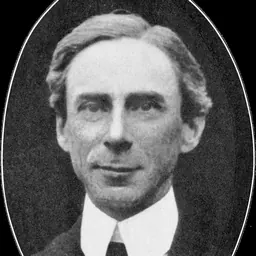


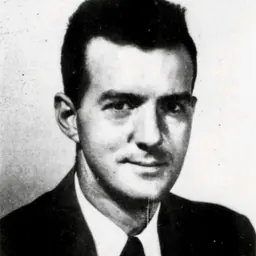


Related people
Same field, nearest in time

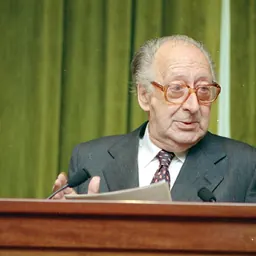
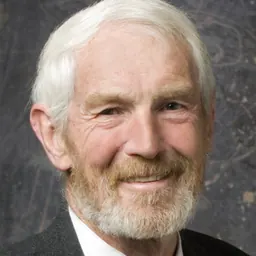
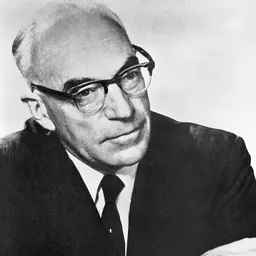
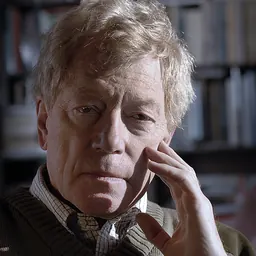
Contemporaries
People whose lives overlapped Paul Edwards's




Frequently asked questions
Who was Paul Edwards?
American philosopher (1923–2004)
When was Paul Edwards born?
Paul Edwards was born on 2 September 1923 in Vienna.
When did Paul Edwards die?
Paul Edwards died on 9 December 2004 in New York City.
What was Paul Edwards's occupation?
Paul Edwards was a philosopher and university teacher.
What was Paul Edwards known for?
Paul Edwards was known for Encyclopedia of Philosophy.
What nationality was Paul Edwards?
Paul Edwards was American.
Sources & further reading
· DBpedia: Paul Edwards (philosopher)
Cite this page
APA: Biography.guide. (2026). Paul Edwards. https://biography.guide/paul-edwards/
MLA: "Paul Edwards." Biography.guide, https://biography.guide/paul-edwards/.
Chicago: "Paul Edwards." Biography.guide. https://biography.guide/paul-edwards/.
Data last updated: 2026-09-22 · Spot an error? Report a correction.
Page generated 2026-09-27 05:01 UTC