
Samuel McDowell Tate
Confederate colonel and businessman
About Samuel McDowell Tate
Lived 1830 – 1897 (aged 66). Samuel McDowell Tate was an American merchant, justice of the peace, postmaster, census taker, railway executive and politician.
Samuel McDowell Tate (1830–1897) was an American businessman from Virginia who served as a lieutenant colonel in the Confederate States Army from North Carolina during the American Civil War, was a state legislator in North Carolina, and held federal offices.
Early life
Samuel McDowell Tate, eldest son and child of David and Susan M. Tate, was born at Morganton, in Burke County, North Carolina, on September 8, 1830. His ancestry in both lines was a graft of French Protestants upon Scotch-Irish stock.
He was nonetheless well educated in the grammar schools of his native state and of Pennsylvania.
Travel and adventure Before the age of the commercial traveler he saw the need for that class in business, and he lived some years in Philadelphia, fitting himself for the life of a merchant.
Early engagements, 1861–62 While in April and the early days of May 1861, without waiting for the State to leave the Union, Vance was raising his "Rough and Ready Guards" across the mountains, and Thomas Settle with fife and drum was getting together his company in Rockingham, and William P. Bynum, already appointed lieutenant-colonel, was organizing his 2nd Regiment of State troops at Raleigh, Tate was hastily winding up his business and calling on his neighbors and friends to form a company to serve under the command of his enterprising chief, Colonel Charles F. Fisher.
As Captain of Company D of the 6th Regiment he served in the Shenandoah Valley in Virginia, and on the morning of July 21 the regiment reached Manassas Junction just in time to render most important service. The 6th North Carolina engaged the enemy at the first onset, and was the last upon the field. Captain Tate served with great distinction not only in these battles, but at Gaines' Mill and in other battles in the front of Richmond and at Second Manassas, ending that battle near the Henry House on the very ground where the regiment had fought on July 21, 1861; and there Captain Tate won his promotion and became major of his regiment. Major Tate then became lieutenant-colonel of the regiment.
In the night attack on Fort Steadman, before daybreak on the morning of March 25, 1865, Colonel Tate was in command of his regiment, which along with the 57th attacked Fort Steadman, and he rendered gallant and valiant service in that assault. On that occasion he was again severely wounded and was sent home, where he suffered greatly. He repaired the roadbed and rebuilt bridges, revamped old rolling stock and put it to work; solicited business and inspired the people by his own energy; he haggled over prices and saved with judicious care, so that he righted his employers' affairs and enhanced their property.
This done, Provisional Governor Holden very promptly turned him out of office, and when Holden in turn went out, with Worth came back Tate, who, identified with the great work from its infancy, continued with it in one capacity or another almost uninterruptedly to the time when it passed forever from the control of North Carolina to that of Northern capitalists. He drafted and had passed laws by which the Western Road was saved to the State and its construction reattempted; he put in familiar and popular use the lease and working of the State's convict force upon her works of internal improvements, this same Western Road being the chiefest of the beneficiaries.
Closely associated with Colonel William L. Saunders, a mentor of the Democratic Party, allied with Colonel Hamilton C. Jones and other Confederate veterans of the Civil War, and supported by the State press, Colonel Tate was an important factor in public matters of import during the period of his career.
Death He never afterwards held office, but devoted his declining years to the welfare of his family and friends and in rendering such public service as was interesting to his community. He rests in the town cemetery, which was purchased through his agency.
Personal life Colonel Tate married in October, 1866, Miss Jennie Pearson, daughter of Robert C. Pearson of Morganton, by whom he became the father of a large family of children, and who survived him but a few years. Both were members of the Presbyterian Communion.
Don’t just read it —
keep it.
Full-length biographies made to live with: read them, listen on the way to work, watch them tonight.
- E-book
- Audio
- Video
Instant download · yours to keep · every purchase keeps this site free
Important facts
People in Samuel McDowell Tate's life
Named in this biography and alive at the same time
Related people
Same field, nearest in time
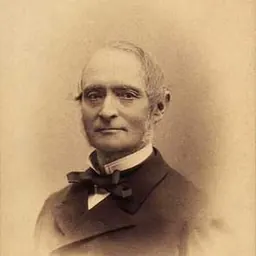


Contemporaries
People whose lives overlapped Samuel McDowell Tate's




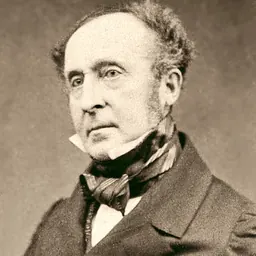
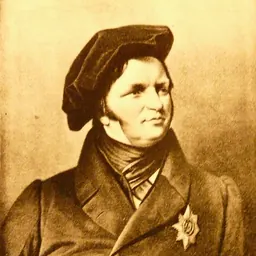
Frequently asked questions
Who was Samuel McDowell Tate?
Confederate colonel and businessman
When was Samuel McDowell Tate born?
Samuel McDowell Tate was born on 6 September 1830 in Morganton.
When did Samuel McDowell Tate die?
Samuel McDowell Tate died on 25 June 1897 in Morganton.
What was Samuel McDowell Tate's occupation?
Samuel McDowell Tate was a merchant, justice of the peace, postmaster, census taker, railway executive and politician.
What nationality was Samuel McDowell Tate?
Samuel McDowell Tate was American.
Sources & further reading
· Wikipedia: Samuel McDowell Tate
· DBpedia: Samuel McDowell Tate
Cite this page
APA: Biography.guide. (2026). Samuel McDowell Tate. https://biography.guide/samuel-mcdowell-tate/
MLA: "Samuel McDowell Tate." Biography.guide, https://biography.guide/samuel-mcdowell-tate/.
Chicago: "Samuel McDowell Tate." Biography.guide. https://biography.guide/samuel-mcdowell-tate/.
Data last updated: 2026-09-20 · Spot an error? Report a correction.
Page generated 2026-09-27 05:19 UTC