
About Samuel Livermore
Lived 1732 – 1803 (aged 71). Samuel Livermore was an American politician, judge and lawyer.
Samuel Livermore (May 14, 1732 – May 18, 1803) was an American politician and judge who served as the U.S. senator from New Hampshire from 1793 to 1801 and served as the president pro tempore of the United States Senate in 1796 and again in 1799.
Life and career Livermore was born in Waltham in the Province of Massachusetts Bay, the son of Hannah (Brown) and Samuel Livermore, and attended Waltham schools. He graduated from the College of New Jersey (now Princeton University) in 1752, then studied law, was admitted to the bar in 1756, and commenced practice in Waltham. He moved to Portsmouth, in 1758 and later to Londonderry. He was a member of the New Hampshire General Court (the state's general assembly) 1768–1769. He was judge-advocate in the Admiralty court and Attorney General from 1769 to 1774. He moved to Holderness in 1775 and was State attorney for three years.
Livermore was a member of the Continental Congress from 1780 to 1782 and again from 1785 to 1786. He was chief justice of the New Hampshire Superior Court of Judicature from 1782 to 1789, and a member of the State constitutional convention in 1788. He was elected to the United States House of Representatives for the First and Second Congresses, serving from March 4, 1789, to March 4, 1793, and served as the chairman of the House Committee on Elections in the Second Congress. Livermore was one of seven representatives to vote against the Fugitive Slave Act of 1793.
Livermore was president of the state constitutional convention in 1791 and in 1792 was elected as a Federalist to the United States Senate and was reelected in 1798 and served from March 4, 1793, until his resignation effective June 12, 1801, due to ill health. He served as president pro tempore of the Senate during the Fourth and Sixth Congresses. The defunct town of Livermore, New Hampshire was named after him.
Livermore died in Holderness, New Hampshire, and is interred in Trinity Churchyard there. He is featured on a New Hampshire historical marker (number 39) along New Hampshire Route 175 in Holderness.
Livermore was the father of Arthur Livermore, a U.S. representative from New Hampshire, and Edward St. Loe Livermore, a U.S. representative from Massachusetts.
Don’t just read it —
keep it.
Full-length biographies made to live with: read them, listen on the way to work, watch them tonight.
- E-book
- Audio
- Video
Instant download · yours to keep · every purchase keeps this site free
Important facts
People in Samuel Livermore's life
Named in this biography and alive at the same time
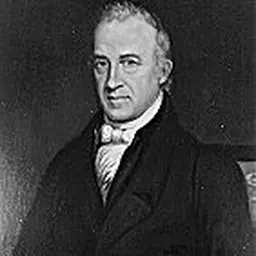
Related people
Same field, nearest in time


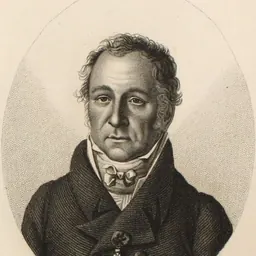

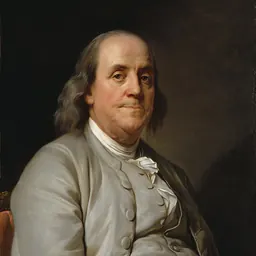

Contemporaries
People whose lives overlapped Samuel Livermore's






Frequently asked questions
Who was Samuel Livermore?
American politician (1732-1803)
When was Samuel Livermore born?
Samuel Livermore was born on 14 May 1732 in Waltham.
When did Samuel Livermore die?
Samuel Livermore died on 18 May 1803 in Holderness.
What was Samuel Livermore's occupation?
Samuel Livermore was a politician, judge and lawyer.
What nationality was Samuel Livermore?
Samuel Livermore was American.
Sources & further reading
Cite this page
APA: Biography.guide. (2026). Samuel Livermore. https://biography.guide/samuel-livermore/
MLA: "Samuel Livermore." Biography.guide, https://biography.guide/samuel-livermore/.
Chicago: "Samuel Livermore." Biography.guide. https://biography.guide/samuel-livermore/.
Data last updated: 2026-09-20 · Spot an error? Report a correction.
Page generated 2026-09-27 05:23 UTC