
About Samuel L. M. Barlow
Lived 1892 – 1982 (aged 90). Samuel L. M. Barlow was an American composer and art critic.
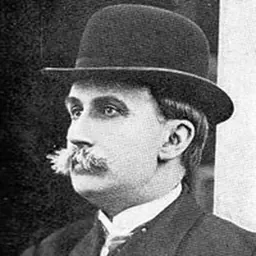
Samuel Latham Mitchell Barlow II (June 1, 1892 – September 19, 1982) was an American composer, pianist and art critic. His compositional style was conservative and he once said that he wrote "tunes that wouldn't shock Papa Brahms." But, his music frequently explored new performance techniques and practices; in addition, he used slide projections to accompany his 1936 symphonic concerto Babar.
Early life and education Barlow was born in New York City on June 1, 1892. He was the second son of Peter Townsend Barlow, a New York City magistrate, and his wife Virginia Louise (Matthews). Her brother was author Brander Matthews. Barlow was named after his paternal grandfather, a prominent Wall Street attorney. Samuel's older brother, Edward Mitchell Barlow, was named after their maternal grandfather, a successful merchant. Edward Barlow died in 1901 at the age of thirteen.
Samuel Barlow graduated with the Harvard Class of 1914.
Career Early in his career, Samuel Barlow taught at Settlement schools, contributed to the literary journal North American Review, and served as the first chairman of the New York City Community Chorus. Beginning in 1917, it presented free concerts on Sunday afternoons at Central Park.
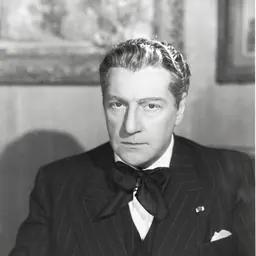
In 1935 Barlow became the first American composer to have an opera presented at the Opéra-Comique in Paris; the opera house staged his one-act work Mon Ami Pierrot. The opera was based on the life of Jean-Baptiste Lully and used a French-language libretto by Sacha Guitry. The opera was well received, and he was awarded the prestigious Légion d'honneur for his achievement.
The following year the Philadelphia Orchestra under Leopold Stokowski performed his Concerto for Magic Lantern and Symphony Orchestra, Barlow's adaptation of the French children's book, Babar the Elephant. He was also a regular contributor to the journal Modern Music, published by the American League of Composers. Evelyn, a noted diseuse who had performed on both sides of the Atlantic, had previously been married to Herbert Pomeroy Brown, a Wall Street broker. Their only child, daughter Audrey Townsend, was born in 1917. Their marriage ended eight years later in Paris. Evelyn was granted a divorce on grounds of abandonment.
Barlow married again on May 10, 1928, to Aimee Ernesta Drinker, then called Ernesta Beaux. She had previously been married to Ambassador William C. Bullitt.
After her divorce from Ambassador Bullitt, Drinker changed her name to Ernesta Beaux. She married Samuel Barlow at her aunt Cecilia's New York residence. At the time of their marriage, Ernesta was an interior decorator. She became well known on the national lecture circuit and as a writer, commenting on numerous social issues of the day. During World War II, she discussed drafting women for national service.
Barlow Chateau at Èze In the early 1920s Samuel Barlow fell in love with a charming French medieval village discovered while vacationing along the Mediterranean, midway between Nice and Monaco. Èze occupies a pinnacle of rock some above Cape Ferrat on the French Riviera. On a clear day one could see the peaks of Corsica to the south and virtually all the Riviera westward toward Toulon. After discussions with the village mayor, Barlow received permission to purchase a dozen or so houses that were clinging to the cliff's side. Over the next few years, Barlow demolished them to build a picturesque estate on the large site. it blended in with the surrounding architecture. He made it a family retreat and a mecca for artists and intellectuals. He was interred at West Laurel Hill Cemetery in Bala Cynwyd, Pennsylvania. His wife Ernesta Beaux Barlow had died the year before, at the age of 89.
Works Partial 3 Songs from the Chinese (voice and ensemble, 1924) Vocalise (1926) Alba (symphonic poem, 1927) Ballo Sardo (ballet, 1928) Circus Overture (1930) Piano Concerto (1931) Scherzo (string quartet, 1933) Spanish Quarter (piano, 1933) Mon ami Pierrot (opera, 1934) Biedermeier Waltzes (1935) Babar (symphonic concerto, 1936) Amanda (opera, 1936) Aphitryon 38 (incidental music, 1937) Leda (1939) Sousa ad Parnassum (1939) Conversation with Tchekhov (piano trio, 1940) Jardin de La Notre (piano)
Don’t just read it —
keep it.
Full-length biographies made to live with: read them, listen on the way to work, watch them tonight.
- E-book
- Audio
- Video
Instant download · yours to keep · every purchase keeps this site free
Important facts
People in Samuel L. M. Barlow's life
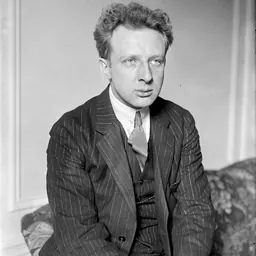
Named in this biography and alive at the same time




Related people
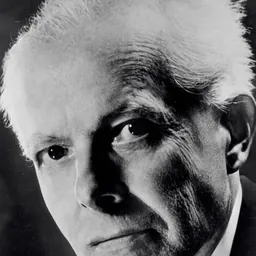
Same field, nearest in time




Contemporaries
People whose lives overlapped Samuel L. M. Barlow's

Frequently asked questions
Who was Samuel L. M. Barlow?
American composer (1892–1982)
When was Samuel L. M. Barlow born?
Samuel L. M. Barlow was born on 1 June 1892 in New York City.
When did Samuel L. M. Barlow die?
Samuel L. M. Barlow died on 19 September 1982 in Wyndmoor.
What was Samuel L. M. Barlow's occupation?
Samuel L. M. Barlow was a composer and art critic.
What nationality was Samuel L. M. Barlow?
Samuel L. M. Barlow was American.
Sources & further reading
· Wikipedia: Samuel L. M. Barlow
· DBpedia: Samuel L. M. Barlow II
Cite this page
APA: Biography.guide. (2026). Samuel L. M. Barlow. https://biography.guide/samuel-l-m-barlow-composer/
MLA: "Samuel L. M. Barlow." Biography.guide, https://biography.guide/samuel-l-m-barlow-composer/.
Chicago: "Samuel L. M. Barlow." Biography.guide. https://biography.guide/samuel-l-m-barlow-composer/.
Data last updated: 2026-09-20 · Spot an error? Report a correction.
Page generated 2026-09-27 05:32 UTC