
About Samuel Jay Crumbine
Lived 1862 – 1954 (aged 91). Samuel Jay Crumbine was a physician.
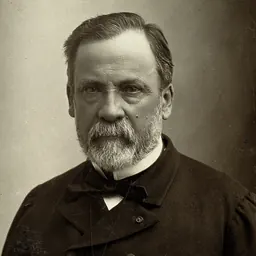
Dr. Samuel Jay Crumbine (September 17, 1862 – July 12, 1954) was an American physician and public health official who introduced numerous initiatives to stop the spread of communicable diseases such as tuberculosis, mostly in the state of Kansas. He campaigned against the common drinking cup, the common towel, and spitting in public to prevent the spread of communicable diseases. He was also involved in the creation of the modern flyswatter with his "Swat the Fly" campaign, which was designed to stop the spread of diseases from flies and other insects.
Early life and education Crumbine was born on September 17, 1862, in Emlenton, Pennsylvania, to Sarah and Samuel J. Krumbine. His father died while imprisoned at Libby Prison in Richmond, Virginia during the Civil War. As a result, Crumbine and his mother lived with his maternal grandmother until he was eight, when he was sent off to a boarding school for orphans in Mercer, Pennsylvania. There, Crumbine began spelling his last name with a "C" instead of a "K." He graduated at sixteen and began working at a drug store in Sugar Grove, Pennsylvania, where he first began working with human medicine.
Following this, Crumbine relocated to Cincinnati and studied medicine under a local physician. Upon completion of his studies, he moved to Spearville, Kansas, and acquired a stake in a local drug store as well as continuing his medical practice. Soon after, he returned to Cincinnati and studied at the Cincinnati College of Medicine, returning to Spearville during breaks from school. He graduated top of his class in 1889. Within the city, outbreaks of cholera and smallpox were common, as was distrust of science-based medicine. Early on in Dodge City, Crumbine made strides to prevent communicable disease outbreaks in the town. He convinced the local Harvey House diner to switch out communal milk pitchers with individual milk bottles, a move which would eventually be enacted across diners statewide. Additionally, Crumbine helped do away with pest houses within the town, instead advocating for the sick to stay home and for the rest of the population to get vaccinated.
Catchy slogans like "swat the fly" became the modus operandi for Crumbine during his campaigns. Beyond that, Crumbine and his organization published monthly health bulletins to educate the public about health problems. He also utilized local news media to further spread the goals of his organization. He further advocated for the removal of the common drinking cup on railroads and public buildings, as well as for the removal of reusable roller towels.
Around this same time, Crumbine began another of his crusades, this one against the food and drug industry. He regularly sent samples from various food and medicine products into research labs to be examined, and oftentimes hazardous materials were found. The Board of Health would alert the public of these findings through widely-circulated reports. These findings also led to the passage of the Kansas Pure Food and Drug Act of 1907, which came a year after the national Pure Food and Drug Act. The law allowed strong enforcement for the crime of mislabeling food and drug labels, resulting in heavy fines or jail time for offenders. However, Crumbine had mixed success in boosting the school's prestige or financial support among state lawmakers. The political opposition that occurred eventually forced him to resign from the position in 1919.
In 1915, Crumbine took aim at infant mortality, creating one of the first state child hygiene divisions within the country. During the campaign, baby clinics were established and Little Mothers Leagues were established, designed to improve maternal education.
Later career In 1923, Crumbine became the center of controversy when Jonathan M. Davis took over the position of governor. Nearly immediately, Davis fired all members of the Board of Health except Crumbine and replaced them with loyalists. He then asked the new appointees to fire Crumbine, an action that they refused to do, leading Davis to personally call for Crumbine's resignation, which he did on June 5, 1923.
Crumbine died on July 12, 1954 due to complications from a brief illness.
Legacy
In 1955, the Crumbine Award was established by the Kansas Public Health Association in honor of him. The award sought to recognize individuals for their contributions to the field of public health. At present, the award is given to local government organizations responsible for food protection by a consortium of organizations concerned with consumer protection.
He was also the model for the character of Doc Adams on the television show Gunsmoke, played by fellow Kansan Milburn Stone.
Personal life In 1889, Crumbine married Katherine Zuercher, whom he met in Cincinnati. With her, he had two daughters, Warren and Violet.
Don’t just read it —
keep it.
Full-length biographies made to live with: read them, listen on the way to work, watch them tonight.
- E-book
- Audio
- Video
Instant download · yours to keep · every purchase keeps this site free
Important facts
People in Samuel Jay Crumbine's life
Named in this biography and alive at the same time
Related people
Same field, nearest in time




Contemporaries
People whose lives overlapped Samuel Jay Crumbine's



Frequently asked questions
Who was Samuel Jay Crumbine?
public health pioneer (1862-1954)
When was Samuel Jay Crumbine born?
Samuel Jay Crumbine was born on 17 September 1862.
When did Samuel Jay Crumbine die?
Samuel Jay Crumbine died on 12 July 1954.
What was Samuel Jay Crumbine's occupation?
Samuel Jay Crumbine was a physician.
Sources & further reading
· Wikipedia: Samuel Jay Crumbine
· DBpedia: Samuel Jay Crumbine
Cite this page
APA: Biography.guide. (2026). Samuel Jay Crumbine. https://biography.guide/samuel-jay-crumbine/
MLA: "Samuel Jay Crumbine." Biography.guide, https://biography.guide/samuel-jay-crumbine/.
Chicago: "Samuel Jay Crumbine." Biography.guide. https://biography.guide/samuel-jay-crumbine/.
Data last updated: 2026-09-26 · Spot an error? Report a correction.
Page generated 2026-09-27 05:14 UTC