
About Samuel Eaton
Lived 1596 – 1665 (aged 68–69). Samuel Eaton was a theologian.
Samuel Eaton (1596?–1665) was an English Independent divine. He was a graduate from Magdalene College, Cambridge, and emigrated to the Thirteen British Colonies as a minister, following disagreements with Archbishop Laud. He was also a colleague of Puritan John Davenport, co-founder of New Haven Colony.
Life Early life and travel Eaton was the third son of Richard Eaton, vicar of Great Budworth, Cheshire, and was born in the hamlet of Crowley in Great Budworth. He was educated at Magdalene College, Cambridge, where he graduated B.A. 1624 and M.A. 1628.
Eaton took orders and was beneficed, but being unable to conform to the regulations of the church as interpreted by Archbishop Laud, he accompanied his eldest brother Theophilus Eaton to New England in 1637, and became the colleague of John Davenport at New Haven. A difference of opinion afterwards arose between him and Davenport. At the convention of 4 June 1639 (O. S.) Eaton took exception to the fifth article of the constitution, which limited the right of voting and of holding public office to church members only on the ground that "the free planters ought not to surrender this power out of their hands". Thomas Porter, 'minister at Whitchurch,’ replied the following year in 'A Serious Exercitation.' Paper concerning the Godhead of Christ, 8vo, London, 1650, written to rebut the Socinian arguments of John Knowles. A more elaborate reply was The Mystery of God Incarnate; or the Word made Flesh cleered up: or, A Vindication of certain Scriptures … from the corrupt Glosses, false Interpretations, and sophisticall Argumentations of M. John Knowles, who denies the Divinity of Christ. Also, Certain Annotations and Observations upon a Pamphlet entituled A Confession of Faith concerning the Holy Trinity, etc., whereunto is annexed the attestation of Philip Nye [and others], 12mo, London, 1650. Vindication, or further Confirmation of some other Scriptures, produced to prove the Divinity of Jesus Christ, distorted and miserably wrested and abused by M. John Knowles, with a discourse, 8vo, London, 1651. The Quakers Confuted; being an Answer unto nineteen Queries propounded by them, and sent to the Elders of the Church of Duckinfield in Cheshire. … Together with an Answer to a Letter which was written … by one of them (R. Waller) [with the Letter], 4to, London, 1654. This venomous attack was answered anonymously during the same year, and was glanced at by George Fox in his Great Mystery, 1659, and Journal.
Don’t just read it —
keep it.
Full-length biographies made to live with: read them, listen on the way to work, watch them tonight.
- E-book
- Audio
- Video
Instant download · yours to keep · every purchase keeps this site free
Important facts
People in Samuel Eaton's life
Named in this biography and alive at the same time

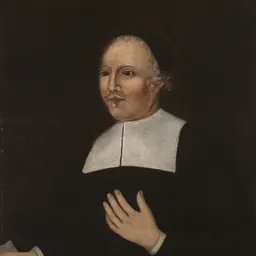



Related people
Same field, nearest in time

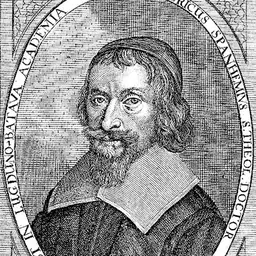
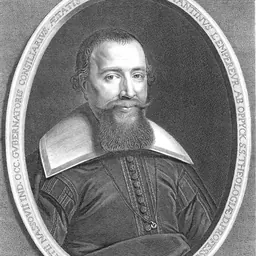
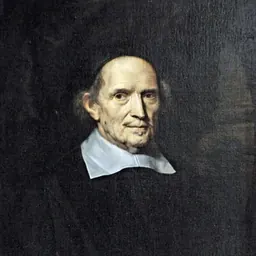

Contemporaries
People whose lives overlapped Samuel Eaton's




Frequently asked questions
Who was Samuel Eaton?
English theologian (d. 1665)
When was Samuel Eaton born?
Samuel Eaton was born in 1596.
When did Samuel Eaton die?
Samuel Eaton died in 1665.
What was Samuel Eaton's occupation?
Samuel Eaton was a theologian.
Sources & further reading
Cite this page
APA: Biography.guide. (2026). Samuel Eaton. https://biography.guide/samuel-eaton/
MLA: "Samuel Eaton." Biography.guide, https://biography.guide/samuel-eaton/.
Chicago: "Samuel Eaton." Biography.guide. https://biography.guide/samuel-eaton/.
Data last updated: 2026-09-20 · Spot an error? Report a correction.
Page generated 2026-09-27 04:59 UTC