
About Samuel de Sorbiere
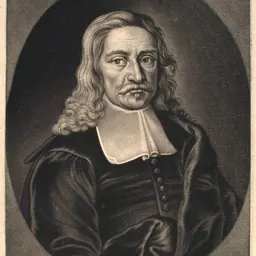
Lived 1615 – 1670 (aged 54). Samuel de Sorbiere was a French philosopher, translator and physician.
Samuel (de) Sorbière (; 17 September 1615 – 9 April 1670) was a French physician and man of letters, a philosopher and translator, who is best known for his promotion of the works of Thomas Hobbes and Pierre Gassendi, in whose view of physics he placed his support, though unable to refute René Descartes, but who developed a reputation in his own day for a truculent and disputatious nature. Sorbière is regarded often by his position on ethics and disclosure about medical mistakes. In 1672 Sorbière considered the idea of being honest and upfront about a mistake having been made in medicine but thought that it might seriously jeopardise medical practice and concluded that it "would not catch on".
Life After relocating to the Netherlands, he published a French translation of Thomas More's Utopia in 1643. He arranged for the publication of Hobbes's De Cive in Amsterdam in 1647, published a French translation in 1649, published a French translation of Hobbes' De Corpore Politico, or the Elements of Law in 1652, and helped secure a publisher for Hobbes's own Latin translation of Leviathan in 1668. His collected Lettres et discours de M. de Sorbière, sur diverses matières curieuses, published in Paris, 1660, are imbued with the spirit of compromise, reconciling science and theology and separating science from metaphysics. His life of Gassendi was prefixed to the collected edition of Gassendi's writings, 1658. Besides Gassendi and Hobbes, he corresponded with Marin Mersenne, François de La Mothe Le Vayer and other prominent thinkers of the day.
In 1663–1664, Sorbière visited England, where in 1663 he was inducted into the Royal Society. In 1664 he published an account of his stay, Relation d'un voyage en Angleterre, où sont touchées plusieurs choses, qui regardent l'estat des sciences, et de la religion (L. Billaine, Paris), in which he offered his comments on how bad the food was, how bad the inns were and imputed to the Royal Society the intention of developing a library. This provoked Thomas Sprat (then spokesman for and historian of the Society) to publish Observations upon Monsieur de Sorbier's Voyage into England (London, 1665) as a reply to Sorbière's perceived insults against both English culture and the Society in particular. In order to avoid further international controversy, Sorbière was held under arrest for four months in France, and Charles II of England prohibited any further responses.
Sorbière's conversion from Calvinism to Catholicism, which opened a career to him, has been interpreted in a political light.
Don’t just read it —
keep it.
Full-length biographies made to live with: read them, listen on the way to work, watch them tonight.
- E-book
- Audio
- Video
Instant download · yours to keep · every purchase keeps this site free
Important facts
People in Samuel de Sorbiere's life
Named in this biography and alive at the same time

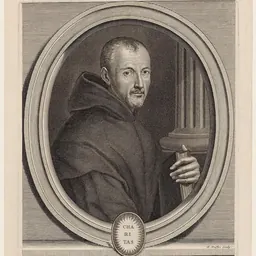

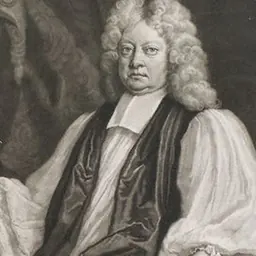
Related people
Same field, nearest in time
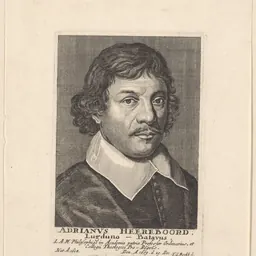
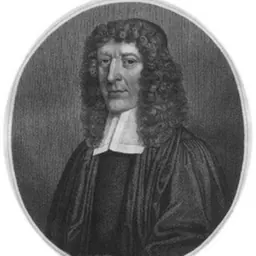



Contemporaries
People whose lives overlapped Samuel de Sorbiere's





Frequently asked questions
Who was Samuel de Sorbiere?
French philosopher (1615-1670)
When was Samuel de Sorbiere born?
Samuel de Sorbiere was born on 17 September 1615 in Saint-Ambroix.
When did Samuel de Sorbiere die?
Samuel de Sorbiere died on 9 April 1670 in Paris.
What was Samuel de Sorbiere's occupation?
Samuel de Sorbiere was a philosopher, translator and physician.
What nationality was Samuel de Sorbiere?
Samuel de Sorbiere was French.
Sources & further reading
· Wikipedia: Samuel de Sorbiere
Cite this page
APA: Biography.guide. (2026). Samuel de Sorbiere. https://biography.guide/samuel-de-sorbiere/
MLA: "Samuel de Sorbiere." Biography.guide, https://biography.guide/samuel-de-sorbiere/.
Chicago: "Samuel de Sorbiere." Biography.guide. https://biography.guide/samuel-de-sorbiere/.
Data last updated: 2026-09-20 · Spot an error? Report a correction.
Page generated 2026-09-27 05:21 UTC