
About Samuel Cook
Lived 1786 – 1861 (aged 75). Samuel Cook was a politician and draper.
Samuel Cook (15 July 1786 – 9 August 1861) lived in Dudley in the 19th century, where he promoted Radical political causes. He agitated for political reform, displaying political posters in the windows of his draper's shop. He became Chairman of the Dudley Political Union, which advocated parliamentary reform, and had a leading role in the Dudley Chartist movement. His political agitation resulted in him being put on trial on many occasions.
Life Samuel Cook was born on 15 July 1786 in Trowbridge. He was the son of Samuel and Amy Cook, his father being a cloth maker. Cook served an apprenticeship with a draper at Poole. He married Maria Jones in 1810. He commenced business in Liverpool. His first recorded political speech was in 1815 when he addressed a crowd outside his house on the occasion of the ending of the Napoleonic War. In 1819 he moved to Dudley where he set up a draper's shop on the High Street. The shop was situated at 77 and 78 High Street and was known as "Gibraltar House". He became active in Radical politics, agitating for parliamentary reform via the Dudley Political Union. One of his methods of political agitation was to display posters in the window of his shop.
In 1823, Cook started a campaign against the Anglican Church authorities and against Church Rates when he published two posters.
In 1826 he was arrested after he displayed a poster publicising a nailers' strike. A further poster describing his arrest was then exposed. Cook was then summoned to the Town Hall on accused of publishing a seditious libel, resulting in him being tried at the Worcester Assizes on 1 August 1827 before Mr. Justice Littledale. He was defended by John Campbell (later the MP for Dudley and holder of several government posts including Attorney General) and was found guilty. However, his punishment was light, being bound over for the sum £200 to receive sentence "when called upon".
In the early 1830s, campaigning organisations known as Political Unions began to form in a number of Black Country towns. Samuel Cook often chaired the regular meeting of the Dudley Political Union. In October 1833 he attended a meeting in Oldbury at which colliers demanded a reduction in daily working hours. As the speeches excited the crowd and the numbers attending increased, the magistrates ordered that the meeting was illegal and called out troops in order to keep the peace.
Cook published "Some of the Principles of Dudley Radicalism" in 1834 in which, amongst other demands, he called for universal suffrage, vote by ballot, universal education, an end to Church Rates, a free press and marriages to be a civil ceremony. On the 16 July, a meeting took place outside the Founders' Arms tavern in Dudley where Cook was present and Smith Lyndon, the main speaker, was alleged to have referred to the police as "blue devils" and "blood-thirsty villains". Both Cook and Lyndon were arrested and Cook was charged with incitement to break the peace. Put on trial on 18 October 1839 at Worcester, Cook was found guilty and sentenced to 6 months imprisonment.
In May 1842, nailmakers in Dudley went on strike, as an economic downturn that had started in 1839 began to bite. From July of the same year, a series of strikes and riots broke out across the Black Country and around the Midlands. Samuel Cook was one of many activists arrested during the protest. In Cook's case, a poster displayed in his shop in August 1842, advertising a demonstration to be held in Birmingham, led to his arrest and imprisonment pending the Worcester Assizes. According to a contemporary newspaper report: he was "escorted by a division of yeomanry on his journey to Worcester".
In December 1843, Cook was declared bankrupt. In a hearing in the Birmingham Bankruptcy Court held on 6 February 1844, it was stated that debts owing were £2,195 18s 11d; whereas assets, and good debts were £60 15s 10d; and Cook's property was valued at £548 3s. During the hearing, a solicitor, Mr. Wainwright, listed some of Cook's arrests and court appearances, leading to the following exchange:
Mr Motteram — The bankrupt has been a "martyr."
His Honour — The bankrupt's creditors are martyrs.
In 1847, Cook attempted to intervene in the election of the MP for Dudley, nominating a fellow Chartist, Joseph Linney, to oppose the sitting Tory MP, John Benbow. According to a local chronicler: "Mr. Joseph Linney was elected by the show of hands, by a large majority; the usual poll was demanded, and the day and time fixed upon, but, alas! for human greatness, poor Mr. Linney could not find the necessary guarantee (funds) for his election expenses, and his friends and admirers were in the same plight, so before the polling commenced, it oozed out that Mr. Linney had retired from the contest, leaving the old member master of the field. Thus, Mr. Benbow was again returned the member for the Castle interest in another Parliament."
In April 1855, Cook accompanied a delegation of colliers to meet a group of coal and ironmasters on the occasion of a colliers' strike.
In December 1856 there were meetings against the Income Tax in the Black Country. At Dudley, where the mayor chaired the meeting, Cook seconded the motion proposing the abolition of the tax. Cook took the opportunity to call for an elected mayor (at this time the mayor was an official of the Court Leet of the Lord of the Manor) and a Municipal corporation for Dudley.
Cook maintained his political activities until the end of his life. On 26 October 1860 he attended the meeting of the Court Leet of the Lord of the Manor of Dudley where he gave "his customary annual protest against the illegal appointment of a Mayor of Dudley" by that body.
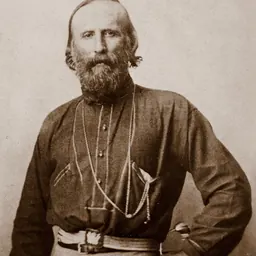
Shortly before his death, Cook was in correspondence with Giuseppe Garibaldi.
Samuel died on 9 August 1861 and was buried at the Independent Chapel on King Street, Dudley. His drapers' business was passed on to his son Samuel Quartus Cook and stayed in the family in expanded premises on Dudley Upper High Street until 1983.
Don’t just read it —
keep it.
Full-length biographies made to live with: read them, listen on the way to work, watch them tonight.
- E-book
- Audio
- Video
Instant download · yours to keep · every purchase keeps this site free
Important facts
People in Samuel Cook's life
Named in this biography and alive at the same time

Related people
Same field, nearest in time


Contemporaries
People whose lives overlapped Samuel Cook's

Frequently asked questions
Who was Samuel Cook?
Cook, Samuel (1786–1861), Chartist
When was Samuel Cook born?
Samuel Cook was born on 17 January 1786 in Trowbridge.
When did Samuel Cook die?
Samuel Cook died on 17 January 1861.
What was Samuel Cook's occupation?
Samuel Cook was a politician and draper.
Sources & further reading
· DBpedia: Samuel Cook (Chartist)
Cite this page
APA: Biography.guide. (2026). Samuel Cook. https://biography.guide/samuel-cook-politician/
MLA: "Samuel Cook." Biography.guide, https://biography.guide/samuel-cook-politician/.
Chicago: "Samuel Cook." Biography.guide. https://biography.guide/samuel-cook-politician/.
Data last updated: 2026-09-22 · Spot an error? Report a correction.
Page generated 2026-09-27 05:16 UTC