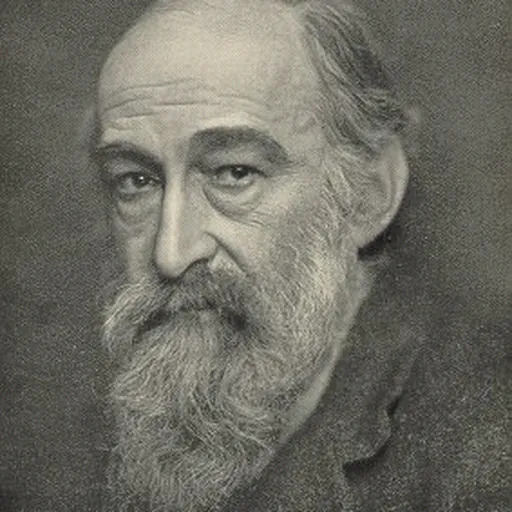
About Samuel Alexander
Lived 1859 – 1938 (aged 79). Samuel Alexander was a British and Australian philosopher and university teacher.
Samuel Alexander (6 January 1859 – 13 September 1938) was an Australian-born British philosopher. He was the first Jewish fellow of an Oxbridge college. He is now best known as an advocate of emergentism in biology.
Early life He was born into a Jewish family at 436 George Street, Sydney, Australia, the third son of Samuel Alexander, a prosperous saddler, and Eliza née Sloman. His father died around the time he was born, of tuberculosis. Eliza moved the family to St Kilda, Victoria in 1863 or 1864, and Alexander was tutored, and placed at a private school. In 1871, he was sent to Wesley College, Melbourne, then under the headmastership of Martin Howy Irving.
Alexander matriculated at the University of Melbourne on 22 March 1875. He completed the first two years with distinction, but then left without taking a degree. He remained as philosophy tutor at Lincoln College to 1893. It was during this period that he developed his interest in psychology, then a neglected subject. He travelled on the continent of Europe, and in the winter of 1890–91 was in Germany working on experimental psychology at the laboratory of Hugo Münsterberg at Freiburg. Another educationalist he found impressive was Esther Lawrence, a cousin.
Robert Mackintosh (1858–1933) owed his appointment as lecturer in 1904 to the new Manchester theological faculty in 1904 to Alexander, he believed. Alexander introduced experimental psychology at Manchester in 1907, in unorthodox fashion, with the appointment of Tom Pear (1886–1972), later a professor. Pear was recruited while still an undergraduate, but was backed by Charles Sherrington, who had brought William George Smith as a lecturer to the University of Liverpool in 1905. He invited John Macmurray to be a lecturer in the philosophy department in 1919.
Alexander was president of the Aristotelian Society from 1908 to 1911, and again from 1936 to 1937. In 1913, he was made a Fellow of the British Academy. Collingwood later contended that Alexander had "philosophical genius of very high order". Alexander influenced A. N. Whitehead, and mentored others who went on to become major figures in 20th-century British philosophy. One such was John Anderson.
In 1924 Alexander retired from his chair, and was succeeded by John Leofric Stocks.
Awards and honours He was given the Hon. LLD of St Andrews in 1905, and in later years he received Hon. Litt. D. degrees from Durham, Liverpool, Oxford and Cambridge. He was elected to membership of the Manchester Literary and Philosophical Society on 13 April 1926. He was Herbert Spencer lecturer at Oxford in 1927, and in 1930 the Order of Merit was conferred on him, the first to a native of Australia. A theatre at Monash University, Melbourne, and a conference room at Wesley College, Melbourne are also named for him.
Alexander was appointed Gifford lecturer at Glasgow in 1915, and delivered his lectures in the winters of 1917 and 1918. They drew on preliminary papers he had written from 1908 onwards. These materials he developed into his major work Space, Time, and Deity, published in two volumes in 1920. His Arthur Davis Memorial Lecture on Spinoza and Time, in the nature of an annexe to Space, Time, and Deity, was published in 1921. Pure spacetime emerges, through a process Alexander describes simply as "motion", the stuff and matter that make up our material world:
Alexander absolutizes spacetime, and even speaks of it as an "Entity|stuff" of which things are made. At the same time he also says that spacetime can be called "Motions" – not motion in the singular, but complexes of motions with kaleidoscopic changes within a continuum. In other words, for Alexander motion is primitive, and space and time are defined through relations between motions.
In Space, Time, and Deity Alexander held that an object may be before a consciousness, but is not in it; consciousness of an object is not the same as consciousness of one's consciousness of the object. For example, an object such as a chair may be apprehended by a consciousness, but the chair is not located within that consciousness; and, the contemplation of the chair is distinct from thinking about the act of contemplating the chair. Further, since the contemplation of an object is itself an action, in Alexander's view it cannot be "contemplated", but only subjectively experienced, or "enjoyed".
Alexander asked the question:
Alexander's views have been described as panentheistic.
Family A change in Alexander's home life occurred in 1902 when the whole of his family—his mother, an aunt, two elder brothers and his sister—came from Australia to live with him.
Books Moral Order and Progress (1889) Locke (1908), a short study in the Philosophies Ancient and Modern Series. Space, Time, and Deity (1920), Macmillan & Co., reprinted 1966 by Dover Publications, reprinted 2004 by Kessinger Publications: "volume one" : online version, "volume two" : Spinoza and Time (1921) Art and the Material (1925); Adamson Lecture for 1925 Art and instinct (1927) Artistic creation and cosmic creation (1927) Beauty and Other Forms of Value (1933) Spinoza : an address delivered at the Liberal Jewish synagogue, London, on Sunday, March 13th, 1927 Spinoza : an address in commemoration of the tercentenary of Spinoza birth (1933) Philosophical and Literary Pieces (1939), (posthumous)
Don’t just read it —
keep it.
Full-length biographies made to live with: read them, listen on the way to work, watch them tonight.
- E-book
- Audio
- Video
Instant download · yours to keep · every purchase keeps this site free
Important facts
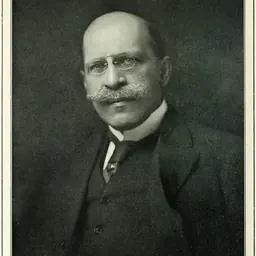
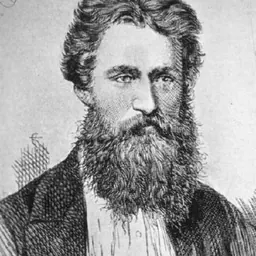
People in Samuel Alexander's life
Named in this biography and alive at the same time



Related people
Same field, nearest in time




Contemporaries
People whose lives overlapped Samuel Alexander's


Frequently asked questions
Who was Samuel Alexander?
Australian-born British philosopher (1859-1938)
When was Samuel Alexander born?
Samuel Alexander was born on 6 January 1859 in Sydney.
When did Samuel Alexander die?
Samuel Alexander died on 13 September 1938 in Manchester.
What was Samuel Alexander's occupation?
Samuel Alexander was a philosopher and university teacher.
What nationality was Samuel Alexander?
Samuel Alexander was British and Australian.
Sources & further reading
Cite this page
APA: Biography.guide. (2026). Samuel Alexander. https://biography.guide/samuel-alexander-philosopher/
MLA: "Samuel Alexander." Biography.guide, https://biography.guide/samuel-alexander-philosopher/.
Chicago: "Samuel Alexander." Biography.guide. https://biography.guide/samuel-alexander-philosopher/.
Data last updated: 2026-09-22 · Spot an error? Report a correction.
Portrait: Wikimedia Commons · author & licence
Page generated 2026-09-27 05:01 UTC