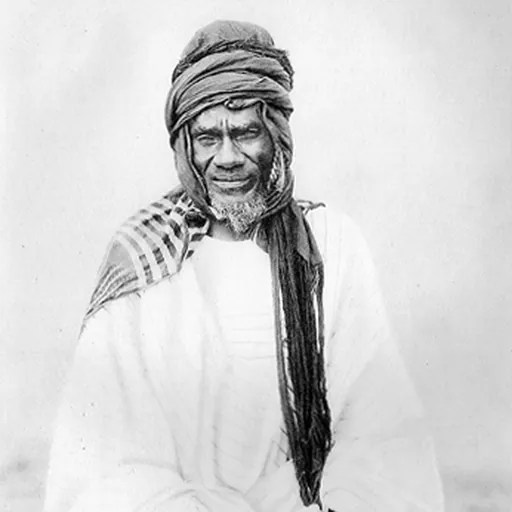
Samori Ture
African warlord and religious leader, founder of the Wassoulou Empire
About Samori Ture
Lived 1830 – 1900 (aged 69–70). Samori Ture was a military personnel.
Samori Ture ( – June 2, 1900), also known as Samori Toure, Samory Touré, or Almamy Samore Lafiya Toure, was a Malinke Muslim cleric, military strategist, and founder of an empire that stretched across present-day north and eastern Guinea, north-eastern Sierra Leone, southern Mali, northern Côte d'Ivoire and part of southern Burkina Faso.
A deeply religious Muslim of the Maliki school of religious jurisprudence of Sunni Islam, he organized his empire and justified its expansion with Islamic principles. Ture resisted French colonial rule in West Africa from 1882 until his capture in 1898.
He was the great-grandfather of Guinea's first president, Ahmed Sékou Touré.
Early life and career Samori Ture was born in Manyambaladugu, the son of Kemo Lanfia Ture, a Dyula weaver and merchant, and Sokhona Camara. The family moved to Sanankoro soon after his birth.
Ture grew up as West Africa was being transformed through growing contacts and trade with the Europeans in commodities, artisan goods and products. European trade made some African trading states rich. The trade in firearms changed traditional West African patterns of warfare and heightened the severity of conflicts, increasing the number of fatalities.
Ture was a troublesome youth, leading a group of local boys who would steal fruit from fields. To put him on a better path, his father bought him some merchandise and sent him off to become a merchant trading kola nuts from the coast for cloth.
The next morning, Diakite's troops fired on Samory's without having loaded bullets into their guns, then turned and helped route Kourouma, who was captured and beheaded. Samory was now Faama of all the land between the Milo, the Sankarani, and Dion rivers. As part of this holy alliance, Samory deepened his knowledge of Islam studying with a Mauritanian teacher named Sidiki Cherif.
In the aftermath of Samaya, some of the leaders of Bamako began making overtures to Ture. The French, eager to possess this key strategic town on the Niger, rushed a force to establish a fort there on February 1, 1883.
In January 1885 Ture sent an embassy to Freetown, offering to put his kingdom under British protection. While the British did not want to risk angering the French, they allowed Ture to buy large numbers of modern repeating rifles.
When an 1885 French expedition under Col. A. V. A. Combes attempted to seize the Buré gold fields by capturing Niagassola, Ture counter-attacked. Dividing his army into three mobile columns, he worked his way around the French lines of communication and quickly forced them to withdraw. Already embroiled in conflict with Mahmadu Lamine and the Toucouleur Empire, the French were compelled to negotiate the Treaty of Kenieba Koura, signed on March 28, 1886. This pact recognized French hegemony over the left bank of the Niger as far upstream as Siguiri, and Samory's control of Bure and the Manding region. With famine and instability widespread, when Samori's forces started forcing conversion to Islam and destroying local sacred sites in 1885, the populace rebelled. Rebels massacred sofa garrisons at Siondougou and Fulala. By the end of the 1887 dry season, the last holdouts had been starved into submission.
During the first months of 1893 the French, although unable to corner Ture armies in Guinea, did manage to capture Faranah and block resupply routes to Liberia and Sierra Leone, Wassoulou's primary source of modern weaponry. This left Samory reliant on a longer route through the Gold Coast.
His objective, and the key to the whole region, was the ancient Dyula trading city of Kong. The city had nominally accepted French protection during Louis-Gustave Binger's visit in 1892, and the colonial leaders sought to formalize this relationship by putting together a column led by Col. Monteil in August 1894. The force did not leave Grand Bassam, however, until February 1895, and its arrival sparked a popular resistance movement.
Last stand
The fall of the Kenedougou capital of Sikasso on May 1, 1898, permitted French colonial forces to launch a concentrated assault against Ture. He soon was forced to migrate once again, this time towards Liberia. Hoping to live off the land while marching, a combination of the unfamiliar mountainous territory of western Ivory Coast, hostile locals, and colonial attacks turned the campaign into a disaster. Thousands died of starvation. Using information from sofa deserters, the French captain Henri Gouraud surprised Ture's forces at Guelemou on September 29, 1898, and captured the Almamy without a fight.
Exile and death Samori Ture was brought to Kayes, and on December 22, 1898, was condemned to exile, despite his wish to return to southern Guinea. His wife Saranken Konate, who had often ruled as regent during his absences from Bissandougou, refused to accompany him. Emotionally devastated, he was taken to Saint-Louis, Senegal on January 4, 1899. He attempted suicide the night before he was scheduled to be deported to Gabon but survived and finally embarked on February 5.
The prison camp where Samori Ture spent his last years, the small island of Missanga in the middle of the Ogooué River near Ndjolé, was known as the 'dry guillotine' due to the death rate among prisoners. He died there of pneumonia on June 2, 1900, at 4:45 pm.
Legacy
In the first decades of colonial domination in southern Mali and northeastern Guinea, the French framed their conquest as having delivered the locals from the violence and insecurity of the Samory years, and therefore that the communities owed their lives and allegiance to them. During the interwar period, however, African intellectuals began to rehabilitate Ture's memory. He became a hero and rallying cry for anti-colonial parties in Guinea and Mali, but was also used by their opponents. Since independence, Samori Ture has been generally remembered as a hero and martyr of African resistance to European colonialism. In some communities in southern Mali that suffered brutal repression under his rule, however, he is remembered as a tyrant.
Samory's great-grandson, Ahmed Sékou Touré, was elected as the first President of Guinea after it became independent. Today, his tomb is at the Camayanne Mausoleum, within the gardens of Conakry Grand Mosque.
In popular culture Massa Makan Diabaté's play Une hyène à jeun (A Hyena with an Empty Stomach, 1988) dramatizes Samori Ture's signing of the 1886 Treaty of Kéniéba-Koura, which granted the left bank of the Niger to France. Guinean band Bembeya Jazz National commemorated Ture in their 1969 release Regard sur le passé. The album draws upon Manding Djeli traditions and consists of two recordings that recount Ture's anti-colonial resistance and nation-building. Author Ta-Nehisi Coates references Ture in his book Between the World and Me when explaining to his son where his name Samori came from. Ivorien reggae superstar Alpha Blondy eulogises Ture in his hit song "Bory Samory" from the Album Cocody Rock. Italian band Classica Orchestra Afrobeat directed by Marco Zanotti produced Regard sur le Passe in 2014, which is a 3 act musical suite which tells the epic story of Ture with two on-stage griots – Sekouba Bambino and Baba Sissoko.
Footnotes
Don’t just read it —
keep it.
Full-length biographies made to live with: read them, listen on the way to work, watch them tonight.
- E-book
- Audio
- Video
Instant download · yours to keep · every purchase keeps this site free
Important facts
People in Samori Ture's life
Named in this biography and alive at the same time
Related people
Same field, nearest in time

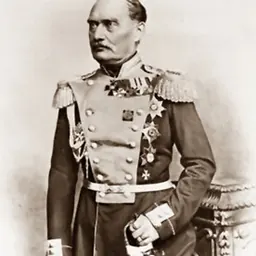
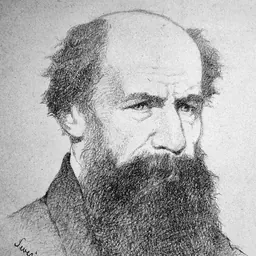

Contemporaries
People whose lives overlapped Samori Ture's




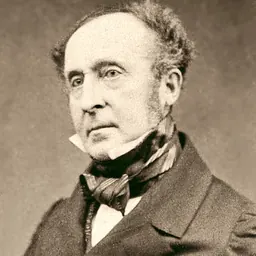
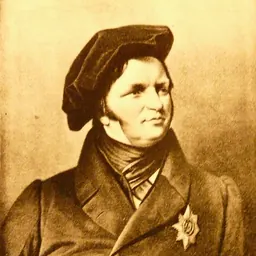
Frequently asked questions
Who was Samori Ture?
African warlord and religious leader, founder of the Wassoulou Empire (1830–1900)
When was Samori Ture born?
Samori Ture was born in 1830 in Kérouané Prefecture, Manyambaladugu.
When did Samori Ture die?
Samori Ture died on 2 June 1900 in Ndjolé.
What was Samori Ture's occupation?
Samori Ture was a military personnel.
What nationality was Samori Ture?
Samori Ture's recorded nationality: Guinea.
Sources & further reading
Cite this page
APA: Biography.guide. (2026). Samori Ture. https://biography.guide/samori-ture/
MLA: "Samori Ture." Biography.guide, https://biography.guide/samori-ture/.
Chicago: "Samori Ture." Biography.guide. https://biography.guide/samori-ture/.
Data last updated: 2026-09-20 · Spot an error? Report a correction.
Page generated 2026-09-27 05:09 UTC