
Sam Paul
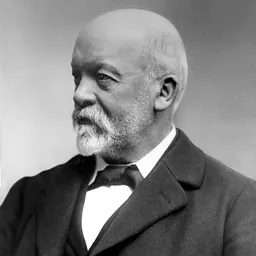
Tammany Hall political organizer, gambler and underworld figure in New York at the start of the 20th century; star witness during the Becker-Rosenthal murder trial.
About Sam Paul
Lived 1874 – 1927 (aged 52–53).
Sam Paul (1874 – January 10, 1927) was an American gambler and underworld figure in New York City at the start of the 20th century. Founder of the Sam Paul Association, he was also a major political organizer for Tammany Hall.
The Rosenthal case and before By 1903, the "Sam Paul Association" was already being mentioned in the news as a center of criminal activity in New York. By 1910, Paul was running a pool hall at the corner of Third Avenue and 13th Street in partnership with Louis Kaufman.
Paul was initially sought by police as a witness in the killing of gambler Herman Rosenthal, as they had received information that the crime had been planned at the Sam Paul Association clubhouse at Sea Gate, Brooklyn on July 14, 1912, by Jack Rose, Bridgie Webber, and a man known only as "Dollar John." However, on July 21, Paul was arrested as a suspect. He maintained his innocence, claiming he had been home in bed at the night of the murder and that, rather than having been involved with Rosenthal's death, he had paid for Rosenthal's funeral. The charges were dropped after Paul provided the police with an alibi.
Paul's arrest prompted New York Times reporters to interview members of the Sam Paul Association at 37 E. 7th Street about the membership and purpose of the organization. A member, who did not give his name, stated that:
The papers have given the impression that the Sam Paul Association has been the headquarters for a lot of plotters and lawbreakers. As a matter of fact, there are a lot of respectable business men, lawyers, doctors, and others in our membership. I myself am a tailor. That man on your right is a government official. Of course, some of the members are in sporting lines, but the proportion is about half and half ... For some reason or other, Sam Paul and the Sam Paul association have to take the knocks for everything that goes wrong. Every time a gaming joint is raided, the papers say it is supposed to have been one of Sam Paul's, and lately every time a crime has been committed they say it was planned here at the clubrooms, and every man the police arrest is said to be a member of the Sam Paul Association. And all this, when as a matter of fact this is only a social club and dining room, and Sam Paul is one of the nicest fellows, and one of the most charitable men in New York. He wouldn't hurt a fly. and subsequently took over the nearby Hesper Club on Second Avenue. Their rivalry eventually resulted in Webber being attacked and severely beaten by two members of Jack Zelig's criminal organization. Zelig was called "the right hand man of Sam Paul" by The New York Times.
When Harry Horowitz and Lefty Louis Rosenberg were arrested in September 1912 and charged with killing Rosenthal, rumors circulated to the effect that Paul had paid for their attorney, former magistrate Charles Wahle. Horowitz, Rosenberg, Wahle, and Paul denied that this was the case. Paul was held as a material witness and was one of several gangland figures who testified at the trial of Charles Becker later that year. Partly as a result of his testimony, Becker was convicted of Rosenthal's murder and was executed in 1915.
Both Koenigs denied these allegations. In separate statements the brothers mentioned Paul's membership in Tammany Hall as probative of their claims that Paul was a member of the Democratic Party, and, as such, unlikely to have associated with them.
After the Rosenthal case Paul married after the trial and had a daughter, Dorothy, who was born in 1918. After his first wife died, Paul married Lena Solomon. Although he had amassed a considerable fortune during his life (earning thousands from poolrooms, cafes, cabaret, restaurants and other establishments), Paul worked as a manager for a cabaret club in his later years and was nearly bankrupt according to a number of his associates in East Side Manhattan. He remarked to Sigmund Schwartz, a personal friend and owner of Schwartz's Undertaking Parlors, "You'll get me pretty soon, now. My health is gone and so is my money". Indeed, Paul was seriously ill for three weeks before his death from nephritis at his East Eighteenth Street home on January 10, 1927. His funeral was held the following morning at Schwartz's parlor on Fifth Street, near Second Avenue, and buried at Mount Hebron Cemetery.
Don’t just read it —
keep it.
Full-length biographies made to live with: read them, listen on the way to work, watch them tonight.
- E-book
- Audio
- Video
Instant download · yours to keep · every purchase keeps this site free
Important facts
People in Sam Paul's life
Named in this biography and alive at the same time



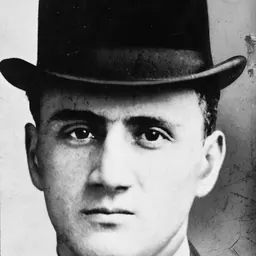
Contemporaries
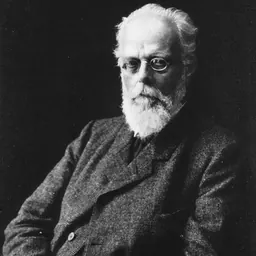
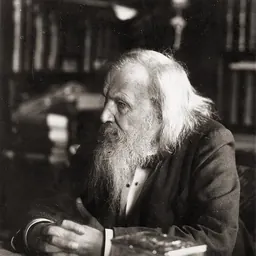
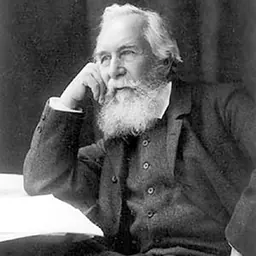
People whose lives overlapped Sam Paul's

Frequently asked questions
Who was Sam Paul?
Tammany Hall political organizer, gambler and underworld figure in New York at the start of the 20th century; star witness during the Becker-Rosenthal murder trial.
When was Sam Paul born?
Sam Paul was born in 1874.
When did Sam Paul die?
Sam Paul died on 10 January 1927 in Manhattan.
What was Sam Paul known for?
Sam Paul was known for Tammany Hall.
Sources & further reading
Cite this page
APA: Biography.guide. (2026). Sam Paul. https://biography.guide/sam-paul/
MLA: "Sam Paul." Biography.guide, https://biography.guide/sam-paul/.
Chicago: "Sam Paul." Biography.guide. https://biography.guide/sam-paul/.
Data last updated: 2026-09-22 · Spot an error? Report a correction.
Page generated 2026-09-27 05:05 UTC