
About Sam Himmelfarb
Lived 1904 – 1976 (aged 72). Sam Himmelfarb was a painter.
Sam Himmelfarb (July 4, 1904 – December 17, 1976) was a Russian-born American artist and commercial exhibit designer, known for his modernist-influenced paintings of everyday people and urban scenes. He also designed the Frank Lloyd Wright-inspired Samuel and Eleanor Himmelfarb Home and Studio (built 1942) in Winfield, Illinois, which is listed on the National Register of Historic Places. Himmelfarb studied art at the Art Students League and National Academy of Design in New York and at the Wisconsin School of Fine and Applied Arts. He initially painted in a realist style influenced by the Ashcan School, which gave way to more modernist, increasingly abstract styles. His paintings appeared in exhibitions at the Art Institute of Chicago (AIC), Terra Museum of American Art, Milwaukee Art Institute, and Arts Club of Chicago, and in circulating shows from the American Federation of Arts, among other venues. He received awards from the AIC, Wisconsin State Fair and Milwaukee Art Museum, and his work belongs to the collection of the latter, and those of the Illinois State Museum, Block Museum, and Arkansas Art Center, among others. Himmelfarb was married to the artist and educator, Eleanor Himmelfarb (1910-2009); their son, John Himmelfarb (b. 1946), and grandchild, Serena Aurora Day Himmelfarb (b. 1986), are also artists.
Life
Samuel Himmelfarb was born in Latvia to Jewish parents in 1904. In 1905, they immigrated to the United States, but soon after, Himmelfarb's mother died during childbirth in New York City. He and his father, Chaim, moved on to Wisconsin, settling in Racine and then Milwaukee. In high school, he learned to play the drums and by the early 1920s was performing semi-professionally in local vaudeville acts, dance music ensembles, and on a Pacific cruise ship; large crowds and musicians would later serve as subjects for many of his paintings. He supported himself with two jobs, as a drummer—playing a 16-show run for big band leader Horace Heidt and gigs with Jimmy Durante—and an architect's apprentice on projects for Long Island homes and the Empire State Building. He was active in antifascist groups and in the Arts Club of Chicago and Artists Equity (serving as president in the 1950s); Notable solo shows were held for Himmelfarb at the Milwaukee Art Institute (1932), Panoras Gallery (New York, 1956), Frank Ryan Gallery (Chicago, 1958), and Charles Allis Art Museum (Milwaukee, 1969). They were also exhibited together in later shows at the Evanston Art Center (1990) and Quincy Art Center (1994). In Chicago Modern, 1893-1945: Pursuit of the New, Amy Galpin and Susan Weininger suggest that Himmelfarb's rapid brushwork and spontaneous paint application portray the "vitality and dynamism of the modern city." and Commuters (1945) —which depicts four men playing cards on their way to work—critics note modernist features such as flattened space, bold outlines, and blocky, unmodulated areas of color that create a Cézanne-like play of geometric shapes on the heads and bodies of figures and their surroundings. His late work alternated between abstracted, painterly pieces, such as On the Way (1965) or Sun Bleached (1969), and high-key, geometric syntheses of recreational, domestic or urban scenes, often executed in acrylic (e.g., Family Feast, 1971; In, 1972). In these works, he often applied paint in a cool, almost mechanical manner, creating clean-edged, flat areas of interlocking forms that consciously used negative space and sometimes formed graphic patterns of striping and outlining (e.g., Truck Stop Diner, 1968; Diagonals in Orange and White, 1969). Critic Donald Key described his work of this period as that of "an accomplished colorist" who "revels in the rhythms of opposing tones and color."
Himmelfarb designed the modernist, Usonian-style Samuel and Eleanor Himmelfarb Home and Studio, which was built in 1942 in a wooded area of Winfield, Illinois, and listed on the National Register of Historic Places on October 4, 2018. In subsequent years, Himmelfarb occasionally undertook other building projects, including a residence in Wheaton, Illinois built for friends (since demolished), a still-surviving, small medical office in Warrenville, Illinois, and design work for a neighboring house in Winfield.
Don’t just read it —
keep it.
Full-length biographies made to live with: read them, listen on the way to work, watch them tonight.
- E-book
- Audio
- Video
Instant download · yours to keep · every purchase keeps this site free
Important facts
Family & relationships
People in Sam Himmelfarb's life
Named in this biography and alive at the same time





Related people
Same field, nearest in time

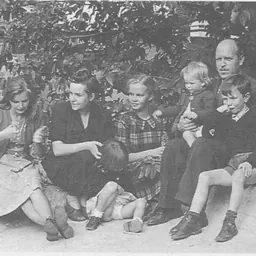




Contemporaries
People whose lives overlapped Sam Himmelfarb's
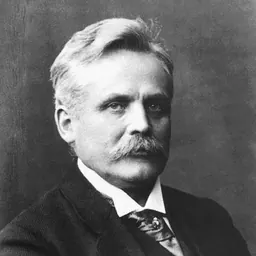
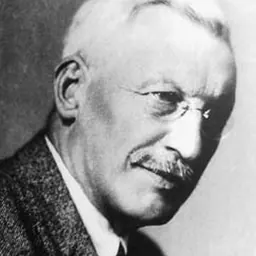

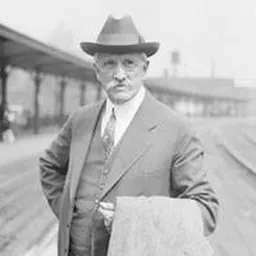

Frequently asked questions
Who was Sam Himmelfarb?
American painter and commercial designer (1904-1976)
When was Sam Himmelfarb born?
Sam Himmelfarb was born on 4 July 1904 in Latvia.
When did Sam Himmelfarb die?
Sam Himmelfarb died on 17 December 1976 in Chicago.
What was Sam Himmelfarb's occupation?
Sam Himmelfarb was a painter.
Sources & further reading
Cite this page
APA: Biography.guide. (2026). Sam Himmelfarb. https://biography.guide/sam-himmelfarb/
MLA: "Sam Himmelfarb." Biography.guide, https://biography.guide/sam-himmelfarb/.
Chicago: "Sam Himmelfarb." Biography.guide. https://biography.guide/sam-himmelfarb/.
Data last updated: 2026-09-20 · Spot an error? Report a correction.
Page generated 2026-09-27 05:32 UTC