
About John Himmelfarb
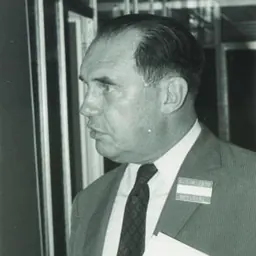
Born 1946. John Himmelfarb is an American painter.
John Himmelfarb (born 1946) is an American artist, known for idiosyncratic, yet modernist-based work across many media. Diverse influences ranging from Miró, Matisse and Picasso to Dubuffet, New York school artists like de Kooning, Guston, and Pop artists inform his work, described by critics and curators as chaotically complex and tightly constructed. He often employs energetic, gestural line, dense patterns of accumulated shapes, and fluid movement between figuration and abstraction, using strategies of concealment and revelation to create a sense of meaning that is both playful and elusive. His work is also unified by "a circulating library" of motifs and organizing structures, such as geographic and urban mapping, abstracted natural and industrial forms, and language systems. Assessing him at mid-career, New Art Examiner’s Andy Argy wrote "Himmelfarb’s art is original […] His unabashed immersion in graphic art, emphasizing drawing over painting, has earned him an important place among artists who make drawings into major aesthetic statements." Himmelfarb next turned to monumental paintings that critic Christopher Moore called joyful, luminous, and frenetic pyrotechnical displays.
Himmelfarb has an extensive exhibition history, notably at the Terry Dintenfass and Luise Ross galleries (New York), Jean Albano Gallery (Chicago), Chicago Cultural Center, Kalamazoo Institute of Arts, Eskenazi Museum of Art (Indiana University, Bloomington), Brooklyn Museum, and Art Institute of Chicago. His work sits in more than fifty public collections in the US and abroad, including the Smithsonian American Art Museum, Bibliothèque nationale de France, British Museum, and High Museum of Art in Atlanta. He has been recognized with a Yaddo Fellowship and an Arts/Industry Residency at Kohler, Wisconsin, as well as grants from the National Endowment for the Arts, Pollock-Krasner Foundation, and Illinois Arts Council. Himmelfarb works and lives in Chicago and Spring Green, Wisconsin, with his wife, Molly Day.
Life and career John Himmelfarb was born in 1946 in Chicago, and grew up in rural Winfield Township, Illinois. His parents, Eleanor and Sam Himmelfarb, were both painters and his father also had an industrial design firm called 3-Dimensions. All three exhibited together on a few occasions. Museum visits, art-focused travels and serious conversations about art, music and literature were constants in Himmelfarb's early family life.
Intending to support his art by teaching, Himmelfarb enrolled in the Master of Arts in Teaching program at Harvard Graduate School of Education. In 1970, he completed his degree, and also met his future wife, Molly Day. After traveling abroad, he moved back to Chicago, worked out of his parents’ studio, and in his first studio sale, generated the proceeds to set up his own studio. His unorthodox strategy worked, long-term. and Smithsonian, and shows at universities and museums across the Midwest. Later, he would show at the Luise Ross, Jean Albano and Thomas McCormick (Chicago), and Modern Arts Midtown (Omaha) galleries, and at museums such as the Jule Collins Smith Museum of Fine Art, Huntington Museum of Art (West Virginia), Davenport Museum of Art (Iowa), and Sioux City Art Center.
Work John Himmelfarb, 2/24/77, pen and ink on paper, 24" x 36", 1977. Himmelfarb's relative distance from traditional art-world channels led his work in a similarly idiosyncratic direction, less focused on novelty or aesthetic polemics, and more on intuition, personal iconography and building on modernist tradition. His work is perhaps best organized by major series, which tend to employ multiple media: 1) Early drawings and prints; 2) "Meetings"; 3) Language-related series; 4) "Inland Romance"; and 5) "Trucks."
Early drawings and prints Himmelfarb initially focused on black-and-white ink drawings and prints of "piled-up complexity" Harold Haydon wrote of his "astonishment at the artist’s inventive genius" and "endless satisfaction in deciphering imagery and discovering hidden humor and irony." In these works, he created compositions resembling sacred scrolls, tablets, fragments of temple facades and everyday documents, fashioned from private, invented languages of pictograms, hieroglyphs and characters derived from Neolithic and religious symbols, ancient earth drawings, Asian and Arabic alphabets, and seal scripts that imply coherent statements, yet remain mysterious. In "Icons" like Motor Home (2007) or the ceramic-tiled Coast of Chicago (2004)—a public commission for the Chicago Transit Authority's Kedzie Avenue subway stop —Himmelfarb worked in a simplified, graphic manner; in "Puzzle" works such as Jump, he accumulated more drawn detail in the fragments. Critic John Brunetti described them as "evocative gestalts of language, image, and thought," combining "unusual beauty" and "rigorous discipline," to suggest the physical and spiritual signatures left by past civilizations or the richness of life. Critics typically noted the paintings’ exuberance, luminous color and frenzied rhythm, comparing them variously, to improvisational jazz, stained glass, mythical city plans, or tapestries depicting a journey.
Of particular note is the roughly eleven-foot by twenty-five-foot Oakton Circle (2001), a work that began as a blank canvas—mounted with two similar-sized works in Oakton College's Koehnline Museum of Art—that Himmelfarb executed as a public act of performance painting, beginning at his exhibit's opening September 6, 2001. Completed in the days after the September 11th attacks, the work drew equal attention from viewers both for Himmelfarb's high-pressure performance and for its emotionally charged color and dynamism on an epic scale.
"Trucks" (2004– ) Himmelfarb's "Trucks" series represents a most improbable journey. It began unexpectedly one day after seeing a Dubuffet painting at the Art Institute of Chicago. Dubuffet employed a liquid black line over a multicolored background that electrified Himmelfarb. He immediately went to his studio to emulate the graphic impact on an "Inland Romance" painting. When a crane-like form emerged, he drew what appeared to be a truck below it (Bypass, 2003). In the next painting, Avion (2004), he dispensed with the crane and only a truck appeared. A new series was born which would expand to include drawings (many on old library catalogue cards), prints, and sculpture employing ceramics, wood, cast iron, steel, and eventually, 25-foot, drivable assemblages incorporating actual trucks, that critics have described collectively as whimsical, formally inventive. John Himmelfarb, Penelope Awaiting Her Chamberlain, 1946 Chevrolet truck and welded salvaged objects, 138" x 300" x 104", 2013.
Himmelfarb initially focused on two-dimensional works that bore the influence of Dubuffet and Guston. Museo Nacional de la Estampa (Mexico City), Total Museum of Contemporary Art (Seoul), Brooklyn Museum, High Museum of Art, Huntington Museum of Art, Joslyn Art Museum, Portland Art Museum, and Sioux City Art Center, among many.
Himmelfarb has been recognized with a Yaddo Fellowship (1979), as well as grants from the National Endowment for the Arts (1982, 1985), the Pollock-Krasner Foundation (1986, 2002), the Illinois Arts Council (1986, 2003), and Chicago Artists Abroad (1989). He has been chosen for residencies by the Kohler Arts/Industry Program (Kohler, Wisconsin) and the Emily Harvey Foundation (Venice, Italy). He has also been honored as a Visiting Artist at more than thirty institutions and universities, including University of Wisconsin-Madison, University of Canterbury (Christchurch, New Zealand), Indiana University, University of Nebraska–Lincoln, and University of Chicago, among many.
Don’t just read it —
keep it.
Full-length biographies made to live with: read them, listen on the way to work, watch them tonight.
- E-book
- Audio
- Video
Instant download · yours to keep · every purchase keeps this site free
Important facts
People in John Himmelfarb's life
Named in this biography and alive at the same time



Related people
Same field, nearest in time




Contemporaries
People whose lives overlapped John Himmelfarb's

Frequently asked questions
Who is John Himmelfarb?
American artist (born 1946)
When was John Himmelfarb born?
John Himmelfarb was born in 1946 in Chicago.
What is John Himmelfarb's occupation?
John Himmelfarb is a painter.
What nationality is John Himmelfarb?
John Himmelfarb is American.
Sources & further reading
Cite this page
APA: Biography.guide. (2026). John Himmelfarb. https://biography.guide/john-himmelfarb/
MLA: "John Himmelfarb." Biography.guide, https://biography.guide/john-himmelfarb/.
Chicago: "John Himmelfarb." Biography.guide. https://biography.guide/john-himmelfarb/.
Data last updated: 2026-09-20 · Spot an error? Report a correction.
Page generated 2026-09-27 05:19 UTC