
About Sam Glucksberg
Lived 1933 – 2022 (aged 89). Sam Glucksberg was an American psychologist, known for Candle problem and Figurative language.
Sam Glucksberg (February 6, 1933 – August 29, 2022) was a Canadian professor in the Psychology Department at Princeton University in New Jersey, known for his works on figurative language: metaphors, irony, sarcasm, and idioms. He is particularly known for manipulating the Candle Problem experiment which had participants figure out the best way to erect a candle on a wall. Along with performing experiments, Glucksberg also wrote Understanding Figurative Language: From Metaphors to Idioms, published by Oxford University Press in 2001.
Biography Glucksberg was born February 6, 1933, in Montreal, Quebec. He received his B.S. in psychology in 1956 at City College of New York, magna cum laude. He then received his Ph.D. in experimental psychology with distinction at New York University in 1960. After a period of three years as a research psychologist at the U.S. Army Human Engineering Laboratories, he came to Princeton as an instructor in 1963, and rose progressively through the ranks, being appointed full professor in 1970. He was chairman of the Department of Psychology from 1974-80.
Academic career Glucksberg was interested in how people use and understand language in everyday life, specifically in the areas of metaphors, irony, sarcasm, and idioms. These are areas in the psychology of language that are not widely covered. Glucksberg set out to understand how people recognize and understand these parts of figurative speech. He wanted to learn if people can respond to figurative speech with the same speed as literal speech. He also focused time and research in areas of language comprehension. In this area he concentrated on the context of communication and figuring out if the context determines whether one comprehends or if one can comprehend without knowing the context of the conversation. Referential communication was another aspect of language Glucksberg researched on and specifically how it affects young children.
Metaphors Metaphors like "Lawyers are sharks" enable us to create novel categories that allow us to characterize the topic of interest. In this case we use "shark" as a metaphorical category and apply the vicious and predatory sense of the animal to lawyers. This enables us to have a direct link between lawyer and shark allowing us to create a mental picture. The standard pragmatic view states that understanding metaphors requires a three-stage process. The first step is to figure out the literal meaning of a sentence. For the example "lawyers are sharks" one would derive the meaning "lawyers are a fish in the ocean", which makes no sense. The second stage addresses this interpretation against the context of utterance. Because it makes no sense in context, we then go to the third step which searches for a nonliteral meaning that does make sense. When the literal meaning violates one of Grice's rules of conversation it then becomes defective and becomes a false statement. This statement then has to be rejected and replaced with a non-literal interpretation. This model shows that non-literal meanings are secondary and literal meanings are automatic.
Glucksberg argued and showed that non-literal meanings can be comprehended as easily as literal meanings. It is not dependent on failure to find a literal meaning but instead a mandatory and automatic process. He proved that non-literal meaning is comprehended just as easily as literal meaning in his experiment where he had participants listen to metaphors like "Jerry first knew that loneliness was a desert* when he was very young." While listening, target words would appear, and participants had to decide whether or not they were words. For the example above, there were three different types of target words, metaphorical, literal, and control. The words that corresponded with these categories were "isolate", "sand", and "mustache". The findings showed that participants were faster with metaphorical and literal target words than they were with the control words. In the next experiment he showed that metaphors are understood directly as categorical assertions. This experiment was modeled after Stroop's classic experiment that people cannot ignore literal meanings. In this well-known experiment, color words were presented in a different color than the word (for example the word "red" would be in the color green) and participants were asked to say the color of the ink. They had difficulty saying green when the word red was printed, meaning they could not inhibit reading words that are attended. Glucksberg applied this knowledge to literally false but metaphorically true sentences. Participants were shown sentences one at a time and then told to determine whether or not they were literally true or false. There were four different types of sentences used, literally true, literally false, metaphors, and scrambled metaphors (metaphors that make no sense). If metaphorical meanings were ignored, then people should reject them at the same speed they do for the scrambled metaphors. But if metaphorical meanings are automatically registered then they should take longer to judge as false than their scrambled counterparts because of the response competition between the true non-literal meanings and the false literal ones of the metaphor sentences. so metaphors like "my job is a jail" would be treated as a comparison statement, "my job is like a jail." The problem with this theory is that it fails to account for two important characteristics of metaphorical comparisons. Metaphoric comparisons are irreversible, and people can easily determine whether or not a comparison is literal or metaphorical. Glucksberg argued that metaphors are class-inclusion assertions in which the topic of the metaphor is assigned a certain category. Applied to the example "my job is a jail", the intended meaning of the sentence is that their job belongs to a category that is referred to as a jail. The word "jail" can belong to a number of categories including types of buildings, punishments or situations that are related to the word "jail". In this case the listener would apply the situations related to the word "jail" (unpleasant, confining, and involuntary) to the word "job" and be able to make sense of the metaphor. When used metaphorically, the word "jail" refers to a thing that conveys certain characteristics to mind, while when used literally it refers to an actual token. This can be explained by Roger Brown who argued that metaphors involve categorization. It is understood the same way as taxonomic categories (Rosch, 1973, 1978) which have two sets of structural properties. The property is vertical and reflects the different levels of hierarchy. For example, the category "food" is organized hierarchically with "vegetable" being superordinate, "tomato" being basic and "plum tomato" being subordinate. When applied to "my job is a jail," "jail" would be at the basic level, "county jail" at the subordinate level and situations at the superordinate level. Categories like "jail" represent a set of properties that can be used to characterize a set of properties of a topic of interest, in this case "my job".
Some metaphors are able to be reversed to the contrary of the contrast model. Metaphors like "sermons are sleeping pills" and "a mighty fortress is our God" are able to be reversed because the relative roles of the topic and vehicle are unaffected by the reversal. Glucksberg pointed out the weak points of the contrast model and introduced the class inclusion assertion model which produces similarity relation between a and b, much like any classification of two objects.
Idioms
Gibbs and Nayak (1991) determined that idioms like "he blew his stack" are said to be motivated by mappings such as anger is heated fluid in a container. They presented people with stories that were consistent with this mapping and consistent with the hypothesis that readers activate and use mappings when dealing with idioms. Glucksberg found that while people preferred stylistically consistent idioms, comprehension of nonpreferred idioms was no slower than preferred ones. He concluded that such mappings are available but they are not routinely accessed and used for idiom comprehension. He presented three experiments to test his hypothesis and to determine when mappings are accessed for comprehension. Glucksberg explained that conceptual mapping might be used when presented with novel utterances like "I am feeling lower than a piece of gum stuck on the bottom of your boots." Both the novelty of the expression and the explicit statement of the analogy between emotional state and lowness requires the use of the analogy to understand the expression.
Experiment 1: Making Mappings Explicit
In this experiment participants were introduced to four different types of scenarios: implicit-mapping, no-mapping, explicit-mapping, and literal meaning scenario. If the conceptual mapping view is correct, then the implicit scenario should initiate conceptual mapping and the non-mapping scenario should not. The final sentence then should be easier to understand following the implicit scenario than the non-mapping one, but Glucksberg claims that the implicit model uses stock phrases that can be understood directly, so it would not invoke conceptual mapping. So there should be no difference in ease of comprehension between implicit and the no-mapping scenario. He reasoned that people are more inclined to use conceptual mapping when they are explicitly invited to do so. The results of the experiment showed that it took longer to comprehend the final sentence following the implicit scenario than the no-mapping scenario, but the response time for the implicit scenario was not significantly slower than the no-mapping scenario. The explicit condition yielded results almost identical to the no-mapping condition, suggesting that even when mapping is spelled out to the reader, it is not sufficient to lead them to use mapping in comprehension of stock phrases. It usually means the opposite of what the speaker actually says. According to Grice and his Maxims of Conversation, the speaker and listen try to be truthful and say nothing false or it will disrupt the maxim of quality (Grice 1975). The speaker is either violating the maxim of quality or they are trying to communicate a message by appearing to violate the maxim. He said that when someone says something that is opposite to the facts, listeners interpret it as the opposite. The problem with this theory is that it doesn't explain why the speaker is motivated to say the opposite of what they meant, nor does it explain the relevance of saying the opposite of what is meant. Roger Kreuz and Glucksberg propose the echoic reminder theory to explain sarcasm because it provides motivation for saying the opposite of what is meant but it also provides an explanation to the marked asymmetry of ironic statements; positive statements can be used ironically. They conducted three experiments that tested to see how sarcastic a final remark would be in a story prompt the participants were given.
Here is an example of a positive expertise prediction with a negative outcome and a positive remark: Nancy and her friend Jane were planning a trip to the beach. "The weather should be nice tomorrow," said Jane, who worked for a local TV station as a meteorologist. The next day was a cold and stormy one. As she looked out the window, Nancy said, "This is certainly beautiful weather." Participants read stories like this but also with no expertise predictions, negative predictions, or negative remarks. Kreuz and Glucksberg found that when the final remark matched the outcome, participants interpreted no sarcasm. Positive remarks about negative outcomes were interpreted as more sarcastic than negative remarks to positive outcomes, but the influence of an explicit victim was not reliably greater for negative remarks. This suggests that people judge remarks as sarcastic when it is obviously false to the speaker and listener. Kumon-Nakamura and Glucksberg proposed the allusional pretense theory of irony to explain why sentences come off as ironic. The first part dealt with pragmatic insincerity, which occurs when a speaker is perceived as intentionally violating felicity conditions for at least of these aspects of an utterance. Models have been proposed to explain how contextual information is used to decide the appropriate meaning of an ambiguous word such as "cast". The "selective access model" suggests that depending on the context of the sentence determines which meaning of the word "cast" comes to mind (orthopedic cast or cast of characters in a play). The "ordered access model" suggests that the more dominant meaning of the word is the meaning formulated first when dealing with an ambiguous word, so the orthopedic cast would be the one called to mind. Through a series of experiments, Glucksberg found that these models might have produced these outcomes in experiments because of backwards priming, which is when a visual target word influences the initial ambiguous word. For example, the ambiguous word "cast" is heard by a listener and then they see the word "actress". While processing the auditory statement, the visual target is available during the mental representation of the ambiguous word, thus bringing about the "cast of characters" meaning to the word rather than the more dominant one. Glucksberg's solution was to use non-words as the visual target so it would eliminate backward priming. He found that context can constrain lexical access using essentially the same paradigms used by others who did not find such evidence. To test this model Glucksberg presented participants with a series of study sentences that they studied and then were tested with "true", "false", or "don't know" sentences, and their reaction times were recorded. Reaction times for "don't know" sentences were faster than true or false ones, which supports the first part of the model, which is when no relevant information is found a rapid "don't know" is made. To test the second part of the model, he kept the same procedure as the first experiment but added explicit "don't know" sentences and concluded that explicit sentences should take longer to process resulting in a slow "don't know", because memory search will retrieve stored information relating the name and object. This then has to be evaluated to determine the exact relationship between the two, and after it is finished a "don't know" response is made. The solution times for the "all labeled" scenario were a lot faster than the other two scenarios. Glucksberg found that the candle problem solution may be triggered by the observation of the box. In his first experiment, he had participants view the previous scenarios and write down the first words that came to mind under each object in the pictures. After this they then stated ways in which they could erect the candle on the wall. He found that participants in the "all labeled" scenario mentioned the box 90% of the time, 63% for no labels, and 20% for tacks label. The initial solutions stated went as follows: 95% all labels, 65% no labels, and 54% for tacks label. This shows that Glucksberg was right in concluding that the box affects solutions. Providing participants with a verbal label of a functionally fixed object makes that object available for use. But this is not so, because referents do not have a simple one-to-one correspondence. A referent may be different in one context than it is in another context. Because of this, a listener understands the speaker if they correctly discriminate the referent from a set of non-referents. The first is the stimulus array in order to make sure his message takes in account the attributes of the referent which will distinguish it from other non-referents. Second is the listener in order that the message may be constructed in a way that is compatible with the listener's knowledge and capabilities. As shown above, adults were able to perform the two-person communication game with near-perfect accuracy, while children were unable to communicate effectively. Glucksberg conducted an experiment to test the relation between age and communication skills. In the experiment he had children from kindergarten, first, third, and fifth grade participate in a game that was called "Stack the Blocks". Children from each grade had to speak to a listener in the same grade that they could not see and have them build a matching set of stacked blocks. Each block had a different design imprinted on it. The results showed that as the game was played with older kids, the less errors were made throughout the game. The younger the kids were, the more errors were made throughout the game. This supports the fact that younger children lack social communication which allows them to communicate effectively to a listener. Glucksberg's findings underscore the point that communication competence should be distinguished from linguistic competence. Children are said to have comparable linguistic performance to adults by age eight, but the results show that this ability seems to develop gradually over the five-year age period in which this experiment tested.
Honors and memberships Fellow, American Psychological Association (1976) Charter Fellow, American Psychological Society and President, Division of Experimental Psychology (1988–89) Fellow, American Association for the Advancement of Science Fellow, Psychonomic Society (1985) Secretary-Treasurer, Society of Experimental Psychologists (1987–90) Member, Society for Research in Child Development; Eastern Psychological Association Editor, Psychological Science (1999-2002) Editor, Journal of Experimental Psychology: General (1984-1989)
Don’t just read it —
keep it.
Full-length biographies made to live with: read them, listen on the way to work, watch them tonight.
- E-book
- Audio
- Video
Instant download · yours to keep · every purchase keeps this site free
Important facts
People in Sam Glucksberg's life
Named in this biography and alive at the same time

Related people
Same field, nearest in time

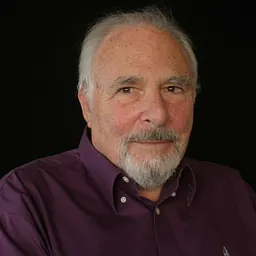



Contemporaries
People whose lives overlapped Sam Glucksberg's
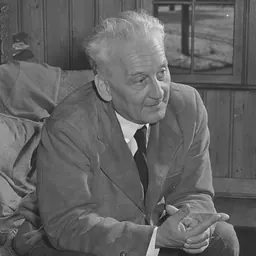

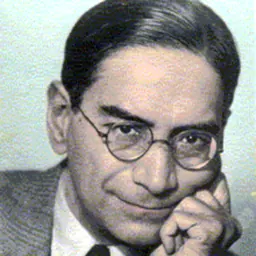


Frequently asked questions
Who was Sam Glucksberg?
Canadian psychologist
When was Sam Glucksberg born?
Sam Glucksberg was born on 6 February 1933 in Montreal.
When did Sam Glucksberg die?
Sam Glucksberg died on 29 August 2022 in New York City.
What was Sam Glucksberg's occupation?
Sam Glucksberg was a psychologist.
What was Sam Glucksberg known for?
Sam Glucksberg was known for Candle problem and Figurative language.
What nationality was Sam Glucksberg?
Sam Glucksberg was American.
Sources & further reading
Cite this page
APA: Biography.guide. (2026). Sam Glucksberg. https://biography.guide/sam-glucksberg/
MLA: "Sam Glucksberg." Biography.guide, https://biography.guide/sam-glucksberg/.
Chicago: "Sam Glucksberg." Biography.guide. https://biography.guide/sam-glucksberg/.
Data last updated: 2026-09-20 · Spot an error? Report a correction.
Page generated 2026-09-27 04:57 UTC