
Sam DeCavalcante
American mobster
About Sam DeCavalcante
Lived 1913 – 1997 (aged 84). Sam DeCavalcante was an American.
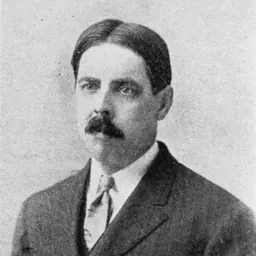
Simone Paul Rizzo DeCavalcante (April 30, 1913 – February 7, 1997), known as "Sam the Plumber", was an Italian-American mobster who was boss of the DeCavalcante crime family of New Jersey. The McClellan hearings later named the New Jersey Mafia the DeCavalcante crime family since he was the boss of the family at the time of those hearings.
Early life The son of Italian immigrants Maria Antoinette (Occhipinti) and Frank Rizzo Di Cavalcante, Simone Paul Rizzo DeCavalcante was born in the Brooklyn borough of New York City and raised in Trenton, New Jersey. His birth date has been reported as April 30, 1913. Claiming descent from an Italian marquis, Michelangelo Cavalcanti and his wife Maria Caterina De Medici, DeCavalcante was nicknamed "The Count".
Criminal career New Jersey mob boss After the retirement of family boss Nicholas Delmore (real name Nicholas Amoruso) between 1960 and 1964, DeCavalcante replaced him. Shortly after that, he acted as a liaison between the Mafia Commission and the Bonanno crime family after the beginning of the Bonanno War between the New York Five Families. Under DeCavalcante's leadership, the New Jersey Mafia was transformed from a dysfunctional group of ever-warring factions into a cohesive and profitable crime family. He also doubled the number of "made men" in the family. DeCavalcante altered longstanding parts of the Mafia initiation ritual, abolishing the use of a gun, a knife and a burning holy card when "making" new members of his organization as "he did not feel it was necessary", according to Vincent "Vinny Ocean" Palermo. Despite this, he insisted there was no difference between the New Jersey Mafia and the Five Families on the other side of the Hudson River and declared: "Cosa Nostra is Cosa Nostra. An Amico Nostro is an Amico Nostro". Living in the Lawrenceville section of Lawrence Township, but working in Newark, DeCavalcante commanded an organization of around 60 "made" members active in the tri-state area of New Jersey, New York and Connecticut. The DeCavalcante crime family, as it came to be known, operated primarily in New Jersey, with interests in Connecticut, Troy, New York, and suburbs of New York City.
DeCavalcante's legal business front was the Kenilworth Plumbing and Heating Co., a plumbing supply store in Kenilworth. He and his wife Mary had three sons, Frank, Robert, and Carl. DeCavalcante's ownership of a plumbing supplies store earned him the nickname "Sam the Plumber", although his preferred sobriquet was "The Count", which derived from his claims that he was the son of an Italian marquis. Another nickname of his was "the Claw", as he had a reputation as a usurious loan shark. The other locations where electronic surveillance was utilized were the Best Sales Co., a company in Newark controlled by Gerardo Catena, the Penn Jersey Vending Co. in Philadelphia, owned by Angelo Bruno, and a building known as "the Barn", located at the rear of a restaurant on U.S. Route 22 in Mountainside. The investigation confirmed claims by cooperating witness Joe Valachi, provided crucial information on La Cosa Nostra, and revealed the existence of the Mafia Commission. However, since no court order was issued for the wiretaps, none of the tapes could be used to indict DeCavalcante. Each of the four men were also critical of the method used to assassinate Cavallaro as his 4-year-old son was also killed in the explosion. It was indicated that the use of hand grenades had since been forbidden by the Mafia.
In addition to murder, the tapes revealed political corruption and links between mobsters and New Jersey public officials. Days before Thomas G. Dunn was elected Mayor of Elizabeth, he visited DeCavalcante at his Kenilworth office on October 23, 1964. Dunn said to DeCavalcante: "If you have any way of getting to [two redacted names] tell them to keep their lousy mouths shut... Because this thing could cream me at the last minute. So if you can in some way get to these two guys – tell them to keep this thing out of the papers". He denied that he was involved in Riggi's case and said: "Many kinds of people drop names of public figures. But no one is responsible for people dropping his name, whether the name droppers be reputable or disreputable individuals".
DeCavalcante was recorded expressing some bitterness at Carlo Gambino's decision to appoint Joseph Colombo of the Colombo crime family to the Commission as he had hoped that his own "family" would be given the opportunity to join the Commission as the Sixth Family. Speaking with his underboss Frank Majuri, he said: "[Colombo] sits like a baby next to Carl [Gambino] all the time. He'll do anything Carl wants him to do", and later mused: "Sometimes, Frank, the more things you see, the more disillusioned you become. You know, honesty and honorability, those things". The bug planted in DeCavalcante's office also revealed affairs he was having with his secretary and other women. Majuri was recorded telling him that he "shouldn't run around because [Gerardo] Catena and [Carlo] Gambino don't".
Conspiracy charges DeCavalcante is reputed to have masterminded a plot to extort thousands of dollars over a six-week period in 1966 from the operators of an illegal dice game in the Philadelphia suburb of Trevose, Pennsylvania. On September 28, 1966, he allegedly sent two Brooklyn Mafiosi, Daniel Annunziata and Gaetano "Corky" Vastola, to the game with the intention of feigning surprise at discovering that the dice were loaded, then staging a holdup, demanding $20,000 and suggesting that DeCavalcante arbitrate the matter. Four gamblers were robbed at gunpoint at the game, which was held at a Trevose motel. After three meetings, one held at DeCavalcante's company in Kenilworth, one at a diner in Lawrence Township, and another at a second motel in Trevose, a $12,000 settlement was arranged by DeCavalcante. He was eventually paid $3,800 by the robbery victims as the adjudicator. On March 21, 1968, DeCavalcante, Vastola and Annunziata were arrested and indicted on charges of conspiring to violate federal extortion statutes following a 17-month racketeering investigation by three federal agencies. DeCavalcante was taken into custody at his Kenilworth plumbing and heating firm, where FBI agents seized three pistols and a shotgun from his office. On July 18, 1968, DeCavalcante was arrested by state and Union County officials as he left the Garden State Parkway in Kenilworth, and was charged under state statutes with illegally acquiring a .38 caliber pistol which had been stolen during a burglary in Fairless Hills, Pennsylvania. The gun was among those seized by the FBI from DeCavalcante's office.
In an effort to discover if his client's offices in Kenilworth were bugged by authorities in relation to the Trevose extortion case, DeCavalcante's attorney, Sidney "Chris" Franzblau, requested a discovery motion argued on January 17, 1969, at which Deputy Attorney General William J. Brennan Jr. was called to testify regarding any electronic surveillance that may have been utilized prior to DeCavalcante's arrest. At the request of Franzblau, 2,300 transcript pages of taped conversations compiled by the FBI in the "DeCavalcante Papers" were released to the public by David M. Satz Jr., the U.S. Attorney for the District of New Jersey, on June 10, 1969. DeCavalcante was formally charged with gambling offenses on January 2, 1970. The following day, he attended the wedding of his son, Carl DeCavalcante, a senior at the University of Vermont, to Cynthia Ann Snyder at St Michael's Church in Trenton. Although he had initially barred news reporters from entering the ceremony, DeCavalcante relented and invited news people into the reception, saying: "You can drink what we drink, eat what we eat on me, but I don't want any of my guests embarrassed." Plainclothes policemen also photographed the wedding from outside. Following his sentencing, DeCavalcante said: "What can I say? I don't know what happened. I tried to make things equal. But it's part of life. We take the bum deals with the good deals." On March 10, 1971, DeCavalcante's 1970 extortion conspiracy conviction was reversed by the U.S. Court of Appeals for the Third Circuit in Philadelphia after Judge Arlin M. Adams, acting on the opinion of a three-judge panel, ruled that the case against him, Annunziata and Vastola had been based on insufficient evidence. The ruling reversed two of the charges against DeCavalcante and ordered a new trial on the third charge. The convictions of Annunziata and Vastola were also overturned. DeCavalcante subsequently requested immediate freedom from the Federal House of Detention in Manhattan, where he had been held since his sentencing in October 1970. The request was denied by Herbert J. Stern, the Acting U.S. Attorney for New Jersey, who opposed releasing DeCavalcante because he was due to be sentenced in the gambling ring case. On March 15, 1971, DeCavalcante was sentenced at Newark Federal Court to five years' imprisonment on the gambling conviction. Despite being denied parole earlier, DeCavalcante was granted mandatory release from prison on December 20, 1973, after serving more than half of his five‐year sentence.
In the spring of 1974, DeCavalcante was stopped by a New Jersey State Police radar unit while driving his Cadillac on Interstate 287 in Harding and charged with speeding at 77 miles per hour on a 55-mile-per-hour limit highway. The case was first postponed because DeCavalcante was in Florida at the time, and again because he was ill with bronchitis. On July 16, 1975, Judge Marius Grosso denied a third postponement due to illness because a State Trooper claimed to have seen a supposedly ill DeCavalcante driving and apparently looking well. DeCavalcante did not attend the hearing at which Grosso fined him $12 for speeding and an additional $10 for court costs.
DeCavalcante moved to Florida in 1976.
Death DeCavalcante died of natural causes at age of 84, at a hospital in Fort Lauderdale, Florida, on February 7, 1997.
Don’t just read it —
keep it.
Full-length biographies made to live with: read them, listen on the way to work, watch them tonight.
- E-book
- Audio
- Video
Instant download · yours to keep · every purchase keeps this site free
Important facts
People in Sam DeCavalcante's life
Named in this biography and alive at the same time




Contemporaries
People whose lives overlapped Sam DeCavalcante's



Frequently asked questions
Who was Sam DeCavalcante?
American mobster (1913–1997)
When was Sam DeCavalcante born?
Sam DeCavalcante was born on 30 April 1913.
When did Sam DeCavalcante die?
Sam DeCavalcante died on 7 June 1997 in Miami.
What nationality was Sam DeCavalcante?
Sam DeCavalcante was American.
Sources & further reading
Cite this page
APA: Biography.guide. (2026). Sam DeCavalcante. https://biography.guide/sam-decavalcante/
MLA: "Sam DeCavalcante." Biography.guide, https://biography.guide/sam-decavalcante/.
Chicago: "Sam DeCavalcante." Biography.guide. https://biography.guide/sam-decavalcante/.
Data last updated: 2026-09-20 · Spot an error? Report a correction.
Page generated 2026-09-27 05:07 UTC