
About Carlo Gambino
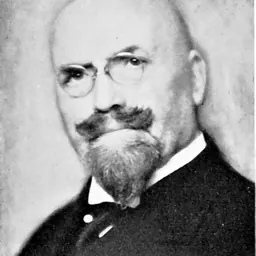
Lived 1902 – 1976 (aged 74). Carlo Gambino was an Italian criminal, godfather and crime boss.
Carlo Gambino (; August 24, 1902 (August 24, 1902, is a birth date most commonly used, however, September 1, 1902, is a birth date that has also been cited.) He had two brothers: Gaspare, who was not involved with the Mafia; and Paolo, who was a part of what would become the Gambino crime family. His parents were Italian immigrants Tommaso Gambino and Felice Castellano.
Gambino entered the United States on December 23, 1921, at Norfolk, Virginia, as a stowaway on the SS Vincenzo Florio. He made his way to New York City to join his cousins, the Castellanos, and worked for a small trucking firm owned by their family. They raised four children – sons Thomas, Joseph (March 28, 1936 – February 20, 2020 ) and Carlo Jr. (1934–2019) and a daughter, Phyllis Gambino Sinatra (September 22, 1927 – February 19, 2007).
Criminal career Castellammarese War and The Commission In New York, Gambino joined a criminal organization headed by Joe Masseria, another Sicilian-born gangster.
When the war began turning poorly for Masseria, his second-in-command, Charles "Lucky" Luciano, saw an opportunity to switch allegiances. In a secret deal with Maranzano, he agreed to engineer Masseria's death in return for taking over Masseria's rackets and becoming Maranzano's lieutenant. On April 15, 1931, Masseria was killed at Nuova Villa Tammaro, a restaurant on Coney Island, ending the Castellammarese War.
Later in 1931, Luciano called a meeting in Chicago with various bosses, where he proposed the creation of a governing body for organized crime that would later evolve into the Commission. Designed to settle all disputes and decide which families controlled which territories, the Commission has been called Luciano's greatest innovation.
Mangano family After Masseria's death, Gambino and his cousins became soldiers in the family headed by Mangano. Gambino was arrested in 1937 for tax evasion related to operating a million-gallon distillery in Philadelphia. He served twenty-two months in prison at the United States Penitentiary in Lewisburg, Pennsylvania, the only period in his long criminal career during which he was incarcerated. During his twenty-year rule, Mangano had resented Anastasia's close ties to Luciano and Costello, particularly the fact that they had obtained Anastasia's services without first seeking Mangano's permission. This and other business disputes led to heated, almost physical fights between the two mobsters.
In 1951, Mangano and his brother Philip were murdered, reportedly on the orders of Anastasia. Philip's body was found near Sheepshead Bay, Brooklyn, on April 19, 1951. Vincent's body was never found and he was declared dead by the Surrogate's Court in Brooklyn on October 30, 1961, ten years after he had disappeared. Anastasia succeeded Mangano as head of his crime family with the support of Costello, who had risen to leadership of the Luciano family after Genovese fled to Italy to avoid criminal charges and held on to that position after Genovese's return.
Anastasia murder In 1957, Genovese decided to move against Costello and Anastasia, enlisting GambinoAnastasia's underbossin the murder conspiracy. Genovese ordered Vincent Gigante to carry out the hit on Costello, which was attempted outside Costello's apartment building on May 2, 1957. While the wound was merely superficial, this brush with death persuaded Costello to relinquish power to Genovese and retire. Although a doorman identified Gigante as the gunman, Costello claimed to not recognize him at Gigante's 1958 trial; Gigante was acquitted on charges of attempted murder.
With Costello gone, Genovese and Gambino allegedly ordered Anastasia's murder. Gambino gave the contract to Profaci, who then allegedly assigned the hit to Joseph "Crazy Joe" Gallo. Anastasia was murdered on October 25, 1957, in the barbershop of the Park Sheraton Hotel in Midtown Manhattan. Gambino subsequently took over the Mangano crime family, which took his name going forward. He appointed Joseph Biondo as underboss; he replaced Biondo with Aniello Dellacroce in 1965.
Apalachin and Genovese's fall Shortly after Anastasia's murder, Genovese took control of Luciano's crime family from Costello. Seeking to legitimize his new power, he called a meeting in which leaders of both the American and Sicilian crime syndicates would be in attendance. Among the items on the meeting's agenda were the Mafia's interests in gambling and narcotics smuggling in pre-revolutionary Cuba, as well as their interests in New York City's garment industry. The meeting took place on November 14 at the home of mobster Joseph Barbara in Apalachin, New York.
Edgar D. Croswell, a trooper with the New York State Police, had become aware that Barbara's son was reserving rooms in local hotels and that a large quantity of meat from the local butcher was being delivered to the Barbara home. Suspicious, Croswell decided to monitor Barbara's house. When the State Police found numerous luxury cars parked at the estate, they took down the license plate numbers and discovered the vehicles were registered to known criminals. Police reinforcements came to the scene and a roadblock was set up. while Genovese himself said he had come to attend a barbecue. The police let him go.
Gambino and Luciano allegedly helped pay part of $100,000 to a Puerto Rican drug dealer to falsely implicate Genovese in a drug deal. On April 17, 1959, Genovese was sentenced to fifteen years in prison for drug offenses; he died in custody on February 14, 1969.
On January 26, 1962, Luciano died of a heart attack at Naples International Airport. Three days later, 300 people attended a funeral service for Luciano in Naples, during which his body was conveyed along the streets in a horse-drawn black hearse. With the permission of the U.S. government, Luciano's relatives took his body back to New York for burial at St. John's Cemetery in Middle Village, Queens. More than 2,000 mourners attended his funeral. Gambino, Luciano's longtime friend, gave his eulogy.
Boss After Genovese's imprisonment, Gambino took control of The Commission. Under his leadership, the Gambino crime family had 500 soldiers and over 1,000 associates.
In 1962, Gambino's oldest son, Thomas, married Lucchese's daughter Frances. Over 1,000 guests attended the wedding, at which Gambino presented Lucchese with a $30,000 gift. In return, Lucchese gave Gambino a part of his rackets at Idlewild Airport (now called John F. Kennedy Airport). Lucchese exercised control over airport security and airport unions. As a team, Lucchese and Gambino now controlled the airport, the Commission, and most organized crime in New York.
In September 1966 he was arrested along with twelve others after attending the La Stella Restaurant meeting. All thirteen men were arrested and charged with "consorting with known criminals", each had bail set at $100,000. The sum total of their bail, $1,300,000, was paid the next day by a bail bondsman with no collateral. They were subsequently released.
Conspiracy against the Commission In 1963, Joseph Bonanno, the head of the Bonanno crime family, made plans to assassinate several rivals on The Commissionbosses Gambino, Lucchese, and Stefano Magaddino, as well as Frank DeSimone. Bonanno sought Joseph Magliocco's support, and Magliocco, bitter over being previously denied a seat on The Commission after Profaci's death, readily agreed. Bonanno promised to make Magliocco his right-hand man in exchange for his assistance. Fearing for his life, Bonanno went into hiding in Montreal, leaving Magliocco to deal with the Commission. Badly shaken and in failing health, Magliocco confessed his role in the plot. The Commission spared his life but forced him to retire as boss of the Profaci family and pay a $50,000 fine. As a reward for turning on his boss, Colombo took over Magliocco's family, which was subsequently renamed the Colombo family. The same year, the U.S. Supreme Court upheld a 1967 order, that he previously appealed, that he be deported because he had entered the country illegally. When the government tried to carry out the order, Gambino was rushed to a hospital after he suffered a massive heart attack.
Although many in the Colombo family blamed Gallo for the shooting, the police eventually concluded that Johnson was a lone gunman after they questioned Gallo. Since Johnson had spent time a few days earlier at a club run by the Gambino family, one theory was that Gambino organized the shooting. Colombo had refused to listen to Gambino's complaints about the League, and allegedly spat in Gambino's face during one argument. However, the Colombo family leadership was convinced that Gallo ordered the murder after his falling out with the family. Gallo was murdered on April 7, 1972.
Tommy Eboli murder After Genovese's death, Gerardo Catena became the new boss of the Genovese family. However, he was indicted and jailed in 1970. Thomas Eboli then became the "front boss" of the family for the next two years.
Eboli wanted to actually run the family and borrowed $4 million from Gambino to finance a new drug trafficking operation. However, law enforcement soon shut down Eboli's drug racket and arrested most of his crew. Gambino allegedly ordered Eboli's murder. While it was initially thought that this was due to Eboli's failure to pay back the loan, it is now believed that Gambino actually wanted to replace Eboli with Frank "Funzi" Tieri and used Eboli's loan default as a pretext. No one was ever charged in this murder.
Death Gambino died at his Massapequa home in the early morning hours of Friday, having watched the television broadcast of the winning the American League pennant the previous evening. The official cause was natural causes and his death was not unexpected, given a history of heart disease.
Cusimano & Russo Funeral Home hosted his wake over the weekend of October 16 and 17. His funeral mass was held on Monday, October 18, at the Church of Our Lady of Grace Gambino was then entombed within his family's private room in the Cloister building of St. John Cemetery in Queens. His funeral and wake were attended by several hundred people, with plainclothes police and FBI agents mingling outside. His funeral procession consisted of thirteen limousines, around a dozen private cars, and one flower car. Dellacroce was imprisoned for tax evasion at the time and was unable to contest Castellano's succession.
Castellano's succession was confirmed at a meeting on November 24, with Dellacroce present. Castellano arranged for Dellacroce to remain as underboss while directly running traditional Mafia activities such as extortion, robbery and loansharking. While Dellacroce accepted Castellano's succession, the deal effectively split the Gambino family into two rival factions.
In popular culture In the 1995 TV film Between Love and Honor, Carlo Gambino is portrayed by Robert Loggia. In the 1996 TV film Gotti, Carlo Gambino is portrayed by Marc Lawrence as the head of the Gambino family towards his death in 1976. In the 2001 TV film Boss of Bosses, Carlo Gambino is portrayed by Al Ruscio. He was shown from his early years in the Cosa Nostra till his death, when Paul Castellano was chosen to succeed him. His younger self is portrayed by William DeMeo. In the 2015 AMC mini series The Making of the Mob: New York, Carlo Gambino is portrayed by Noah Forrest. In the 2018 biopic Gotti, Carlo Gambino is portrayed by Michael Cipiti. He is portrayed by Anthony Skordi on the 2022 TV series The Offer. He is portrayed by Arthur J. Nascarella in Season 3 of TV Series Godfather of Harlem He is portrayed by James Ciccone in The Alto Knights
Don’t just read it —
keep it.
Full-length biographies made to live with: read them, listen on the way to work, watch them tonight.
- E-book
- Audio
- Video
Instant download · yours to keep · every purchase keeps this site free
Important facts
Family & relationships
People in Carlo Gambino's life
Named in this biography and alive at the same time






Related people
Same field, nearest in time



Contemporaries
People whose lives overlapped Carlo Gambino's
Frequently asked questions
Who was Carlo Gambino?
American mobster (1902–1976)
When was Carlo Gambino born?
Carlo Gambino was born on 24 August 1902 in Palermo.
When did Carlo Gambino die?
Carlo Gambino died on 15 October 1976 in Massapequa.
What was Carlo Gambino's occupation?
Carlo Gambino was a criminal, godfather and crime boss.
What nationality was Carlo Gambino?
Carlo Gambino was Italian.
Sources & further reading
Cite this page
APA: Biography.guide. (2026). Carlo Gambino. https://biography.guide/carlo-gambino/
MLA: "Carlo Gambino." Biography.guide, https://biography.guide/carlo-gambino/.
Chicago: "Carlo Gambino." Biography.guide. https://biography.guide/carlo-gambino/.
Data last updated: 2026-09-20 · Spot an error? Report a correction.
Page generated 2026-09-27 05:28 UTC