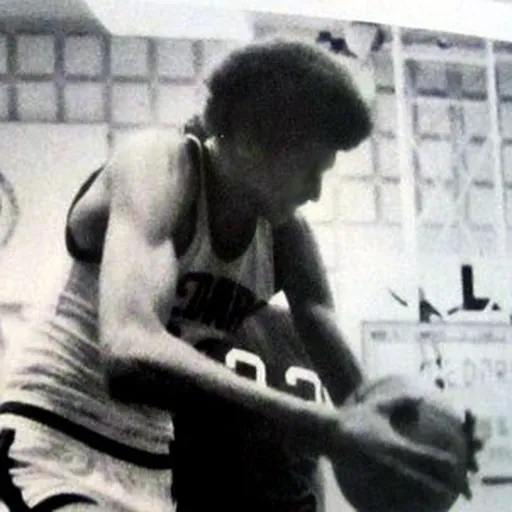
About Sam Bowie
Born 1961. Sam Bowie is an American basketball player.
Samuel Paul Bowie (born March 17, 1961) is an American former professional basketball player. A national sensation in high school and outstanding collegian and Olympic team member, Bowie's professional promise was undermined by repeated injuries to his legs and feet. In spite of the setbacks, the and center played ten seasons in the National Basketball Association (NBA).
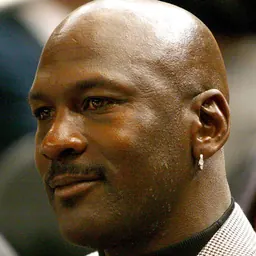
Projected as a solid first-rounder in the 1984 NBA draft, Bowie was chosen by the Portland Trail Blazers as the second selection, notably ahead of Michael Jordan.
Early life Bowie was born on March 17, 1961, as the son of Ben Bowie and Cathy "Sammy" Bowie. His father was and had played basketball for the Harlem Magicians for six seasons. Bowie's parents divorced when he was 12. After the divorce, Bowie lived with both of his parents in Lebanon, Pennsylvania. Concerned about not showing favoritism toward either parent, he then lived with his maternal grandmother until going to college.
Bowie was a sophomore in college when his father died suddenly, aged 45, when a cyst on his lung burst. Of his father Ben, after he died, Bowie said, "We loved each other more than two individuals could. But we never could say, 'I love you.' Neither of us was that kind of person. That's the thing I'm most sorry about, that I didn't get to tell him I loved him before he was gone." He averaged over 28 points and 18 rebounds per game, and was a McDonald's and Parade All-American. As a junior, he led the Cedars to the state finals, where they lost by a point to Schenley High School of Pittsburgh, 51–50. "When I say this, I mean it with all my heart, from the Kentucky experience to all of my years in pro ball, when I reminisce I go back to my Lebanon Cedar days," said Bowie in 2018. "I just wish we could've won that state championship game. Fifty-one to fifty, we were so close."
Bowie played in the 1979 McDonald's All-American Game. The memorable rosters included: Antoine Carr, Quintin Dailey, Sidney Green, Clark Kellogg, Greg Kite, Sidney Lowe, John Paxson, Ralph Sampson, Byron Scott, Steve Stipanovich, Isiah Thomas, Dereck Whittenburg, Dominique Wilkins and James Worthy.
College career (1979–1984) Bowie's #31 jersey was retired by the University of Kentucky. This banner in Rupp Arena honors him.
Bowie signed to play for the University of Kentucky, under Coach Joe B. Hall, in 1979.
Freshman season (1979–1980) As a freshman during the 1979–80 season at Kentucky, Bowie averaged 6.9 points, 9.6 rebounds and 2.1 blocks per game. Kentucky finished 29–6 and advanced to the 1980 NCAA tournament. Bowie had 13 points, 11 rebounds and 3 blocks in Kentucky's 97–78 victory over Florida State. He played nine minutes, fouling out with 2 points and 3 rebounds in a 55–54 loss to Duke.
Sophomore season (1980–1981) Bowie's sophomore season saw him average 17.5 points, 9.1 rebounds, and 2.9 blocks per game. He was named a third-team NCAA Basketball All-American by the Associated Press. In 1981, he set, and now shares, the Kentucky record for most blocked shots in a game, with nine against St. John's.
However, Bowie began sustaining injuries that would plague the remainder of his basketball career. In the third-to-last game of his sophomore season against Vanderbilt, Bowie went up for a dunk but came down off balance. He landed with most of his weight on his left leg, saying that he felt pain but initially tried to play through it. Kentucky qualified for the 48-team 1981 NCAA tournament as the #2 seed in the Mideast Region, with a first-round bye. In the Wildcats' first game of the tournament, against #7 seed Alabama-Birmingham, Bowie fouled out, playing 21 minutes, as Kentucky was eliminated by UAB 69–62.
Injuries (1981–1983) During the 1980–81 season, unbeknownst to Bowie at the time, he had suffered an injury to his leg. He only got it checked after he had been suffering from significant pain in left lower leg. Originally thought to be shin splints, X-rays determined that Bowie had suffered a stress fracture in his left tibia and had been playing on it for much of the time. The injury required surgery and cost Bowie his 1981–82 season, and he was in a cast for 44 weeks. Unfortunately for him, an examination after the cast was removed determined the fracture had not healed properly and Bowie was forced to undergo bone graft surgery: as a result of that surgery, he missed the entire 1982–83 season as well.
Senior season (1983–1984) Bowie returned for the 1983–84 season. Having not played in two years, he played in all 34 Kentucky games and averaged 10.5 points, 9.2 rebounds, and 1.9 blocks. He was named to the Associated Press second-team All-American team. During his senior season, his heroics in a game against rival Louisville earned him a spot on the cover of Sports Illustrated. Bowie, along with fellow "Twin Tower" Melvin Turpin (as the Kentucky frontcourt duo was called), and Kenny Walker led Kentucky to the SEC championship, the SEC Tournament Championship, a top-three national ranking, and a 26–4 season record.
In the 1984 NCAA tournament, the Wildcats defeated Brigham Young 93–68, in-state rival Louisville 72–67 and Illinois 54–51 to advance to the Final Four in Seattle. Bowie had 16 points and 6 rebounds against BYU, 8 points, 12 rebounds and 3 blocks against Louisville and 11 points and 14 rebounds against Illinois.
In the Final Four, Kentucky met eventual NCAA Champion Georgetown, with Patrick Ewing in the semi-finals. Kentucky led at the half, but Georgetown defeated the Wildcats 53–40, ending Bowie's college career. Bowie had 10 points, 11 rebounds and two blocks in the loss. Ewing had 8 points and 9 rebounds with 0 blocks.
In 96 career games at Kentucky, Bowie averaged 13.4 points, 8.8 rebounds, 2.3 blocks and 1.4 assists on 69.9% shooting. Bowie played 3 seasons in five years.
1980 Olympic team In the summer of 1980, Bowie was selected for the United States Olympic men's basketball team. The 1980 United States Olympic team was coached by Dave Gavitt and assisted by Larry Brown. The 1980 US team was the youngest American national team ever assembled. Alongside Bowie were team members Mark Aguirre, Rolando Blackman, Michael Brooks, Bill Hanzlik, Alton Lister, Rodney McCray, Isiah Thomas, Darnell Valentine, Danny Vranes, Buck Williams and Al Wood.
The Soviet invasion of Afghanistan caused the United States and 66 other countries to boycott the 1980 Summer Olympics in Moscow. Unable to compete in the Olympics due to the boycott, Team USA played a series of games against NBA all-star teams in various US cities, ending with a 5–1 record. The games were labeled the "Gold Medal Series".
NBA career
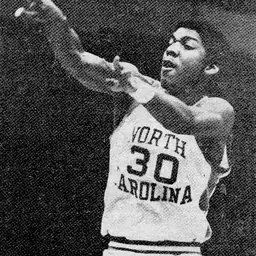
1984 NBA draft Entering the 1984 NBA draft, although the Houston Rockets had tied with the Indiana Pacers for the NBA's worst record, the Pacers had traded the top pick to the Portland Trail Blazers in 1981 for center Tom Owens. In 1984, having beat the Blazers in a coin toss for first pick, the Rockets chose Houston center Hakeem Olajuwon. Unable to choose him, yet still seeking a center, the Blazers chose Bowie. Choosing third, the Chicago Bulls then drafted North Carolina shooting guard Michael Jordan.
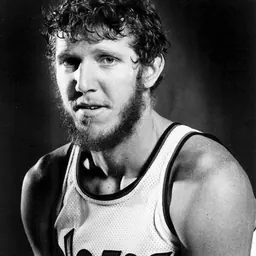
At the time, picking Bowie made sense from the Blazers' perspective. The team had not had a solid big man since Bill Walton, one of its first major stars, left in 1979. Soon before the draft, the NBA fined the Blazers $250,000 (equivalent of $,000 in ) for improper contact with Olajuwon and center Patrick Ewing. A year earlier, Portland had drafted a shooting guard, Olajuwon's college teammate Clyde Drexler. Having both Drexler and Jim Paxson, the Blazers had little need on paper for another shooting guard. Still, in 2005, highlighting Bowie's injury-laden college career, ESPN named the Blazers' choice the worst draft pick in the history of North American professional sports. Also that year, arguing that teams should draft for talent and not need, Sports Illustrated named Bowie the biggest draft bust in NBA history.
Portland Trail Blazers (1984–1989) During his rookie season, Bowie played in 76 games and averaged 10 points and 8.6 rebounds, earning a spot on the NBA All-Rookie Team. However, in his second season, Bowie's leg injuries recurred. During a game against the Milwaukee Bucks at The MECCA, Bowie and teammate Jerome Kersey became entangled going for a rebound, and as they landed, Bowie's left tibia broke. He was carried off the floor on a stretcher.
"I firmly believe I can be one of the top centers in the league if I'm healthy," said Bowie. "One year, things are going to fall into place, and I'm going to show people how good I can be."
The next season, Bowie returned. In the season's fifth game against the Dallas Mavericks, Bowie went up for a jump hook shot. As he went up, his legs buckled underneath him and Bowie fell to the floor. He suffered a season-ending fracture of his right tibia. Bowie compared the feeling having his leg chopped by an ax. On March 29, 1988, Bowie had surgery where he received a graft from his hip bone and had a metal plate with 10 screws permanently attached to his right shin. The injury effectively sidelined him for the next two seasons; he missed all of the 1987–88 season, as well as the first 62 games of the 1988–89 season. All told, Bowie played 63 games out of a possible 328 during his last four seasons in Portland.
"I have one huge regret," said Bowie. "I wish I would've been more patient and didn't come back as quickly as I did the second year I fractured my leg. You feel like you disappointed Portland. You're getting paid a lot of money and you can't play. I don't know if it's guilt or regret. But I've never been one to say, 'Why me?'. I feel I should have an MD behind my name from all the education I've received from my own cases."
Los Angeles Lakers (1993–1995) After the 1992–93 season, Bowie was traded for Benoit Benjamin, being sent from New Jersey to the Los Angeles Lakers. However, Bowie's leg injury problems recurred. Bowie played in 92 games in the two seasons combined, starting in 17 of them. Although Jerry West, the team's general manager, wanted Bowie to continue to play for the Lakers, Bowie decided to retire from professional basketball after the 1994–95 season. He desired to follow his passion and become involved in harness racing.
Career overview Bowie, Bill Walton, and Greg Oden are frequently cited together. All three were centers, drafted high by Portland, who failed to achieve their potential due to career-altering injuries.
"You know, I go speak and visit at hospitals a lot—and not to sound mushy—but I've seen 7-, 8-, 9-year-old kids who have had their legs amputated because of bone cancer or a car accident," Bowie said. "That's when it puts things into perspective. There's a kid who wishes he had a leg to break. That's when I realize how lucky I am. I can't complain about the hand I've been dealt. Sure, I've had my share of surgery and broken bones, but these things were meant to be. I'm a Christian and I've always felt that tomorrow is predetermined and that you will never be put through more than you can handle."
Post-basketball endeavors For a time, Bowie performed color commentary for University of Kentucky Basketball.
In 2012, Bowie was featured in an ESPN SEC Storied documentary, Going Big. Bowie's number 31 was retired by Kentucky Basketball in 2002.
Career statistics
NBA
Regular season
Playoffs
College
Don’t just read it —
keep it.
Full-length biographies made to live with: read them, listen on the way to work, watch them tonight.
- E-book
- Audio
- Video
Instant download · yours to keep · every purchase keeps this site free
Important facts
People in Sam Bowie's life
Named in this biography and alive at the same time




Related people
Same field, nearest in time


Contemporaries
People whose lives overlapped Sam Bowie's

Frequently asked questions
Who is Sam Bowie?
American basketball player (born 1961)
When was Sam Bowie born?
Sam Bowie was born on 17 March 1961 in Lebanon.
What is Sam Bowie's occupation?
Sam Bowie is a basketball player.
What nationality is Sam Bowie?
Sam Bowie is American.
Sources & further reading
Cite this page
APA: Biography.guide. (2026). Sam Bowie. https://biography.guide/sam-bowie-basketball-player/
MLA: "Sam Bowie." Biography.guide, https://biography.guide/sam-bowie-basketball-player/.
Chicago: "Sam Bowie." Biography.guide. https://biography.guide/sam-bowie-basketball-player/.
Data last updated: 2026-09-20 · Spot an error? Report a correction.
Portrait: Wikimedia Commons · author & licence
Page generated 2026-09-27 04:58 UTC