
Salvador Terán
Mexican silversmith and designer
About Salvador Terán
Lived 1920 – 1974 (aged 53–54). Salvador Terán was a Mexican silversmith and jewelry designer.
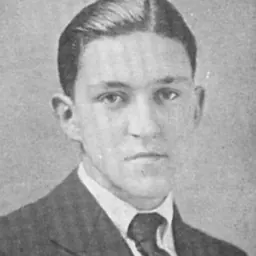
Salvador Vaca Terán (1920–1974), generally known as Salvador Terán, was a Mexican silversmith and modernist designer associated with the Taxco school of silver design. He trained at William Spratling's Taller de Las Delicias and in 1939 joined his first cousins, the Castillo brothers, in establishing Los Castillo. He worked there as a designer and workshop manager before opening an independent studio in Mexico City in 1952.
Terán designed jewelry, boxes, trays, decorative objects, interiors, and mosaic murals. His work is characterized by layered or overlapping planes, oxidized backgrounds, stylized human and animal figures, and the combination of metal with stone or glass mosaic. His imagery often drew upon pre-Columbian art while using simplified forms and spatial effects associated with mid-century Mexican modernism.
Training at Las Delicias
Terán was among the early apprentices, or zorritas, at William Spratling's Taller de Las Delicias in Taxco. He appears in a 1934 photograph documenting the workshop's personnel.
Las Delicias used a hierarchical apprenticeship system in which young workers learned cutting, soldering, repoussé, chasing, engraving, stone setting, and other specialized techniques under established master silversmiths. The workshop trained many of the designers and craftsmen who later established the principal independent ateliers of the Taxco silver movement.
Los Castillo
In 1939, Terán left Las Delicias and joined his cousins Antonio Castillo, Jorge "Chato" Castillo, and Justo "Coco" Castillo in establishing Los Castillo. The founding group also included Antonio Castillo's wife, Margot van Voorhies Carr.
Terán worked at Los Castillo for approximately thirteen years as a designer and workshop manager. Antonio Castillo later recalled that Terán had worked closely with him and was treated as a brother within the family workshop.
Like many designers working within large Taxco ateliers, Terán was not individually credited on the objects he designed during this period. His work was marketed under the Los Castillo hallmark. This anonymity illustrates the collaborative structure of the Taxco taller, in which the workshop proprietor's mark generally identified objects produced by several designers, master silversmiths, and specialized craftsmen.
Los Castillo became known for mixed-metal surfaces, stone mosaic, enamel, feather inlay, and other technically experimental processes. Terán's later independent work continued several of the spatial and material investigations he had pursued while associated with the workshop.
Independent studio
Terán left Los Castillo in 1952 and established an independent studio in Mexico City employing approximately twenty-five silversmiths. His work was sold in the capital, including through La India Bonita, a shop that also carried silver by Spratling.
Contemporary guidebooks recognized his work shortly after the establishment of the studio. Frances Toor's 1957 guide to Mexico recommended La India Bonita for silver described as among the best from Taxco, while later accounts listed Terán alongside Antonio Pineda, Héctor Aguilar, and Enrique Ledesma as one of the outstanding Mexican silversmiths of the period.
Terán's independent pieces commonly bear a hallmark reading "Salvador", together with marks identifying Mexico, sterling silver, a design number, and sometimes the Mexican eagle assay mark.
Design and technique
Overlapping planes
A defining characteristic of Terán's jewelry was his use of overlapping planes. He mounted pierced or shaped silver figures above oxidized backgrounds, creating shadows and the appearance that dancers, birds, insects, or abstract figures floated in three-dimensional space.
The darkened lower surfaces intensified the graphic quality of the raised silver forms. Although relatively shallow, the separation between the layers allowed the figures to appear animated and spatial rather than merely engraved or modeled in relief.
LACMA holds a silver necklace depicting dancers and stars, dated to approximately 1950–1955, as well as a bracelet from the same general period.
Mosaic and decorative objects
Terán experimented with metal, stone mosaic, and other materials. His workshop produced boxes, trays, coffee services, wall decorations, and other objects incorporating mosaic surfaces.
His interest in architectural mosaics began while he was still connected to Los Castillo. In 1952, the year he established his independent studio, he designed the interior of a shop opened by the silversmith Reveriano Castillo. The installation included a mosaic band extending across two walls and depicting cloud-like forms and stars. The mosaic remained largely unaltered until the business was sold in 1989.
Terán also produced larger mosaic murals for specific architectural settings and smaller wall works intended for sale. Many incorporated imagery derived from pre-Columbian art.
Pre-Columbian and modernist imagery
Terán used pre-Columbian imagery as a source for modern design rather than simply copying archaeological objects. His jewelry and murals incorporated feathered serpents, celestial imagery, dancers, masks, animals, and stylized human forms.
A 1958 mosaic mural discussed by Morrill and Berk combines an ancient feathered serpent with a modern figure and industrial imagery. The composition was interpreted as a statement about the synthesis of Mexico's Indigenous past and modern identity.
His sun-and-moon jewelry similarly transformed historical imagery into compact modernist forms. LACMA notes that Terán's anthropomorphic sun and moon designs recall images in the sixteenth-century Florentine Codex, in which Indigenous artists represented the celestial bodies with faces.
LACMA also holds a silver-and-bone pendant based on the same motif.
Materials and forms
Terán worked principally in silver but also combined it with bone, amethyst, oxidized metal, glass or stone tesserae, and other materials. His jewelry included necklaces, bracelets, brooches, pendants, earrings, and articulated pieces.
A star pendant necklace in LACMA's collection, dated to approximately 1945, combines tubular silver elements with an amethyst cabochon. Later work frequently placed simplified silver figures against recessed or oxidized grounds, producing a silhouette-like visual effect.
Legacy
Terán is recognized as one of the technically inventive designers associated with the Taxco School. Morrill and Berk described him as highly regarded by his peers for both design and technical skill.
His career also demonstrates the importance of anonymous or undercredited designers within Taxco's large workshops. For more than a decade, designs he created or helped develop were sold under the Los Castillo name. Only after opening his own studio did he regularly mark work under his own name.
Terán's independent work extended Taxco silver's modernist vocabulary beyond jewelry into mosaic murals, interior design, and decorative objects. His use of layered surfaces joined pre-Columbian-derived imagery with the spatial experimentation and abstraction of mid-century modern design.
His work is represented in the collection of the Los Angeles County Museum of Art, which holds examples of his jewelry from the 1940s through the 1960s.
Don’t just read it —
keep it.
Full-length biographies made to live with: read them, listen on the way to work, watch them tonight.
- E-book
- Audio
- Video
Instant download · yours to keep · every purchase keeps this site free
Important facts
People in Salvador Terán's life
Named in this biography and alive at the same time





Related people
Same field, nearest in time





Contemporaries
People whose lives overlapped Salvador Terán's





Frequently asked questions
Who was Salvador Terán?
Mexican silversmith and designer (1920–1974)
When was Salvador Terán born?
Salvador Terán was born in 1920.
When did Salvador Terán die?
Salvador Terán died in 1974.
What was Salvador Terán's occupation?
Salvador Terán was a silversmith and jewelry designer.
What nationality was Salvador Terán?
Salvador Terán was Mexican.
Sources & further reading
Cite this page
APA: Biography.guide. (2026). Salvador Terán. https://biography.guide/salvador-teran/
MLA: "Salvador Terán." Biography.guide, https://biography.guide/salvador-teran/.
Chicago: "Salvador Terán." Biography.guide. https://biography.guide/salvador-teran/.
Data last updated: 2026-09-20 · Spot an error? Report a correction.
Page generated 2026-09-27 05:16 UTC