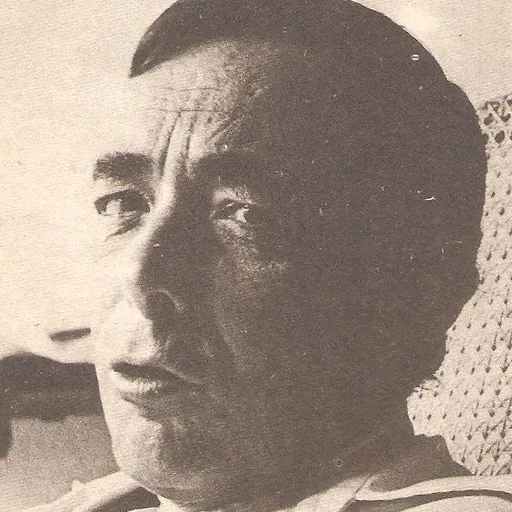
About Salvador Elizondo
Lived 1932 – 2006 (aged 73). Salvador Elizondo was a Mexican linguist, translator, university teacher, journalist, literary critic and writer.
Salvador Elizondo Alcalde (December 19, 1932, in Mexico City – March 29, 2006) was a Mexican writer of the 60s Generation of Mexican literature.
Regarded as one of the creators of the most influential cult noirè, experimental, intelligent style literature in Latin America, he wrote as a novelist, poet, critic, playwright, and journalist. His most famous novels are Farabeuf (1965) and El hipogeo Secreto (1968). He is also known for El grafógrafo (1972) which is a series of short texts based on linguistic abbreviatory experimentation. Farabeuf (tr. John Incledon) was published in English by Ox & Pigeon in 2015.
His style is considered innovative among Mexican contemporary literature for introducing a cosmopolitan view of language and narrative, bringing elements from external literary currents and languages to a refined dialogue of thought and communication. His technique is considered rather unrealistic and proto-fictional, as opposed to magical realism. Some critics have highlighted his literary works as postmodern literature since it challenges fiction through autofiction, metafiction, metalepsis, and by intertwining possible fictional worlds. His works are associated with writers such as Ezra Pound, James Joyce, Julio Cortázar, Juan Rulfo and Georges Bataille. He was also a professor at UNAM for 25 years (mentor of writers such as Pablo Soler Frost) and received many international grants, such as the Guggenheim and Rockefeller, and was the recipient of the 1990 national prize of literature.
Elizondo died in Mexico City on March 29, 2006, of cancer. His funeral was held at the Palacio de Bellas Artes.
Works Poemas, 1960 Luchino Visconti (críticism), 1963 Farabeuf o la crónica de un instante (novela), 1965 Narda o el verano, 1966 Autobiografía, 1966 El hipogeo secreto (novela) 1968 Cuaderno de escritura (críticism), 1969 El retrato de Zoe, 1969 El grafógrafo, 1972 Contextos (critical articles), 1973 Museo poético (anthology of modern Mexican poetry), 1974 Antología personal, 1974 Miscast (A comedy in three Acts), 1981 Camera lucida, México, 1983 La luz que regresa, 1984 Elsinore: un cuaderno, 1988 Estanquillo (textos), 1992 Teoría del infierno, 1993 Pasado Anterior 2007
Selected filmography The Hypnotist (1940) Tender Pumpkins (1949) Philip of Jesus (1949) Duel in the Mountains (1950) Seven Women (1953) The Three Elenas (1954) Back to the Door (1959) My Mother Is Guilty (1960)
Awards Xavier Villaurrutia Prize (1965) National Prize for Arts (1990)
Don’t just read it —
keep it.
Full-length biographies made to live with: read them, listen on the way to work, watch them tonight.
- E-book
- Audio
- Video
Instant download · yours to keep · every purchase keeps this site free
Important facts
People in Salvador Elizondo's life
Named in this biography and alive at the same time





Related people
Same field, nearest in time

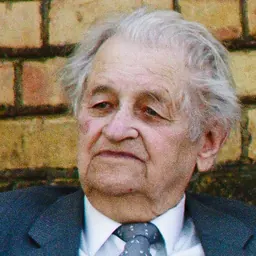
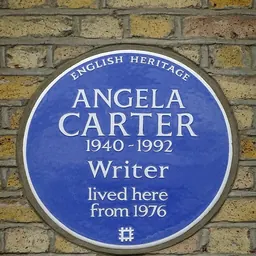

Contemporaries
People whose lives overlapped Salvador Elizondo's
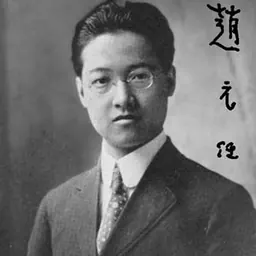

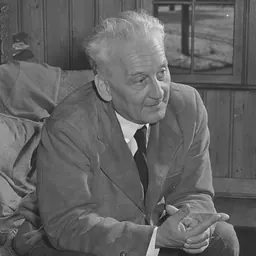
Frequently asked questions
Who was Salvador Elizondo?
Mexican writer (1932–2006)
When was Salvador Elizondo born?
Salvador Elizondo was born on 19 December 1932 in Mexico City.
When did Salvador Elizondo die?
Salvador Elizondo died on 29 March 2006 in Mexico City.
What was Salvador Elizondo's occupation?
Salvador Elizondo was a linguist, translator, university teacher, journalist, literary critic and writer.
What nationality was Salvador Elizondo?
Salvador Elizondo was Mexican.
Sources & further reading
· Wikipedia: Salvador Elizondo
Cite this page
APA: Biography.guide. (2026). Salvador Elizondo. https://biography.guide/salvador-elizondo/
MLA: "Salvador Elizondo." Biography.guide, https://biography.guide/salvador-elizondo/.
Chicago: "Salvador Elizondo." Biography.guide. https://biography.guide/salvador-elizondo/.
Data last updated: 2026-09-23 · Spot an error? Report a correction.
Portrait: Wikimedia Commons · author & licence
Page generated 2026-09-27 05:06 UTC