
About Salim Hatum
Lived 1928 – 1967 (aged 38–39). Salim Hatum was a politician and military personnel.
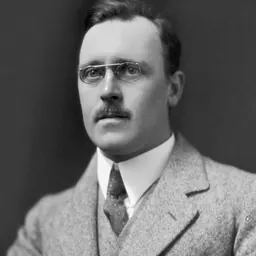
Salim Hatum (; 1928 – 26 June 1967) was a Syrian military officer and politician who played a significant role in Syrian politics in the 1960s. A member of the Syrian Regional Branch of the Arab Socialist Ba'ath Party, he was instrumental in the 1966 Syrian coup d'état that toppled the government of Amin al-Hafiz, also a Ba'athist. That same year he launched an insurrection from his home region of Jabal al-Druze against his colleagues who formed the new government but sidelined him from any major position. He fled Syria amid a warrant for his arrest, but returned in 1967 and was subsequently jailed and executed.
Early life Hatum was born in the village of Dhibin near the town of Salkhad in the Jabal al-Druze region of southern Syria, during French Mandatory rule. His family were followers of the Druze religion. Historian Hanna Batatu describes Hatum's family as part of the "middle landed class," His father had been a director of the census in the area.
Military and political career
Early career and 1963 coup Hatum began his military career in the Homs Military Academy, where he also joined the Ba'ath Party, an Arab nationalist movement, headed by Michel Aflaq. After graduating he became an officer in the Syrian Army, with the rank of captain. In 1958 Syria and Egypt merged under the leadership of Gamal Abdel Nasser to form the United Arab Republic. In September 1961 the union was ended after a coup by secessionist officers in Syria. Arab nationalist officers sought to topple the secessionist government of Nazim al-Qudsi and formed an alliance within the military to launch a coup in 1963. Hatum was one of the few Ba'athist officers among the Arab nationalists in the army during this period, although the Ba'athists were the most organized force unofficially headed by a secretive grouping known as the Military Committee and officially, if only nominally, organized by the political party under Aflaq. In addition to the commando unit he headed prior to the coup, Hatum was also made the commander of the army garrisons posted near the strategic radio and television stations. That year, he also served on the military tribunal to try Israeli spy Eli Cohen.
A coup was planned for 1 July, but delayed until 3 September, upon Hatum's insistence. In the meantime, in August, one of Hatum's co-conspirators, colonel Talal Abu Asali, publicly cursed Jadid and promised to avenge Hafiz during a drinking session with other officers. As a result, he was arrested the following day by Chief of Staff Ahmad Suwaydani, who assigned Hatum (who was far from suspicion at that point) to head the investigation against Asali. During the interrogation, Hatum reportedly whispered to Asali "I will kill anyone who talks". Jadid became suspicious of Hatum for unclear reasons, stripped him of his investigative role and assigned Syrian intelligence head, Abd al-Karim al-Jundi, to head the interrogation. After Jundi allegedly tortured Asali, the latter confessed that Sha'ir and Razzaz were planning a coup against the new government, but did not mention Hatum. Jundi subsequently led a crackdown against officers belonging to the Druze community, like Sha'ir and Hatum, arresting over 200 military personnel. Asali was released.
Sectarianism increasingly played a role in the rivalry and confrontation between the two camps, with the Druze and to an extent the Sunni Muslim officers set against the Alawite officers like Jadid and Assad, who were largely in control of the country's military and internal security networks at that time. Hatum stated in a press conference in Jordan, that sectarianism was taking hold in the Syrian Army, with the purges undertaken by Assad and Jadid resulting in the entrenchment of Alawite power in the country, with Alawite officers taking up key positions in the state. He further asserted that Alawites outnumbered non-Alawites in the officer corps five to one and the government was leading Syria under the slogan of "One Nusayri state with an eternal message." This was a mock reference to the Ba'athist motto "One Arab nation with an eternal message", replacing "Arab" with "Nusayri", which is a derogatory name for Alawite.
Following Syria's defeat in the 1967 Six-Day War with Israel, Hatum announced that he would return to Syria to fight the Israelis. He felt Jadid would not pursue the death warrant against him with his government now weakened by the defeat.
Don’t just read it —
keep it.
Full-length biographies made to live with: read them, listen on the way to work, watch them tonight.
- E-book
- Audio
- Video
Instant download · yours to keep · every purchase keeps this site free
Important facts
People in Salim Hatum's life
Named in this biography and alive at the same time


Related people
Same field, nearest in time






Contemporaries
People whose lives overlapped Salim Hatum's

Frequently asked questions
Who was Salim Hatum?
Syrian politician
When was Salim Hatum born?
Salim Hatum was born in 1928 in Dhibin.
When did Salim Hatum die?
Salim Hatum died on 26 June 1967 in Damascus.
What was Salim Hatum's occupation?
Salim Hatum was a politician and military personnel.
What nationality was Salim Hatum?
Salim Hatum's recorded nationality: Syrian people.
Sources & further reading
Cite this page
APA: Biography.guide. (2026). Salim Hatum. https://biography.guide/salim-hatum/
MLA: "Salim Hatum." Biography.guide, https://biography.guide/salim-hatum/.
Chicago: "Salim Hatum." Biography.guide. https://biography.guide/salim-hatum/.
Data last updated: 2026-09-20 · Spot an error? Report a correction.
Page generated 2026-09-27 05:26 UTC