
About Salim al-Bishri
Lived 1832 – 1917 (aged 84–85). Salim al-Bishri was an Egyptian teacher.
Salim al-Bishri, also known as Salim al-Bishri al-Maliki (1832 in Mahallat Bishr, Beheira – 1916 in Cairo), was an Egyptian Sunni religious scholar and a Grand Imam of al-Azhar. He was one of the six Grand Imams who held this position twice, once between 1899 and 1903 and again from 1909 until his death.
As a significant Maliki scholar among his generation of students at al-Azhar University, he later became the head of the Maliki scholars at the university before being appointed as the Grand Imam. He had a particular interest in hadiths, which are collections of sayings and actions of Muhammad. While serving as a conservative Grand Imam of al-Azhar, he initiated modernizations and reforms within the institution, including the significant reform of 1911. However, he came into conflict with Salafist and liberal Muslims.
He resigned from his position the first time due to a disagreement with the Egyptian government regarding the organization of al-Azhar. During his second term, he issued a fatwa condemning the massacre of Christians and Armenians during the Adana massacre.
He died in Cairo in 1916.
Name His full name was Salim bin Abi Farraj bin Salim bin Abi Farraj al-Bishri.
Biography
Origins and youth Salim al-Bishri was born in 1832 in Mahallat Bishr (Beheira). He came from an affluent family. After the death of his father when he was only seven years old, he began memorizing the Quran and became a hafiz. He later continued his service at the Sayyidah Zainab Mosque and was subsequently appointed as a Maliki teacher at al-Azhar University. He gained recognition as a Muslim scholar specializing in hadiths, which was his preferred field of study.
Grand Imam of Al-Azhar He was later appointed as the head of the Maliki school at al-Azhar University as the sheikh and also secured a position within the Council of al-Azhar by Hassûnah an-Nawâwî (1895–1899), the Grand Imam at the time. After Hassûnah an-Nawâwî's passing, and following a brief interregnum, Salim al-Bishri succeeded him and became the Grand Imam of al-Azhar.
Salim al-Bishri held opposing views to the theological positions advocated by Muhammad Abduh, the founder of the Egyptian reformist movement, and Jamal al-Din al-Afghani, one of the pioneers of Pan-Islamism. However, he faced criticism from Salafists who accused him of not teaching hadiths correctly. Nevertheless, he did accept some of Abduh's legal propositions that he deemed legitimate, such as simplifying divorce procedures for women.
He resigned from his position for the first time due to a conflict with the Khedive of Egypt, Abbas II of Egypt, whom he refused to grant the authority to appoint a sheikh within the university. in which he stated: O Muslims, be faithful to your religion and beware of perpetrating acts forbidden by God in His Book and the Sunnah of His Prophet, and beware of disobeying God, which incites His anger and indignation. Verily, God has imposed on you responsibilities and ordained that you are obligated to grant certain rights to those to whom you are contractually bound and those who have entrusted their safety to you and those who live amongst you from among the Jews and the Christians (Ahl al-Dhimma). These include that you act righteously towards them as they have acted righteously towards you, protect them from what you protect yourselves and your kin from, to strengthen them with your strength and power, and to protect their homes, monasteries, and churches in the same manner that you protect your mosques and places of worship. And, by God, whoever transgresses against their women, murders them and oppresses them has truly violated the covenant established by God Almighty and violated their divinely-ordained obligations.In 1911, Salim al-Bishri implemented a significant reform within al-Azhar, which, among other changes, established the Supreme Council of al-Azhar. He also engaged in discussions with Shiite figures, such as Abd al-Husayn Sharaf al-Din al-Musawi, with whom he maintained a correspondence.
Death He died in Cairo in 1916.
Don’t just read it —
keep it.
Full-length biographies made to live with: read them, listen on the way to work, watch them tonight.
- E-book
- Audio
- Video
Instant download · yours to keep · every purchase keeps this site free
Important facts
People in Salim al-Bishri's life
Named in this biography and alive at the same time
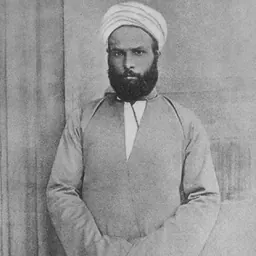
Related people
Same field, nearest in time

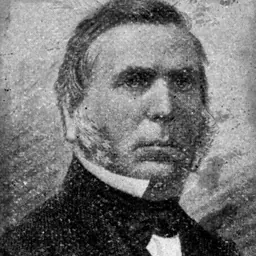


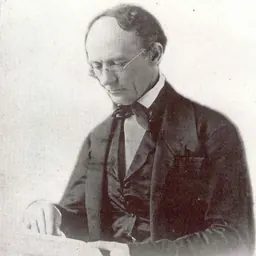
Contemporaries
People whose lives overlapped Salim al-Bishri's



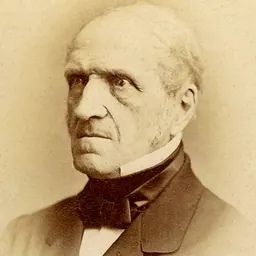


Frequently asked questions
Who was Salim al-Bishri?
Egyptian Sunni religious scholar
When was Salim al-Bishri born?
Salim al-Bishri was born in 1832.
When did Salim al-Bishri die?
Salim al-Bishri died in 1917.
What was Salim al-Bishri's occupation?
Salim al-Bishri was a teacher.
What nationality was Salim al-Bishri?
Salim al-Bishri was Egyptian.
Sources & further reading
Cite this page
APA: Biography.guide. (2026). Salim al-Bishri. https://biography.guide/salim-al-bishri/
MLA: "Salim al-Bishri." Biography.guide, https://biography.guide/salim-al-bishri/.
Chicago: "Salim al-Bishri." Biography.guide. https://biography.guide/salim-al-bishri/.
Data last updated: 2026-09-20 · Spot an error? Report a correction.
Page generated 2026-09-27 05:30 UTC