
About Salah Abu Seif
Lived 1915 – 1996 (aged 81). Salah Abu Seif was an Egyptian film director, screenwriter and director.
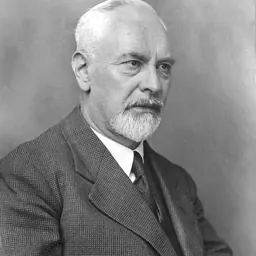
Salah Abu Seif (, ) (May 10, 1915 – June 23, 1996) was a prominent Egyptian film director and screenwriter. He is considered to be the godfather of Neorealist cinema in Egyptian cinema.
Many of the 41 films he directed are considered Egyptian classics; eight of them rank in the Bibliotheca Alexandrina’s list of 100 Greatest Egyptian Films, the most of any director. Another 1997 Top 100 ranking by Egyptian film critics lists eleven of Abu Seif's films, right behind Youssef Chahine with twelve films.
His film The Beginning and the End (1960) was the first adaptation of a novel by Nobel Prize winner Naguib Mahfouz. In 1977 he was a member of the jury at the 10th Moscow International Film Festival.
Early life Abu-Seif was born in 1915, in Cairo's ancient quarter of Boolaq, to landowning parents from Upper Egypt. He was 12 years old when he saw the first full- length feature film made by an Egyptian, in 1927, at a local movie-house - earlier films were imports accompanied by Egyptian narrations, or made by Europeans living in Egypt. As the son of a conservative family, Abu-Seif graduated from the Cairo College of Commerce and Economics in 1932, while at the same time working as a freelance reporter following movie stars. But it was at his day job as a clerk in a factory that he met the Egyptian film-maker Niazy Mustapha, who was on a shoot there. Mustapha made him a film editor.
In 1939, Abu-Seif won a scholarship to study film in Paris. Within five years of his return in 1942, he had established himself as one of the most avant-garde second generation film-makers in the country. He pioneered shooting on location - though he also used reconstructions - in places none of his predecessors had dared to visit, like ghurza (the equivalent of old Chinese opium dens), brothels and impoverished areas whose existence had never been officially acknowledged.
Career Abu Seif began his career as a film editor in films such as Aydah (1942), before making his feature directorial debut with the film Always in my Heart (1946).
Many of his films had political implications. The Case '68 and Malatily Bathhouse were influenced by the Six-Day War. Both films dealt with the changing social climate of post-war Egypt. They experienced troubled production and release history, including protests against their release by the Arab Socialist Union.
Abu Seif’s preference for realistic stories and settings allowed him to form a close relationship with his audience, who would have seen themselves represented in his films. He was described as “the artist of the Egyptian people” due to the reflective and observational nature of his work.
Won "Best Film of the Year" at Egyptian Film Association
Nominated for "Golden Prize" at the 12th Moscow International Film Festival
Nominated for "Golden St. George" at the 17th Moscow International Film Festival
Don’t just read it —
keep it.
Full-length biographies made to live with: read them, listen on the way to work, watch them tonight.
- E-book
- Audio
- Video
Instant download · yours to keep · every purchase keeps this site free
Important facts
People in Salah Abu Seif's life
Named in this biography and alive at the same time
Related people
Same field, nearest in time



Contemporaries
People whose lives overlapped Salah Abu Seif's





Frequently asked questions
Who was Salah Abu Seif?
Egyptian film director (1915–1996)
When was Salah Abu Seif born?
Salah Abu Seif was born on 10 May 1915 in Cairo.
When did Salah Abu Seif die?
Salah Abu Seif died on 23 June 1996 in Cairo.
What was Salah Abu Seif's occupation?
Salah Abu Seif was a film director, screenwriter and director.
What nationality was Salah Abu Seif?
Salah Abu Seif was Egyptian.
Sources & further reading
Cite this page
APA: Biography.guide. (2026). Salah Abu Seif. https://biography.guide/salah-abu-seif/
MLA: "Salah Abu Seif." Biography.guide, https://biography.guide/salah-abu-seif/.
Chicago: "Salah Abu Seif." Biography.guide. https://biography.guide/salah-abu-seif/.
Data last updated: 2026-09-22 · Spot an error? Report a correction.
Page generated 2026-09-27 05:19 UTC